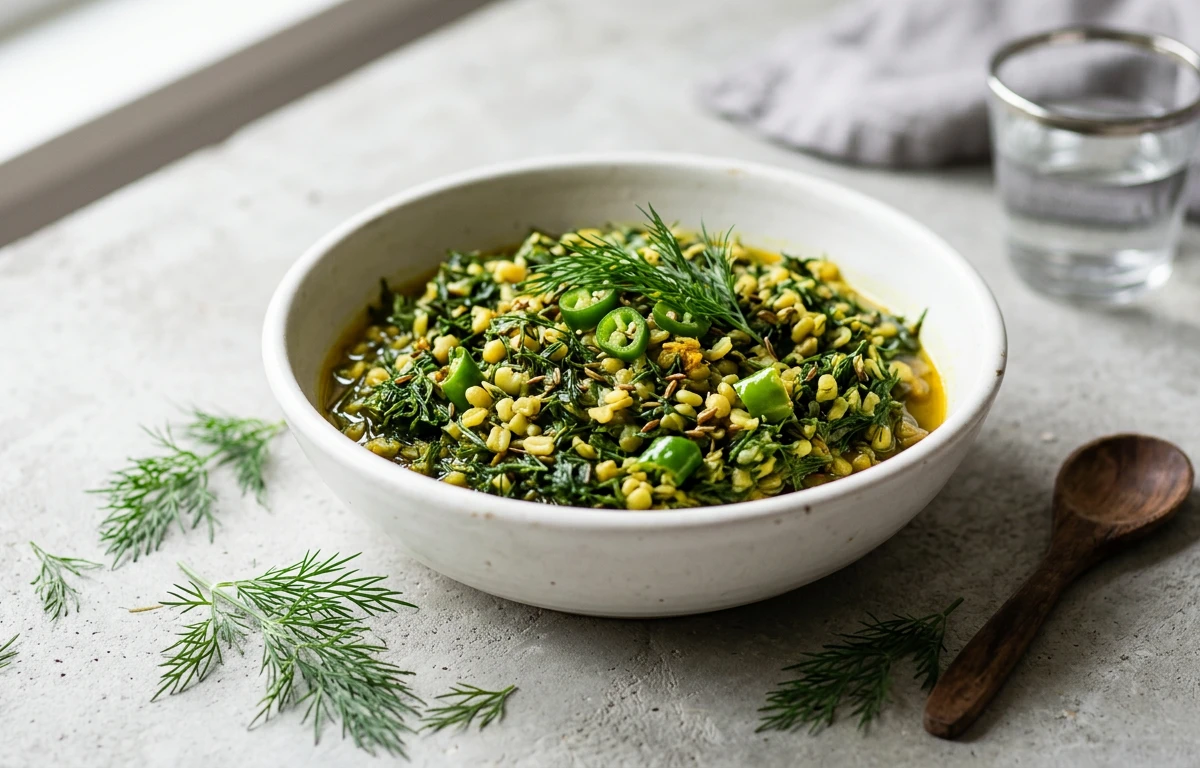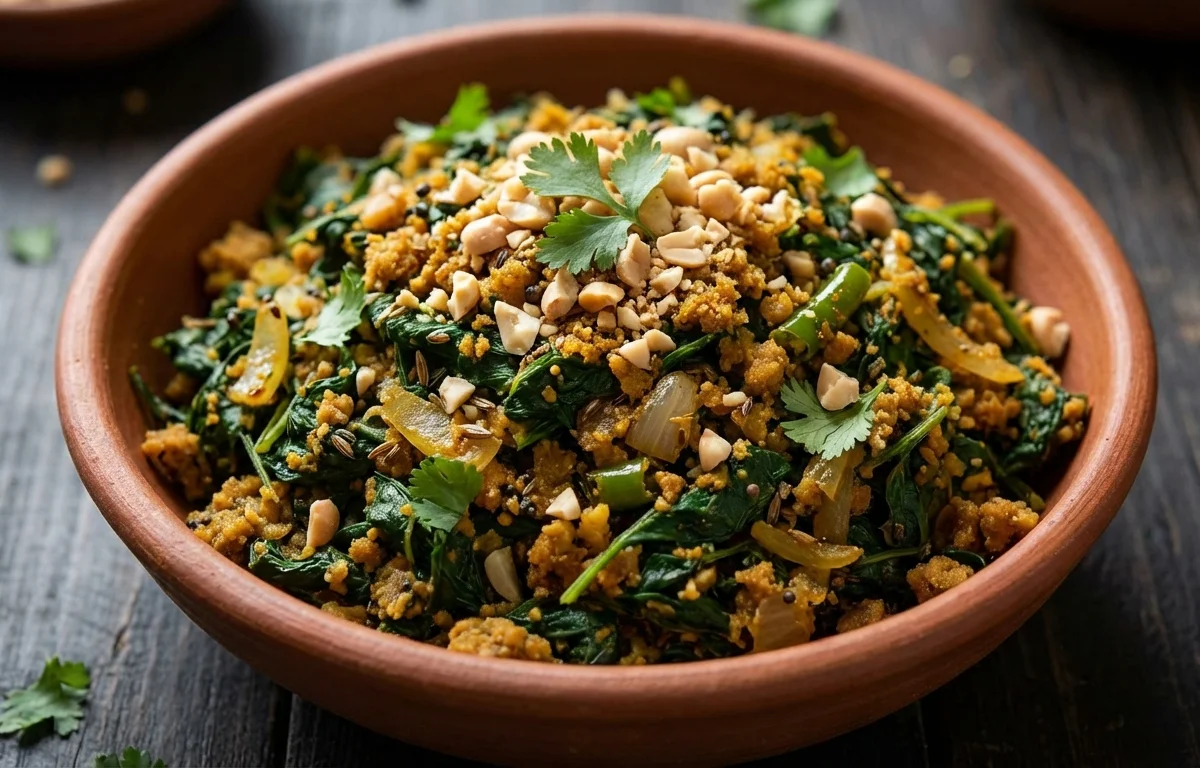
Methichi Bhaji
A simple, hearty Maharashtrian stir-fry where fresh fenugreek leaves are tossed with minimal spices, garlic, and a hint of jaggery. The slight bitterness of methi mellows beautifully against the earthy gram flour and gentle sweetness, making it a perfect everyday side.
For 4 servings
- prep
Prepare the fenugreek leaves.
Pluck the methi leaves from the thick stalks. Discard thick stems. Wash the leaves thoroughly in several changes of water to remove all grit. Drain well and roughly chop. Set aside.
TIPTo remove excess bitterness, sprinkle a little salt on the chopped leaves and set aside for 10 minutes, then squeeze out the water before cooking. - temper · ~2 min
Heat the oil and crackle the cumin.
1.Heat oil in a heavy-bottomed kadhai or pan over medium heat.2.Add cumin seeds and let them sizzle and change color slightly (30 sec).3.Add chopped garlic and sauté until fragrant and lightly golden (1 min). - saute · ~4 min
Cook the aromatics.
1.Add slit green chilies and chopped onion to the pan.2.Sauté until the onion turns translucent and soft (3-4 min).3.Add turmeric powder and stir for a few seconds until fragrant.TIPDon't let the garlic burn — keep the heat at medium and stir constantly. - saute · ~4 min
Add the fenugreek leaves and cook.
1.Add all the chopped methi leaves to the pan in batches if needed.2.Stir well to coat the leaves with the onion mixture.3.The leaves will wilt and reduce dramatically in volume (3-4 min).TIPMethi leaves cook down to almost a quarter of their raw volume, so don't worry if the pan looks very full at first. - saute · ~5 min
Finish with chickpea flour and jaggery.
1.Sprinkle chickpea flour evenly over the cooked methi. Stir continuously and cook for 2 minutes to toast the flour.2.Add salt and grated jaggery. Mix well.3.Sprinkle 2 tablespoons of water, stir, cover, and let it steam on low heat for 2 minutes.4.Open the lid, give it a final stir, and turn off the heat.TIPThe chickpea flour binds the dish and absorbs any excess moisture. Make sure to cook it thoroughly so you don't taste raw flour.
What to keep in mind.
7 tips from the recipe — small details that make a real difference to the final dish.
- 1Wash the fenugreek leaves in several changes of water to remove all grit and dirt.
- 2Sprinkle salt on chopped methi leaves for 10 minutes, then squeeze out water to reduce bitterness.
- 3Add fenugreek leaves in batches as they wilt dramatically to a quarter of their raw volume.
- 4Cook the chickpea flour for a full 2 minutes until fragrant to avoid a raw, pasty taste.
- 5Use a heavy-bottomed kadhai or pan to prevent the garlic from burning during tempering.
- 6Adjust the jaggery to taste — more if the methi is especially bitter, less if you prefer savory.
- 7This dish can be made ahead and stored in the refrigerator for up to 3 days; flavors meld beautifully.
Adapt it for your goals.
Vegan (as-is)
This recipe is already vegan, but you can swap oil for coconut oil for a subtle tropical note that complements the methi.
Low OilLow-Oil
Reduce oil to 1 tablespoon and add 2 extra tablespoons of water during cooking; the chickpea flour will still bind the dish without extra fat.
Nutty VariationNutty Variation
Add 2 tablespoons of crushed peanuts along with the chickpea flour for extra crunch and a nutty flavour that pairs well with fenugreek.
SpicierSpicier
Increase green chilies to 4 or add ½ teaspoon of red chili powder for those who prefer a pronounced heat.
Protein BoostProtein Boost
Add ½ cup of cooked chana dal (Bengal gram) along with the methi leaves for a heartier, more protein-rich version.
Why this is on our healthy list.
Rich in Dietary Fiber
Fenugreek leaves are an excellent source of soluble fiber, which aids digestion and helps maintain steady blood sugar levels.
Good Source of Iron
Methi leaves contain non-heme iron, and pairing them with the onion and garlic in this dish can enhance iron absorption.
Low in Calories
This stir-fry is a light, nutrient-dense vegetable dish with minimal oil, making it suitable for calorie-conscious diets.
Contains Chickpea Flour Protein
Gram flour (besan) adds plant-based protein and complex carbohydrates, contributing to satiety and muscle repair.
Frequently asked questions
Sprinkle salt over the chopped leaves and set aside for 10 minutes, then squeeze out the released water before cooking. Adding jaggery or sugar also balances bitterness.



.webp)