
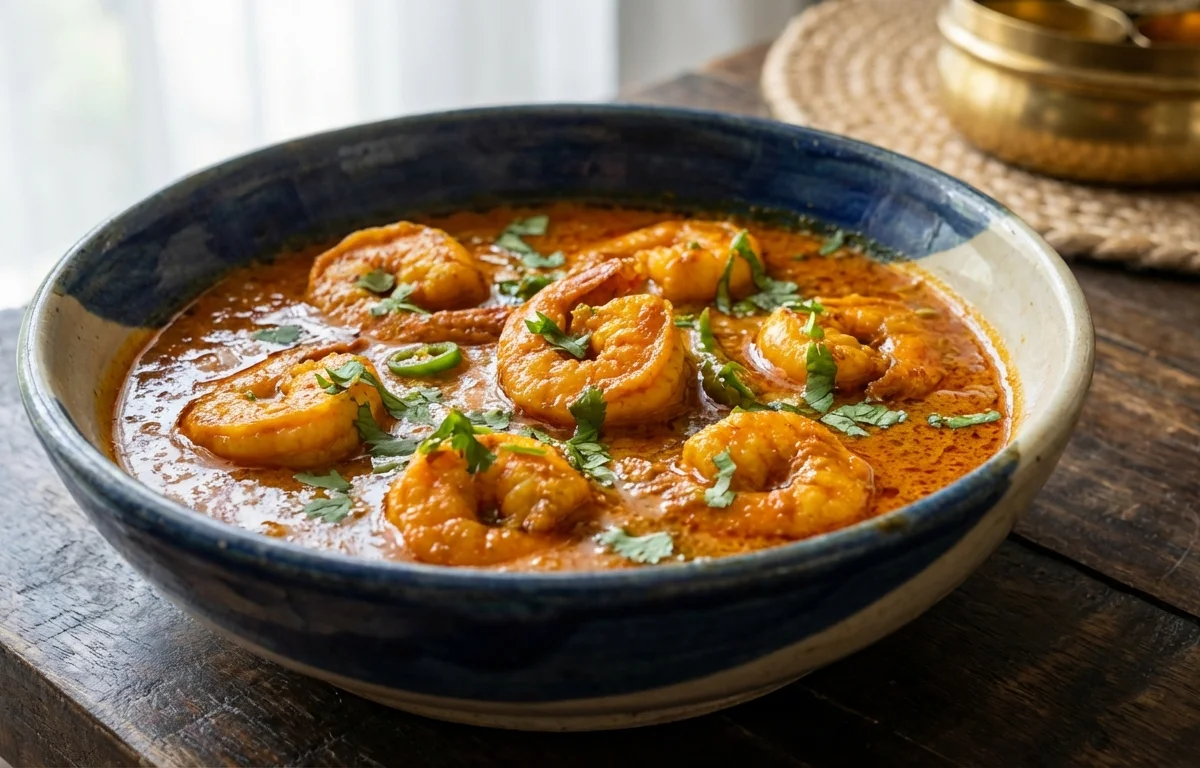
Misa Maas Anja
A light and tangy Assamese prawn curry where freshwater shrimp are simmered in a delicate gravy of tomatoes, ginger, and minimal spices. The sourness from lemon or thekera adds a refreshing zing, making it a perfect companion to steamed rice in a traditional meal.
For 4 servings
- prep · ~10 min
Marinate the prawns.
Toss cleaned prawns with turmeric powder and half the salt. Set aside for 10 minutes while you prep the vegetables.
- temper · ~5 min
Heat mustard oil and saute aromatics.
1.Heat mustard oil in a pan over medium heat until it smokes lightly.2.Add chopped onions and saute until translucent and soft (3-4 minutes).3.Add grated ginger and crushed garlic. Saute until the raw smell disappears (1 minute).TIPMustard oil must reach its smoking point to lose its raw pungency — this gives the curry its authentic Assamese flavour. - saute · ~5 min
Cook the tomato masala.
1.Add chopped tomatoes, red chili powder, and the remaining salt to the pan.2.Cook, stirring frequently, until tomatoes soften completely and oil begins to separate from the edges (4-5 minutes). - boil · ~10 min
Add water and potatoes.
1.Pour in water and add potato quarters along with slit green chilies.2.Bring to a boil, then reduce heat to a simmer.3.Cover and cook until potatoes are fork-tender (8-10 minutes). - simmer · ~4 min
Simmer the prawns.
1.Gently slide marinated prawns into the simmering gravy.2.Cook uncovered until prawns turn pink and curl slightly (3-4 minutes). Do not overcook.TIPPrawns cook very fast. Once they turn pink and opaque, they are done. Overcooking makes them rubbery. - mix
Finish with lemon juice and check seasoning.
Turn off the heat. Stir in fresh lemon juice and mix gently. Adjust salt if needed.
- garnish
Garnish with coriander and serve.
Transfer to a serving bowl. Sprinkle generously with chopped coriander leaves. Serve hot with steamed rice.
What to keep in mind.
7 tips from the recipe — small details that make a real difference to the final dish.
- 1Mustard oil must reach its smoking point to mellow its pungency—this step is non-negotiable for authentic flavor.
- 2Marinate the prawns with turmeric and salt for exactly 10 minutes; this removes excess moisture and prevents them from turning mushy.
- 3Quarter the potatoes evenly so they cook at the same rate as the gravy thickens.
- 4Cook the tomato masala until oil visibly separates from the edges—this ensures a rich, cohesive gravy.
- 5Slide prawns into the simmering broth gently and never boil them; a gentle simmer keeps them tender.
- 6Add lemon juice only after turning off the heat to preserve its fresh tang and prevent bitterness.
- 7This curry tastes even better the next day—the flavors deepen overnight in the fridge.
Adapt it for your goals.
Vegetarian
Replace prawns with cubed paneer or firm tofu. Add them in the last 2 minutes of simmering to avoid breaking. The mustard oil still provides the earthy backbone.
No Potato (Keto/Low Carb)No-Potato (Keto/Low-Carb)
Skip potato entirely and add a handful of chopped bottle gourd (lauki) or zucchini for bulk without the starch. The curry remains light and tangy.
Extra HerbyExtra-Herby
Stir in a generous handful of fresh mint leaves along with the coriander garnish for a bright, cooling note against the mustard oil heat.
Why this is on our healthy list.
Rich in Lean Protein
Prawns provide high-quality, low-fat protein essential for muscle repair and satiety.
Anti-Inflammatory Spices
Turmeric and ginger contain curcumin and gingerol, compounds known for their anti-inflammatory properties.
Good Source of Vitamin C
Tomatoes and fresh lemon juice contribute vitamin C, supporting immune function and iron absorption.
Low in Saturated Fat
Mustard oil, used moderately, is low in saturated fat and high in monounsaturated fats when used for cooking.
Frequently asked questions
Yes, but thaw them completely and pat very dry before marinating to avoid excess water in the curry.




-curry.webp)
.webp)