Moong Dal Attu
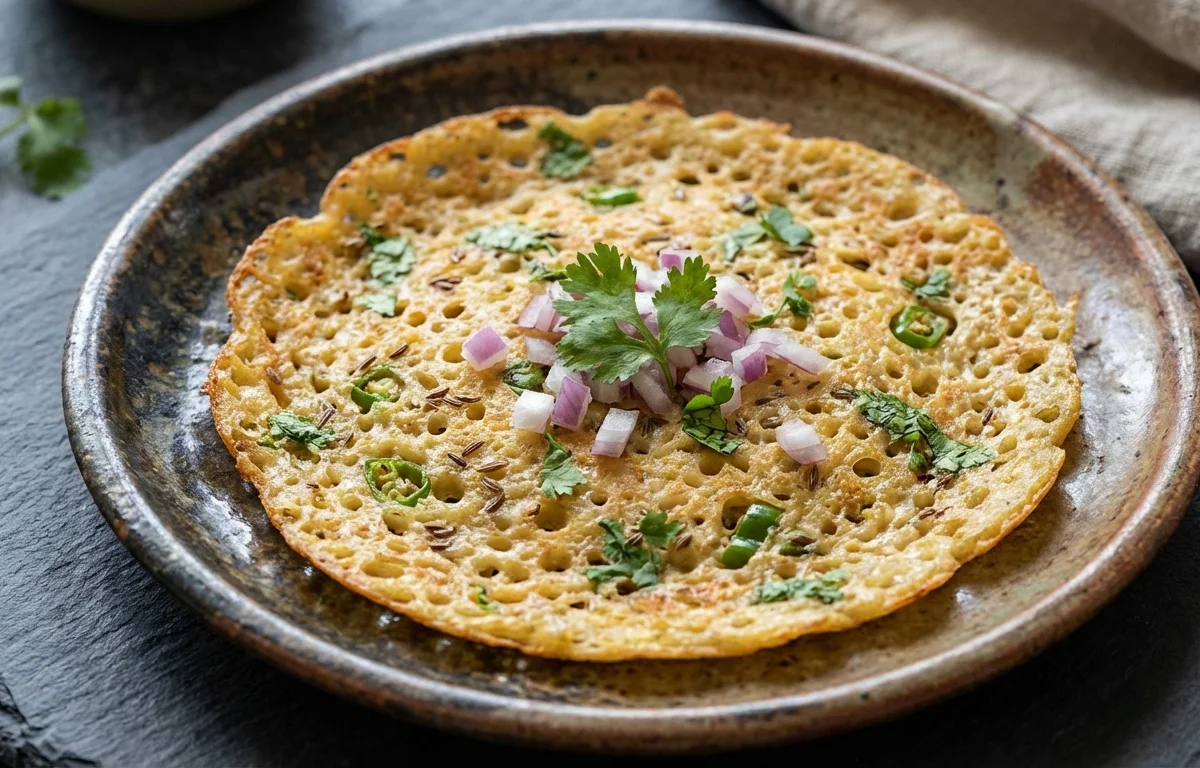
Crispy, golden crepes made from whole green moong dal — no rice, no fermentation needed. This Andhra-style protein-packed breakfast is light yet satisfying, with a delicate nutty flavor that pairs perfectly with spicy ginger chutney or coconut chutney.
For 8 servings
- prep · ~120 min
Soak the moong dal.
Wash the whole moong dal thoroughly in 2-3 changes of water. Soak in enough water to cover for 2 hours. Drain completely.
TIPSoaking softens the dal and helps grind into a smooth batter. - mix · ~5 min
Grind the batter.
1.Add drained moong dal to a blender with green chili, ginger, and cumin seeds.2.Add about ¾ cup water gradually and grind to a smooth, slightly coarse paste.3.Scrape down sides as needed. Batter should be pouring consistency like dosa batter.4.Transfer batter to a mixing bowl.TIPDon't over-grind to a super fine paste — a little texture gives crispy edges. - mix · ~5 min
Mix in remaining ingredients.
1.Add rice flour, salt, chopped onion, and chopped coriander leaves to the batter.2.Whisk well until everything is evenly combined. Let batter rest 5 minutes.TIPRice flour helps achieve crispiness since there's no rice in the base batter. - fry · ~4 min
Cook the pesarattu.
1.Heat a tawa or flat griddle over medium heat. Once hot, lightly grease with a few drops of oil.2.Pour a ladleful of batter in the center and spread in a circular motion into a thin, even crepe.3.Drizzle a teaspoon of oil around the edges and on top.4.Cook until the underside is golden and crisp (2-3 minutes), then flip and cook the other side for 1 minute.5.Press gently with a spatula for even browning.TIPSpread the batter quickly in one go — the batter sets fast on a hot tawa. - garnish
Serve immediately.
Fold the crispy pesarattu and serve hot with ginger chutney or coconut chutney.
TIPPesarattu is best eaten straight off the tawa — it softens as it cools.
What to keep in mind.
7 tips from the recipe — small details that make a real difference to the final dish.
- 1Soak the whole moong dal for exactly 2 hours — over-soaking makes the batter too watery and crepes hard to spread.
- 2Grind the batter to a slightly coarse paste; a little texture in the dal gives the pesarattu its signature crispy edges.
- 3Use a well-seasoned cast-iron or non-stick tawa and keep the heat medium-high; too low heat makes crepes soft and oily.
- 4Spread the batter quickly in a single circular motion — it sets fast on a hot tawa, so don't pause mid-spread.
- 5Drizzle oil only around the edges; the center will crisp from the heat alone and won't turn greasy.
- 6Serve pesarattu immediately — they lose crunch within minutes and become chewy as they cool.
- 7Leftover batter keeps refrigerated for up to 24 hours; stir in a splash of water if it thickens before using.
Adapt it for your goals.
High-protein (no rice flour)
Skip the rice flour to make this entirely dal-based and slightly higher in protein per crepe. The texture will be a bit softer, so spread the batter extra thin for crispness.
spicy onion pesarattuSpicy onion pesarattu
Fold in 1 finely chopped green chili extra and 2 tablespoons of grated carrot into the batter for a veggie-packed, mildly spicy version that adds color and crunch.
low oilLow-oil
Cook on a non-stick tawa using only a tiny spray of oil — or none at all — for a fat-free crepe that still gets golden if the tawa is hot enough.
jainJain
Omit the onion and add an extra tablespoon of chopped coriander and 2 tablespoons of grated bottle gourd (lauki) to maintain moisture and texture in the batter.
Why this is on our healthy list.
High in Plant-Based Protein
Whole green moong dal is one of the richest legume sources of protein, making this breakfast a satisfying, muscle-friendly start to the day.
Rich in Dietary Fiber
The skin of whole moong dal provides insoluble fiber that supports digestion and helps keep blood sugar stable after meals.
Low in Fat, Naturally
These crepes use only a minimal amount of oil for cooking and contain no added fats in the batter, keeping the overall fat content very low.
Packed with Folate and Iron
Green gram lentils are a good source of folate (important for cell growth) and iron, which supports healthy oxygen transport in the body.
Frequently asked questions
No — split yellow moong dal has less starch and no skin, so the batter will be too thin and the crepes will turn out soft and sticky instead of crispy.



.webp)