
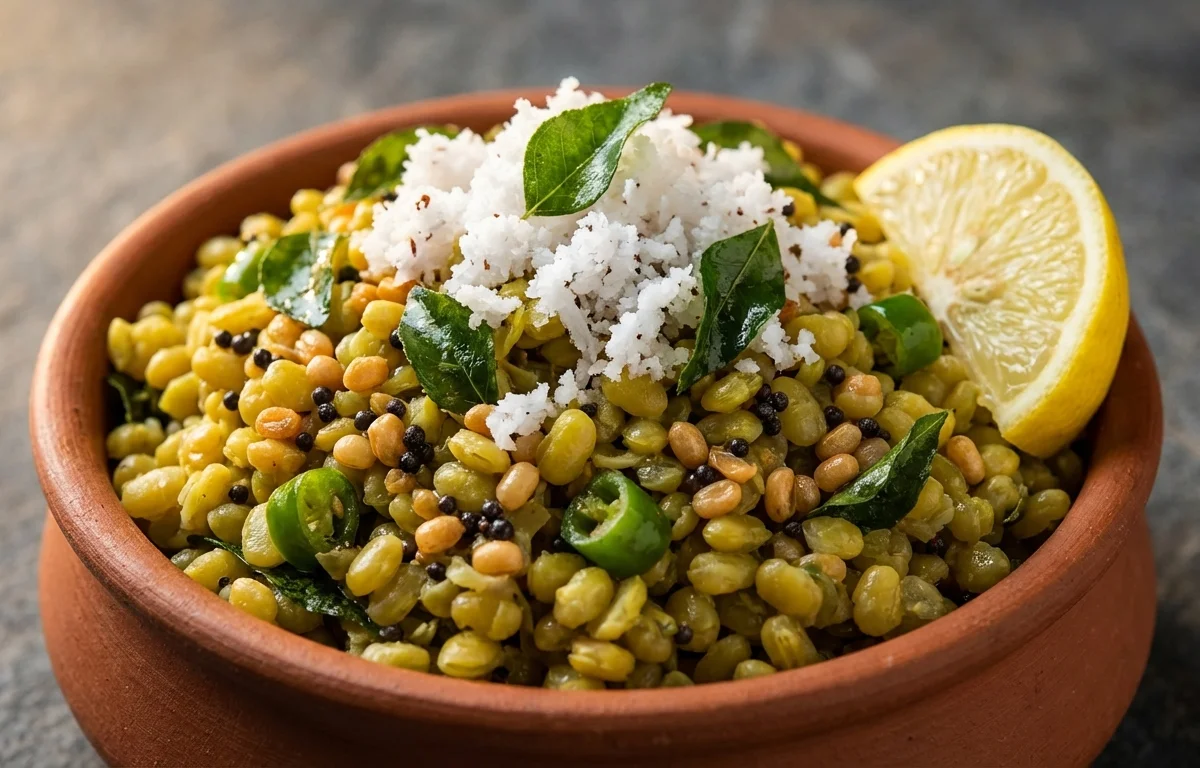
Paasi Paruppu Sundal
A wholesome and savory South Indian snack made with tender yellow moong dal, fresh coconut, and a fragrant tempering. This protein-rich dish is a Navaratri festival classic and a perfect light meal.
For 4 servings
Rinse the yellow moong dal thoroughly under running water. Soak it in ample fresh water for at least 30 minutes. After soaking, drain the water completely.
In a medium pot, add the soaked and drained dal, 2 cups of fresh water, and 1/2 tsp of salt. Bring to a boil over medium-high heat, then reduce the heat to a simmer. Cook for 10-12 minutes, or until the dal is tender but still holds its shape (al dente). Be careful not to overcook it into a mush. Once cooked, drain any excess water using a colander and set aside.
While the dal cooks, prepare the tempering. Heat the coconut oil in a wide pan or kadai over medium heat. Once the oil is hot, add the mustard seeds and allow them to splutter, which should take about 30 seconds.
Add the urad dal to the pan and sauté for about 1 minute until it turns a light golden brown. Immediately add the broken dried red chillies, asafoetida, curry leaves, and finely chopped green chillies. Sauté for another 30 seconds until the curry leaves are crisp and the mixture is fragrant.
Gently add the cooked and drained moong dal to the pan with the tempering. Add the remaining 1/4 tsp of salt (or to taste). Mix everything together carefully, ensuring you don't mash the dal.
Stir in the grated coconut and cook for 1-2 minutes, allowing the flavors to meld. Turn off the heat. If using, squeeze fresh lemon juice over the sundal just before serving and give it a final gentle mix. Serve warm or at room temperature.
What to keep in mind.
5 tips from the recipe — small details that make a real difference to the final dish.
- 1The key to perfect sundal is the texture of the dal. It must be cooked through but remain whole and separate. Check it frequently while it boils.
- 2For a faster cooking time, you can pressure cook the soaked dal with 1.5 cups of water for just 1 whistle. Release the pressure immediately to prevent overcooking.
- 3Using fresh, finely grated coconut will give the best flavor and texture, but good quality frozen coconut is a convenient alternative.
- 4Adjust the number of green and red chillies to suit your preferred spice level.
- 5Ensure the urad dal turns golden brown in the tempering for a nice crunch and nutty flavor, but don't let it burn.
Adapt it for your goals.
Add Tanginess
For a tangy twist, add 2-3 tablespoons of finely chopped raw mango (pacha manga) along with the coconut at the end. Cook for a minute until the mango softens slightly.
Add VegetablesAdd Vegetables
Incorporate finely grated carrots or chopped cucumber for added crunch, color, and nutrients. Add them along with the coconut.
Different LentilDifferent Lentil
This recipe can also be made with other lentils like chana dal (split chickpeas) or whole green moong. Adjust soaking and cooking times accordingly.
Add Spice PowderAdd Spice Powder
For a different flavor profile, you can add a pinch of turmeric powder while boiling the dal or 1/2 teaspoon of sambar powder to the tempering.
Why this is on our healthy list.
Rich in Plant-Based Protein
Yellow moong dal is an excellent source of plant-based protein, which is essential for muscle repair, building tissues, and keeping you feeling full and satisfied.
Promotes Digestive Health
The high dietary fiber content in moong dal aids in digestion, promotes regular bowel movements, and supports a healthy gut microbiome.
Good for Heart Health
This dish is low in saturated fat and cholesterol. The potassium and magnesium in moong dal help in maintaining healthy blood pressure levels, contributing to cardiovascular wellness.
Supports Stable Blood Sugar
With a low glycemic index, moong dal helps in the slow release of glucose into the bloodstream, preventing sharp spikes in blood sugar levels, making it a suitable choice for diabetics.
Frequently asked questions
One serving of Paasi Paruppu Sundal (about 0.75 cup or 125g) contains approximately 180-220 calories, depending on the amount of oil and coconut used.


