Paatot Diya
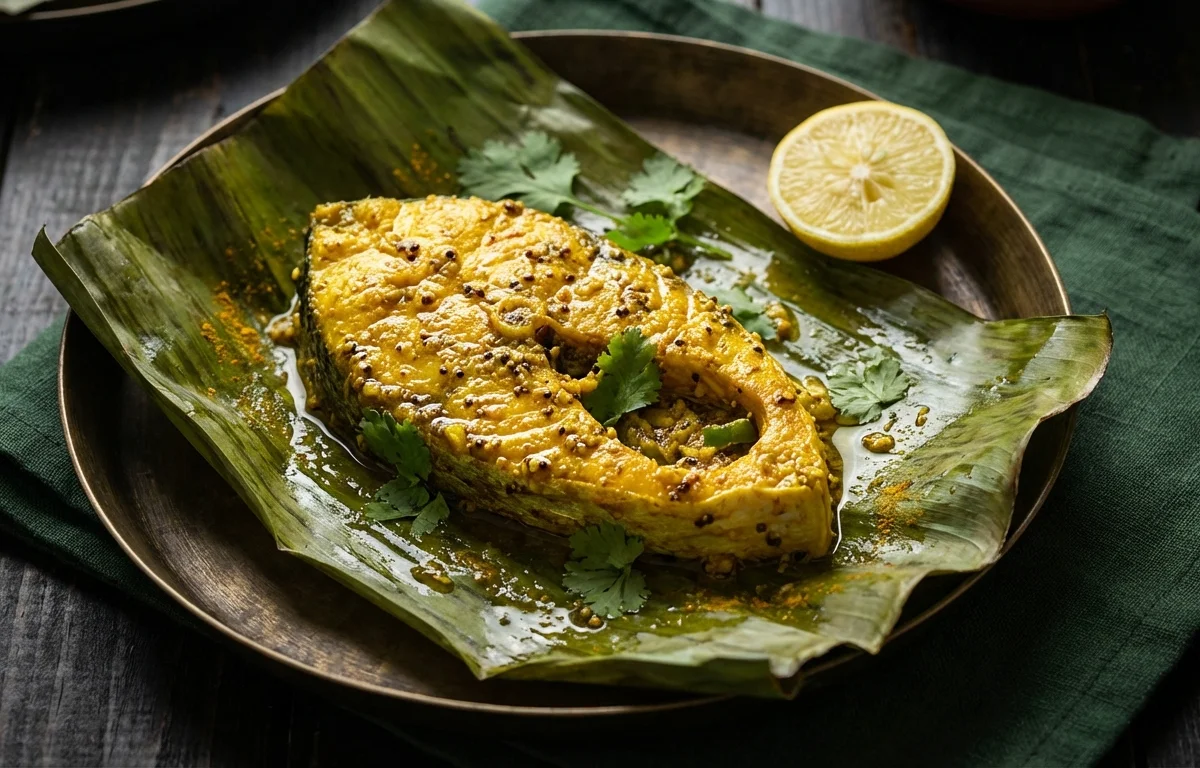
Delicate fish steaks marinated with mustard, green chilies, and fresh herbs, then wrapped tightly in banana leaves and gently steamed to perfection. A traditional Assamese dish that captures the subtle, earthy aroma of the leaf with every bite.
For 4 servings
- prep · ~15 min
Prepare the banana leaves and mustard paste.
1.Quickly pass each banana leaf over an open flame until it turns bright green and becomes pliable.2.Soak mustard seeds in 2 tbsp water for 15 minutes, then grind to a smooth paste with a mortar and pestle. - mix · ~2 min
Make the mustard marinade.
1.In a bowl, mix the ground mustard paste, minced garlic, 2 tbsp mustard oil, lemon juice, turmeric powder, and salt.2.Stir until you have a uniform, fragrant yellow paste.TIPEnsure the paste is not too runny — you want it to generously coat the fish. - prep · ~10 min
Coat the fish steaks.
1.Pat the fish steaks completely dry with a kitchen towel.2.Rub the mustard marinade all over each steak, ensuring it gets into the slits.3.Slip a slit green chili onto each piece of fish. Let them rest for 10 minutes.TIPDon't marinate too long; the lemon juice will start to cook the delicate fish. - assemble · ~5 min
Wrap the fish in banana leaves.
1.Place one marinated fish steak in the center of a banana leaf piece.2.Drizzle a little extra mustard oil on top.3.Fold the leaf over the fish to create a tight, secure parcel. Tie it with a piece of kitchen twine.TIPWrap tightly to trap all the steam and aroma inside. - steam · ~20 min
Steam the parcels.
1.Bring 2 cups of water to a rolling boil in a steamer or a large pot fitted with a trivet.2.Arrange the banana leaf parcels on the steaming rack.3.Cover and steam over medium heat for 15 to 20 minutes.TIPThe parcels should puff up slightly when cooked. Do not overcook or the fish will turn rubbery. - serve · ~1 min
Serve the steamed fish.
1.Carefully transfer a parcel to each plate.2.Serve immediately, letting each person unwrap their own banana leaf to enjoy the earthy aroma.TIPServe with plain steamed rice to soak up the juices.
What to keep in mind.
6 tips from the recipe — small details that make a real difference to the final dish.
- 1Pat the fish steaks completely dry before applying the marinade to ensure the paste adheres properly.
- 2Wilt the banana leaves quickly over an open flame until they turn bright green and become pliable; this prevents tearing during wrapping.
- 3Do not marinate the fish for longer than 10 minutes—the lemon juice and mustard can start curing the delicate flesh.
- 4Tie the parcels tightly with kitchen twine so no steam escapes; puffed parcels indicate proper sealing.
- 5Check doneness by gently piercing the thickest part of the steak with a knife—it should flake easily but remain moist.
- 6Serve the parcels immediately at the table and let each diner unwrap their own to experience the fragrant burst of steamed banana leaf.
Adapt it for your goals.
Low-oil
Omit the final drizzle of mustard oil and reduce the oil in the marinade to 1 tablespoon. Ideal for anyone watching their fat intake while still enjoying the authentic mustard kick.
high proteinHigh-protein
Swap the white fish for an equal weight of boneless chicken thighs, adjusting the steaming time to 20–25 minutes. A great alternative for those who prefer poultry or want to increase their protein variety.
jainJain
Replace fish with thick slices of paneer and steam for only 8–10 minutes. Perfect for Jain diets that avoid root vegetables and non-vegetarian ingredients, while retaining the mustard-lemon character.
veganVegan
Substitute firm tofu or king oyster mushroom steaks for the fish and use a vegan-friendly banana leaf (ensure no ghee or animal fats). Makes a hearty plant-based version of this Assamese classic.
Why this is on our healthy list.
Rich in Lean Protein
White fish like rohu or catla provides high-quality, low-fat protein that supports muscle maintenance and repair.
Anti-Inflammatory Spices
Mustard seeds and turmeric contain natural compounds (curcumin, sinigrin) known for their anti-inflammatory properties when consumed regularly.
Heart-Healthy Fats
Mustard oil is rich in monounsaturated fatty acids and omega‑3s, which may contribute to cardiovascular wellness.
Vitamin Boost from Herbs
Fresh green chilies and lemon juice add vitamin C, while garlic provides allicin, supporting immune function.
Low-Carb & Gluten-Free
This dish contains no grains or gluten, making it naturally suitable for low-carb or gluten-free eating patterns.
Frequently asked questions
Yes, but thaw the steaks completely in the refrigerator overnight and pat them very dry before marinating to avoid excess water diluting the paste.