
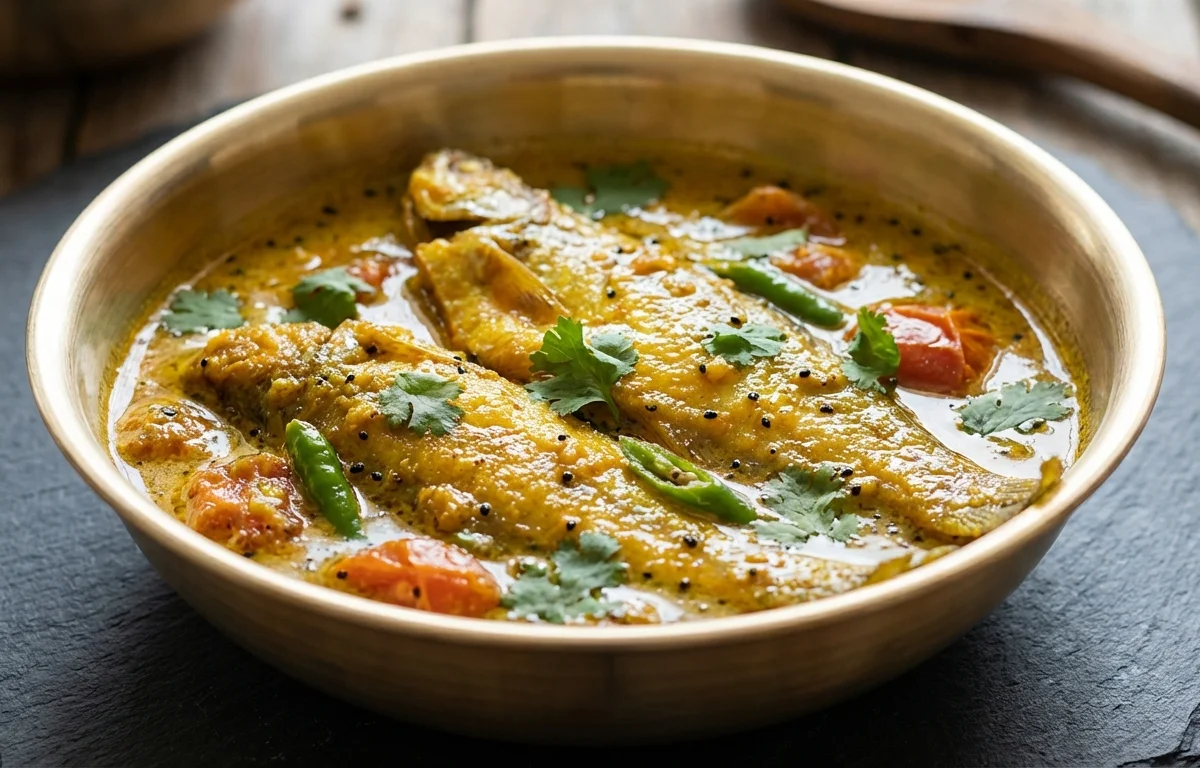
Pabda Maacher Jhal
A classic Bengali fish curry where tender pabda (Indian butterfish) steaks are gently simmered in a pungent mustard-poppy seed gravy. The sharp heat of green chilies and raw mustard oil cuts through the richness, creating a thin, soupy jhal that's spooned generously over hot steamed rice.
For 4 servings
- prep · ~10 min
Marinate the fish.
1.Wash and pat dry the pabda fish steaks with a kitchen towel.2.Rub each piece with a pinch of salt and a pinch of turmeric powder.3.Set aside to marinate for 10 minutes while you prepare the mustard paste.TIPPat the fish thoroughly dry to prevent oil spluttering during frying. - prep · ~5 min
Make the mustard-poppy seed paste.
1.Drain the soaked yellow mustard seeds, black mustard seeds, and poppy seeds.2.Transfer to a mixer grinder and add 2 slit green chilies and 3 tablespoons of warm water.3.Grind to a smooth, thick paste. Scrape down the sides and add 1 more tablespoon of water if needed.4.Set the paste aside.TIPAlways use warm water when grinding mustard — cold water makes the paste bitter. - fry · ~5 min
Shallow fry the fish.
1.Heat 2 tablespoons mustard oil in a kadai or wide pan over medium heat until it reaches smoking point.2.Lower the heat and gently slide in the marinated fish steaks.3.Fry for 1-2 minutes per side until lightly golden, not fully cooked. Remove and set aside.TIPBring mustard oil to smoking point first, then cool slightly before frying. This removes the raw pungency. - temper · ~1 min
Temper the spices.
1.In the same pan with the remaining oil, add nigella seeds and let them sizzle for 10 seconds.2.Add 2 slit green chilies and sauté for 20 seconds until fragrant. - saute · ~4 min
Cook the mustard paste.
1.Lower the flame completely and add the mustard-poppy paste to the pan.2.Add turmeric powder and red chili powder. Stir continuously.3.Sauté for 3-4 minutes until the raw smell disappears and the paste releases oil from the sides.TIPKeep the heat low when cooking mustard paste — high heat turns it bitter. - simmer · ~10 min
Build the gravy and cook the fish.
1.Pour in 1.5 cups warm water and stir well. Add salt to taste.2.Bring the gravy to a gentle boil over medium heat.3.Gently slide the fried fish steaks into the simmering gravy.4.Cook uncovered for 6-8 minutes on medium-low heat, swirling the pan occasionally. Do not stir with a spoon, as pabda flesh is delicate.5.Taste and adjust salt.TIPNever stir the curry vigorously once the fish is in. Swirl the pan instead — pabda breaks easily. - garnish · ~5 min
Finish with raw mustard oil and green chilies.
1.Turn off the heat. Drizzle the remaining 1 tablespoon raw mustard oil over the top.2.Garnish with 2 slit green chilies and chopped coriander leaves.3.Let it rest for 5 minutes before serving so the flavors meld.TIPThe final drizzle of raw mustard oil is non-negotiable — it gives pabda jhal its signature sharp pungency. - serve
Serve hot with steamed rice.
What to keep in mind.
7 tips from the recipe — small details that make a real difference to the final dish.
- 1Pat the fish steaks completely dry before marinating to prevent spluttering during frying.
- 2Soak mustard seeds in warm water for exactly 30 minutes to mellow their bitterness and help them grind smoothly.
- 3Always use warm water when grinding the mustard-poppy paste — cold water activates enzymes that make it bitter.
- 4Bring mustard oil to smoking point, then let it cool slightly before adding fish — this tames its raw pungency.
- 5Keep the heat low while sautéing the mustard paste; high heat will make it turn bitter and grainy.
- 6Once the fish is added, never stir with a spoon — gently swirl the pan to avoid breaking the tender pabda.
- 7For best flavor, let the curry rest 5 minutes off heat after the final raw oil drizzle so the pungency melds.
Adapt it for your goals.
Low-oil version
Skip the shallow-fry step: marinate the fish and gently poach it directly in the simmering gravy for 8-10 minutes. Use only 1 tbsp mustard oil for tempering and omit the final raw oil drizzle. The curry stays lighter while retaining the mustard-poppy flavor.
high protein versionHigh-protein version
Replace pabda with firm, boneless fish like tilapia or basa, cut into larger steaks. The cooking time remains the same — just handle the fillets gently. Perfect for those wanting more protein per serving and easier deboning.
jain adaptationJain adaptation
Omit garlic and onion (already absent here) and replace fish with chunks of paneer or boiled potatoes. Use the same mustard-poppy paste and tempering. A satisfying plant-based option that still delivers the sharp, pungent jhal experience.
vegan versionVegan version
Substitute pabda with firm tofu or king oyster mushrooms cut into thick slices. Marinate and shallow-fry as you would the fish. The mustard-poppy gravy provides robust flavor that complements the umami of mushrooms or tofu beautifully.
Why this is on our healthy list.
Rich in Omega-3 Fatty Acids
Pabda (Indian butterfish) is a good source of heart-healthy omega-3s, which support brain function and reduce inflammation.
Mustard Seeds Support Digestion
Mustard seeds contain compounds that stimulate digestive enzymes and may help reduce bloating and indigestion.
Turmeric Provides Curcumin
Turmeric in the marinade and gravy adds curcumin, a natural anti-inflammatory compound linked to joint and immune health.
Poppy Seeds Offer Minerals
Poppy seeds contribute small amounts of calcium, phosphorus, and zinc, supporting bone health and energy metabolism.
Frequently asked questions
Yes, small freshwater fish like rui (rohu), katla, or even tilapia work well. Choose firm-fleshed steaks and adjust cooking time — pabda is more delicate, so handle other fish similarly.


-curry.webp)
.webp)