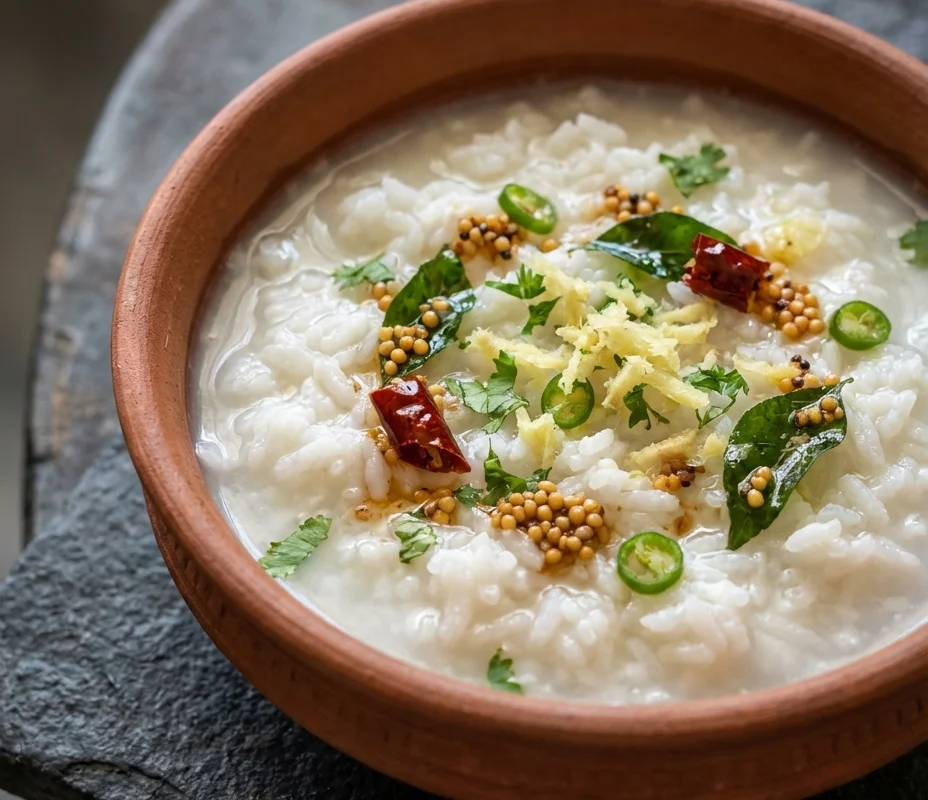
Pakhala Bhata
A cooling Odia rice dish where cooked rice is soaked in water with a little yogurt and left to turn lightly tangy. It is simple, soothing, and especially comforting in hot weather when served chilled or at room temperature.
For 4 servings
- boil · ~20 min
Cook the rice until soft.
1.Rinse the rice well until the water runs mostly clear.2.Add the rice and 3 cups water to a pot and bring to a boil.3.Lower the heat, cover, and cook until the rice is soft and the water is absorbed, about 15-18 minutes.TIPA slightly softer rice works best here because it relaxes well into the soaking liquid. - rest · ~30 min
Cool the cooked rice.
Spread the rice lightly in the pot or a wide bowl and let it cool until just warm or fully at room temperature. Do not mix yogurt into very hot rice.
- mix · ~2 min
Mix the rice with water, yogurt, and salt.
Transfer the cooled rice to a deep bowl or clay pot. Add the cooled soaking water, yogurt, and salt, then mix gently so the grains loosen into the liquid.
- rest · ~480 min
Let the pakhala turn lightly tangy.
Cover and leave it at room temperature for 8 hours or overnight so the rice develops its mild sour taste.
TIPIn very hot weather, move it to the fridge after a few hours once the light tang develops. - serve · ~1 min
Stir and serve the pakhala.
Give it a good stir before serving so the rice and liquid are evenly mixed. Serve chilled or at room temperature.
What to keep in mind.
6 tips from the recipe — small details that make a real difference to the final dish.
- 1Cook the rice a touch softer than everyday table rice so it loosens properly into the soaking liquid.
- 2Let the rice cool to just warm before adding yogurt, or the heat can dull its fresh tang and affect fermentation.
- 3Use a deep bowl or clay pot with extra headroom, since the rice swells and needs space to stir easily.
- 4If your kitchen is very hot, check the pakhala after 4-6 hours and refrigerate once it reaches a mild sourness you like.
- 5Stir well before serving because the rice settles at the bottom and the top liquid can taste less seasoned.
- 6For the best texture the next day, add a splash of cold water before serving if the rice has absorbed too much liquid.
Adapt it for your goals.
Dahi-forward
Increase the yogurt slightly for a creamier, more pronounced tang if you prefer a fuller curd flavor.
overnight fridgeOvernight-fridge
After a short room-temperature rest, refrigerate overnight for a gentler sourness and safer holding in very warm weather.
veganVegan
Use a plain unsweetened plant-based yogurt to keep the slight tang while avoiding dairy.
Why this is on our healthy list.
Cooling and Hydrating
The rice is served with plenty of water, making this dish especially soothing and refreshing in hot weather.
Gentle on the Stomach
Its soft rice, mild seasoning, and simple ingredients make it a comforting option when you want something light and easy to eat.
Contains Fermented Dairy
The yogurt adds cultured dairy and contributes the pleasant sour character that defines pakhala.
Frequently asked questions
It is better to cool the rice until just warm or room temperature first, so the yogurt mixes in smoothly and the flavor stays clean.