Poornam Boorelu
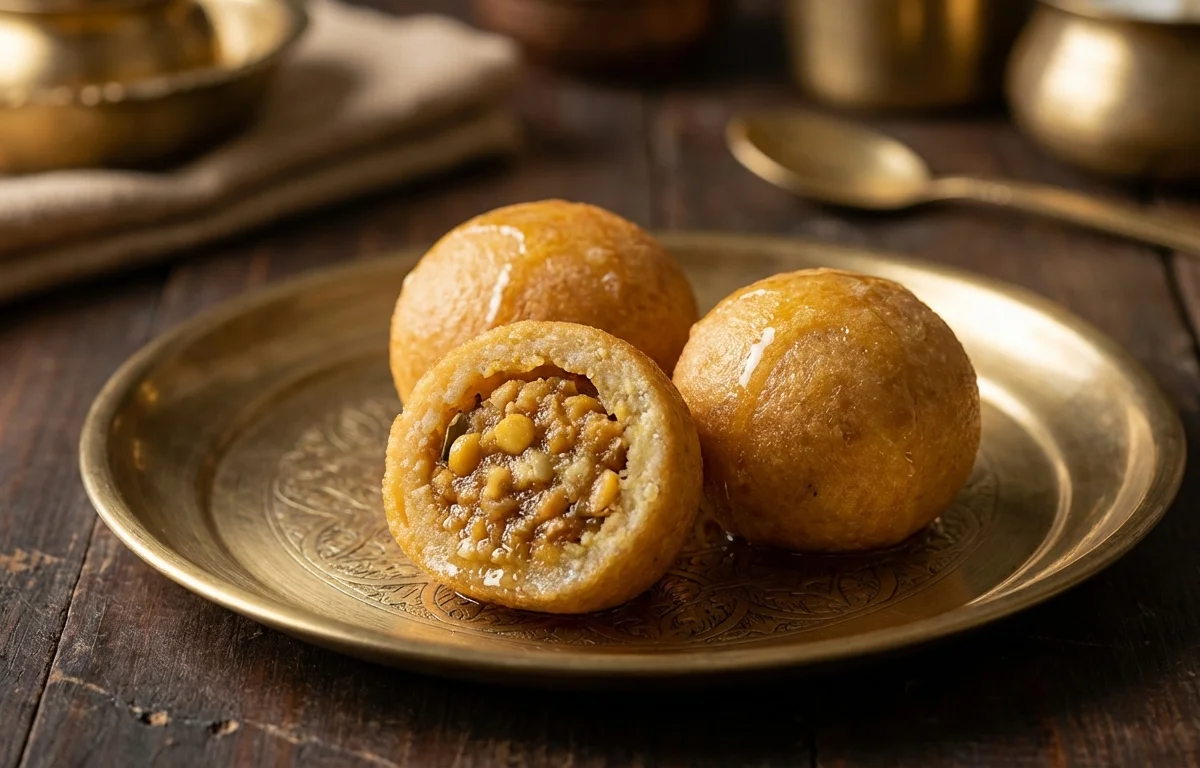
Crispy golden dumplings with a soft, fluffy interior and a sweet, cardamom-laced chana dal filling. This festive Andhra delicacy is made by stuffing fermented urad dal-rice batter with jaggery-sweetened lentil paste, then deep-frying until perfectly crisp. A beloved treat during Sankranti, Diwali, and family celebrations.
For 4 servings
- prep
Soak urad dal and rice for batter.
1.Wash 1 cup urad dal and 0.5 cup rice together in several changes of water until water runs clear.2.Soak them together in enough fresh water to cover by 2 inches for 5-6 hours.TIPSoaking adequately ensures a smooth, fluffy batter that ferments well. - prep
Grind the batter and ferment.
1.Drain the soaked dal and rice, reserving the water.2.Transfer to a mixer grinder and add 1.5 cups reserved water gradually.3.Grind until you get a smooth, thick batter with a slightly coarse texture — not too fine and not too runny.4.Pour into a large bowl, add 1 pinch salt, and whisk vigorously for 2 minutes to incorporate air.5.Cover and set aside in a warm place for 8-10 hours or overnight until fermented and slightly risen.TIPThe batter should be thick enough to coat the back of a spoon. If it's too thin, it won’t stick to the filling. - boil · ~20 min
Cook the chana dal for filling.
1.Wash 1 cup chana dal thoroughly.2.Add it to a pan with 2 cups water and bring to a boil.3.Reduce heat to medium and cook until the dal is soft but still holds its shape — about 15-20 minutes. The grains should mash easily when pressed but not be mushy.4.Turn off heat and drain completely through a colander. Spread on a plate and let it cool and dry for 10 minutes.TIPThe dal must be completely dry before grinding, otherwise the filling will be too wet and the boorelu will burst while frying. - mix · ~7 min
Make the sweet poornam filling.
1.Transfer the cooled, dry chana dal to a mixer grinder.2.Add 1 cup grated jaggery and 4 cardamom seeds (reserve the sugar added to grind them).3.Grind to a coarse, thick paste without adding any water. Scrape down the sides occasionally.4.If using, mix in 3 tbsp fresh grated coconut by hand.5.The final paste should be thick enough to roll into firm, crack-free balls. If too wet, cook in a non-stick pan on low heat for 5-7 minutes to dry it out.TIPNever add water while grinding the filling — the jaggery will release enough moisture. A dry filling is the secret to perfect boorelu. - prep
Shape the poornam balls.
1.Divide the poornam mixture into 8 equal portions.2.Roll each portion between your palms into a smooth, crack-free ball about the size of a small lime.3.Place them on a lightly greased plate without overlapping.TIPRoll the balls tightly — any cracks will widen during frying and the filling will leak into the oil. - fry · ~5 min
Heat oil for deep frying.
1.Pour 3 cups oil into a deep kadai or pan.2.Heat on medium flame until the oil reaches 350°F (175°C) — a drop of batter should rise immediately without browning.TIPMaintaining steady medium heat is crucial. Too hot and the outside browns before the batter cooks through; too cool and the boorelu soak up oil. - assemble · ~7 min
Coat and fry the boorelu.
1.Stir the fermented batter well. It should be thick and airy.2.One by one, drop a poornam ball into the batter and gently turn it with a spoon to coat it on all sides with a thick, even layer.3.Carefully lift the coated ball with the spoon and gently slide it into the hot oil.4.Fry 3-4 boorelu at a time, without overcrowding.5.Fry for 5-7 minutes, turning occasionally, until deep golden brown and crisp all over.TIPDon’t fry more than 4 at once — overcrowding drops the oil temperature and makes the boorelu greasy. - other
Drain and repeat.
1.Use a slotted spoon to lift out the fried boorelu.2.Drain on paper towels for 1 minute to absorb excess oil.3.Bring oil back to temperature before frying the next batch.4.Repeat with remaining poornam balls. - serve
Serve warm or at room temperature.
Enjoy fresh poornam boorelu as-is, or drizzle with a little warmed ghee for extra richness. They stay crisp for up to 4-5 hours at room temperature.
TIPServe within a few hours for the best contrast between the crispy shell and the soft, sweet filling.
What to keep in mind.
7 tips from the recipe — small details that make a real difference to the final dish.
- 1Soak the urad dal and rice for at least 5-6 hours to ensure a smooth, fluffy batter that ferments well.
- 2Grind the batter thick enough to coat the back of a spoon — a runny batter won't stick to the filling.
- 3After cooking the chana dal, drain and spread it on a plate to cool and dry completely before grinding.
- 4Never add water while grinding the filling — the jaggery releases enough moisture for a thick paste.
- 5Roll the poornam balls tightly with no cracks to prevent leaking during frying.
- 6Maintain steady medium heat (350°F/175°C) — too hot burns the outside, too cool makes boorelu greasy.
- 7Drain fried boorelu on paper towels for a minute to remove excess oil before serving.
Adapt it for your goals.
Vegan
Skip the optional grated coconut or use it as is — this recipe is already naturally vegan as it contains no dairy or animal products.
Gluten FreeGluten-Free
Naturally gluten-free since it uses urad dal, rice, and chana dal. Perfect for those avoiding wheat.
Low OilLow-Oil
For a lighter version, pan-fry the batter-coated balls in a shallow layer of oil, turning to brown all sides, though they won't be as crisp.
Nut FreeNut-Free
Omit the optional coconut to keep this completely nut-free and allergy-friendly.
Why this is on our healthy list.
High in Plant Protein
Urad dal and chana dal are both excellent sources of plant-based protein, supporting muscle repair and satiety.
Rich in Fiber
The combination of lentils and rice provides dietary fiber that aids digestion and promotes gut health.
Natural Sweetness
Jaggery is a less-refined sweetener that contains trace minerals like iron and magnesium compared to white sugar.
Good Source of B Vitamins
Urad dal is rich in folate and other B vitamins, important for energy metabolism and red blood cell formation.
Frequently asked questions
This usually happens if the filling balls have cracks or if the batter is too thin — roll the balls tightly and ensure the batter is thick enough to coat without dripping.



.webp)