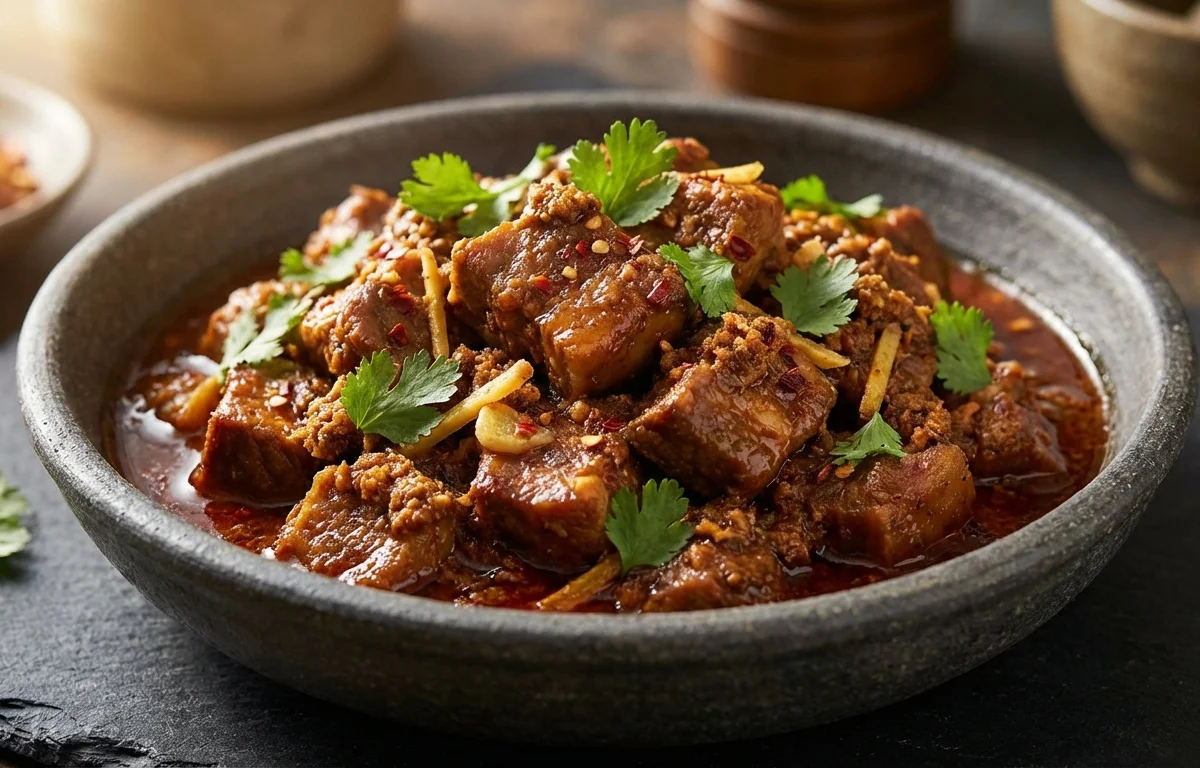
Pork with Axone Fry
A bold, earthy stir-fry from Nagaland featuring tender pork belly cooked with axone (fermented soybean paste). The axone lends a deep umami punch, balanced by the heat of dried red chilies and the freshness of local herbs, making this a rustic, intensely flavorful dish.
For 4 servings
- prep
Clean and cut the pork.
Wash the pork belly and cut it into uniform 1-inch chunks with fat intact. Pat them dry with a kitchen towel.
- boil · ~35 min
Boil the pork with axone.
1.Place the pork chunks in a wok with 1 cup of water and bring to a boil over high heat.2.Once boiling, add the axone paste, stirring to dissolve it into the water.3.Lower the heat, cover, and simmer until the pork is tender and water completely evaporates (30-35 min).TIPKeep the lid on for tender meat; the pork will render its own fat as the water dries up. - fry · ~9 min
Fry the pork in its own fat.
1.Once the water has evaporated, stir the pork and allow it to fry in the rendered fat for 5-7 minutes until lightly browned.2.Add the smashed garlic and ginger juliennes. Fry on medium-high heat for 2 minutes until aromatic.TIPDon't crowd the pan; let the pork fat crisp up the edges. - fry · ~2 min
Add the chilies.
1.Add the broken dried red chilies and fry for 1-2 minutes until they darken slightly and release their heat.2.Stir aggressively to prevent the axone from sticking to the bottom of the wok.TIPDried chilies burn quickly; keep them moving constantly. - mix · ~1 min
Taste, adjust seasoning, and serve.
1.Taste the dish carefully; axone is naturally salty, so add a pinch of salt only if absolutely needed.2.Fry for a final 1 minute to incorporate the salt.3.Remove from heat and transfer to a serving bowl.TIPBe conservative with salt — axone carries a lot of natural umami and salinity. - serve
Serve hot with steamed rice.
This dish pairs perfectly with plain steamed white rice to soak up the rich, rendered pork fat and axone flavor.
What to keep in mind.
6 tips from the recipe — small details that make a real difference to the final dish.
- 1Use pork belly with a good ratio of fat to meat — the fat renders during cooking and enriches the dish.
- 2Boil the pork until the water has completely evaporated; this ensures the fat renders and the meat becomes tender.
- 3Do not add salt before tasting the final dish — axone is salty and may not need extra salt.
- 4Stir aggressively when frying the axone paste to prevent it from sticking and burning in the wok.
- 5Dried red chilies burn quickly; fry them only for 1-2 minutes and keep them moving to avoid bitterness.
- 6For best flavor, serve immediately with plain steamed rice — the dish does not reheat as well due to the axone's strong aroma.
Adapt it for your goals.
Higher protein
Replace half the pork belly with leaner cuts like pork shoulder or loin. You may need to add a tablespoon of oil to compensate for the reduced fat rendering.
milder heatMilder heat
Reduce the dried red chilies to 2-3 pieces and remove the seeds. Add a chopped green bell pepper for a gentle, sweet contrast.
herbaceousHerbaceous
Stir in a handful of chopped fresh cilantro or Naga perilla leaves (similar to shiso) just before serving for a bright, herbal note.
boneless swapBoneless swap
Use pork spare ribs or rib tips (with bone) for a more rustic, slow-cooked texture. Increase boiling time to 45-50 minutes until the meat pulls away from the bone.
Why this is on our healthy list.
Rich in Fermented Probiotics
Axone (fermented soybean paste) introduces beneficial bacteria and enzymes that may support digestive health, provided the paste is naturally fermented.
High-Quality Animal Protein
Pork belly supplies complete protein with all essential amino acids, contributing to muscle repair and satiety.
Source of B Vitamins
Pork is naturally rich in B vitamins, particularly B12 and B6, which support energy metabolism and red blood cell formation.
Garlic and Ginger for Immunity
Fresh garlic and ginger used in this dish contain compounds with anti-inflammatory and antioxidant properties.
Frequently asked questions
Yes, pork shoulder or boneless ribs also work well. But pork belly provides the best amount of fat required for the authentic, rich, and oily texture.