Posola Khar
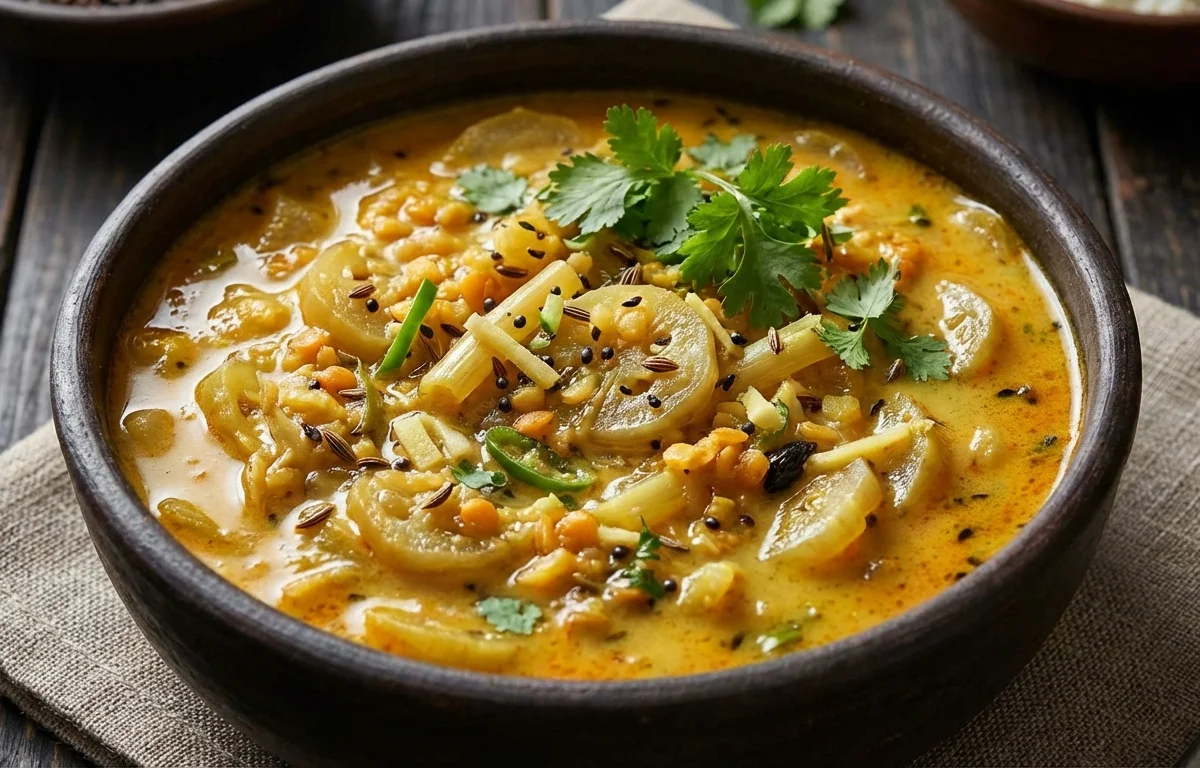
A gentle Assamese khar made with tender banana stem and the unmistakable alkaline touch of traditional khar water. Lightly spiced and delicately savory, it is usually served with rice as a soothing part of a home-style meal.
For 4 servings
- prep · ~10 min
Prepare the banana stem.
1.Peel away the tough outer layers and fibers from the banana stem.2.Chop the tender inner core finely.3.Rinse well to remove any loose fibers. - saute · ~2 min
Heat the oil and fry the aromatics.
1.Heat mustard oil in a pan over medium heat.2.Add bay leaf and slit green chili.3.Cook for 30 seconds until fragrant.TIPDo not let the mustard oil smoke too much; a gentle heat keeps the khar delicate. - boil · ~12 min
Cook the banana stem.
Add the chopped banana stem and stir for 1 minute. Pour in water, add salt, cover, and cook until the stem softens but still holds its shape.
- simmer · ~6 min
Add the khar water.
Pour in the khar water and mix gently. Simmer uncovered for 5 to 6 minutes until the liquid reduces slightly and the dish smells mellow and savory.
TIPAdd khar only after the banana stem is mostly cooked so the texture stays tender. - serve
Serve hot with plain rice.
What to keep in mind.
6 tips from the recipe — small details that make a real difference to the final dish.
- 1Keep a bowl nearby while chopping and pull away any stringy fibers as you go, so the finished khar stays silky rather than fibrous.
- 2Finely chop the banana stem evenly; larger pieces can stay tough while smaller bits turn mushy.
- 3Cook the mustard oil just until its raw sharpness softens, not until it heavily smokes, or the dish loses its gentle character.
- 4Add khar water only after the banana stem is mostly tender; adding it too early can keep the stem slightly hard.
- 5Simmer uncovered at the end so the liquid reduces lightly and the alkaline aroma mellows into the vegetable.
- 6This dish tastes best fresh and hot with plain rice, but leftovers can be refrigerated for a day and reheated gently without boiling hard.
Adapt it for your goals.
Milder
Use one slit green chili or remove it before serving for a gentler version that keeps the khar flavor front and center.
more brothyMore-brothy
Add a little extra water and reduce less if you prefer a lighter, soupier khar to mix freely into hot rice.
fiber richFiber-rich
Chop the banana stem slightly coarser for a more rustic bite and a heartier texture in the final dish.
Why this is on our healthy list.
Vegetable-forward and light
This khar is centered on banana stem with very little oil, making it a gentle, home-style dish that feels light with rice.
Naturally high in plant fiber
Banana stem is valued for its fibrous texture, which helps make the dish satisfying despite its simple ingredient list.
Minimal spice load
With only bay leaf, green chili, mustard oil, and khar water, the seasoning stays restrained and easy on the palate.
Frequently asked questions
It should turn tender and lose its raw crunch, but the pieces should still hold their shape and not break down into mush.