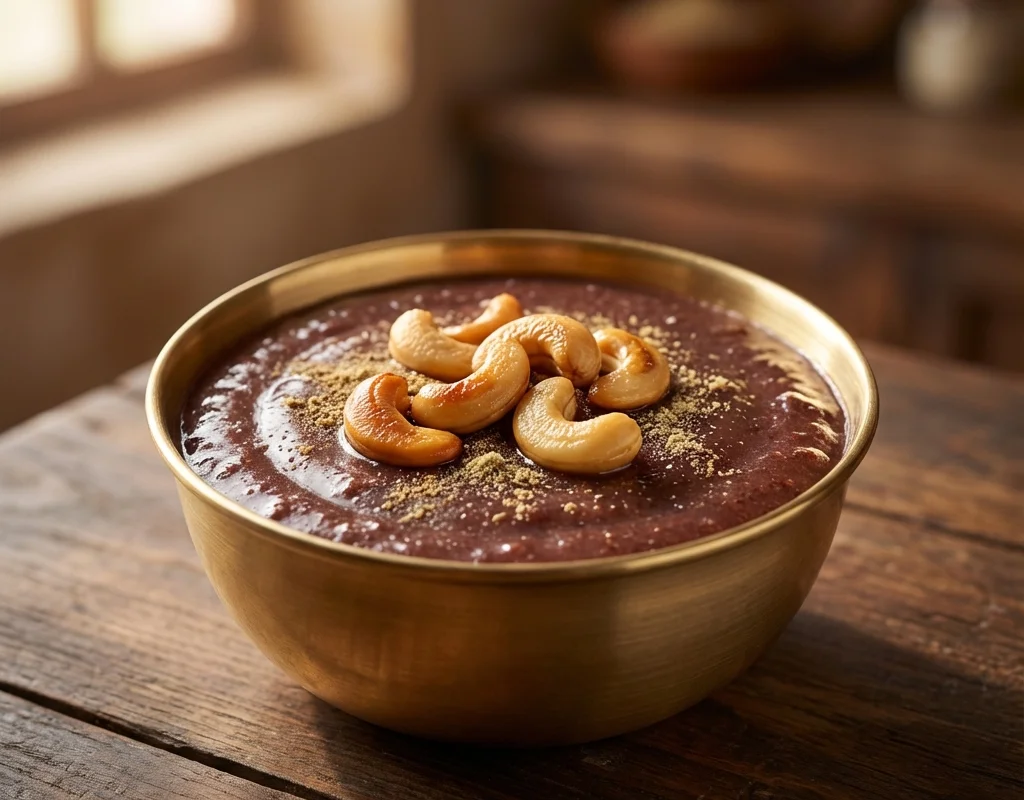
Ragi Manni
A soft, lightly sweet South Indian finger millet pudding made with ragi flour, jaggery, and coconut. It cooks up smooth and comforting, with a gentle earthy flavor that makes it a lovely breakfast or light sweet dish.
For 4 servings
- mix · ~3 min
Mix the ragi flour into a smooth slurry.
1.Add ragi flour to a bowl.2.Pour in 1 cup water little by little.3.Whisk until smooth and free of lumps.TIPA smooth slurry helps the manni cook evenly without turning grainy. - boil · ~5 min
Melt the jaggery in water.
1.Add jaggery and the remaining 2 cups water to a pan.2.Heat over medium flame until the jaggery dissolves.3.Stir in the pinch of salt. - mix
Add the slurry to the pan.
Lower the heat and pour in the ragi slurry in a thin stream, stirring continuously so no lumps form.
- simmer · ~10 min
Cook until thick and glossy.
1.Keep stirring on low heat as the mixture thickens.2.Add grated coconut and cardamom powder.3.Cook until the manni turns smooth, shiny, and starts leaving the sides of the pan.TIPUse low heat once the slurry goes in, or the bottom can catch quickly. - garnish
Finish with ghee.
Stir in the ghee and mix well for a softer texture and better flavor.
- serve
Serve the ragi manni warm.
Spoon into small katoris and serve warm as a light breakfast, snack, or simple sweet.
What to keep in mind.
8 tips from the recipe — small details that make a real difference to the final dish.
- 1Whisk the ragi with water before it goes near the stove; even tiny dry pockets turn into stubborn lumps later.
- 2If your jaggery has grit, strain the melted jaggery water before adding the ragi slurry for a smoother manni.
- 3Pour the slurry in a thin stream while stirring constantly so the heat thickens it evenly instead of making clumps.
- 4Keep the flame low after adding ragi; finger millet thickens fast and can catch at the bottom in minutes.
- 5The right doneness is when the mixture looks glossy and starts leaving the sides of the pan, not just when it thickens.
- 6Fresh grated coconut is best stirred in near the end so it keeps a little texture and sweet coconut aroma.
- 7Ragi manni firms as it cools, so stop cooking when it is slightly looser than the final texture you want.
- 8Leftovers can be loosened with a splash of hot water while reheating, then finished with a few drops of ghee.
Adapt it for your goals.
Vegan
Skip the ghee or replace it with coconut oil for a fully dairy-free version that still matches the coconut-jaggery flavor profile.
low sweetLow-sweet
Reduce the jaggery slightly for a more breakfast-style manni that highlights ragi's earthy taste instead of dessert-like sweetness.
nuttyNutty
Top with roasted cashews or sliced almonds for crunch, making the soft pudding more festive and texturally interesting.
thin porridgeThin-porridge
Add a little extra hot water at the end for a looser, spoonable breakfast porridge that is easier to sip or serve to children.
Why this is on our healthy list.
Naturally Millet-Based
Ragi brings the wholesome character of finger millet, making this a traditional grain-based dish with a hearty, sustaining texture.
Gentle Energy From Jaggery
Jaggery sweetens the dish while adding a deeper, less sharp sweetness than refined sugar, which suits simple homemade breakfasts and snacks.
Contains Healthy Fats
Coconut and a small amount of ghee add richness and satiety, helping the pudding feel comforting even in a modest serving.
Frequently asked questions
Lumps usually happen when the ragi slurry is added too quickly or without constant stirring. Make a completely smooth slurry first and pour it into the pan in a thin stream.