Saaga Rai
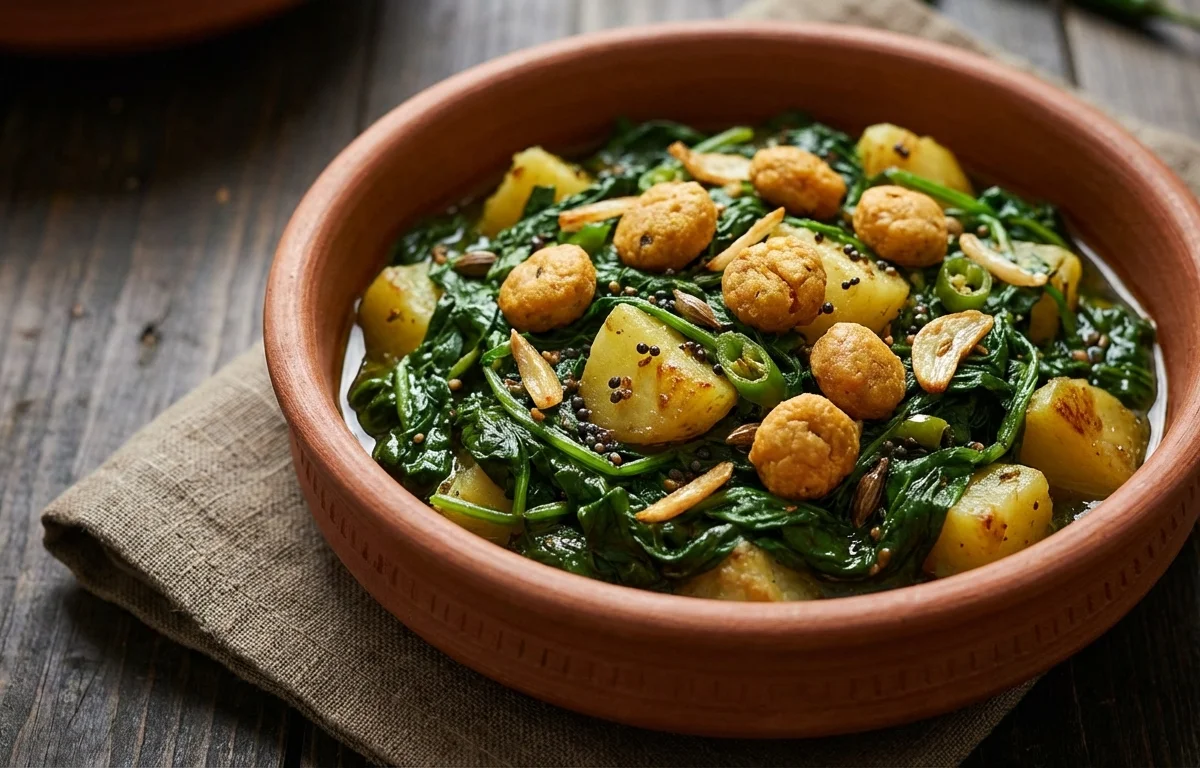
A rustic Odia preparation of leafy greens gently cooked with garlic, green chilies, and a pungent mustard paste. Saaga Rai celebrates the earthy freshness of seasonal greens with minimal spices, letting the natural flavors shine. A humble, nutritious dish served with steamed rice and a drizzle of ghee.
For 4 servings
- prep · ~7 min
Steam the greens until wilted.
Bring water to a boil in a steamer pot. Place washed and roughly chopped spinach in the steamer basket. Cover and steam for 5-7 minutes until leaves are fully wilted and tender. Remove from heat and let cool slightly.
TIPDo not discard the liquid released from the greens — it carries flavor and nutrients. - prep · ~5 min
Make a coarse mustard paste.
Soak yellow mustard seeds in 2 tablespoons of water for 5 minutes. Grind to a coarse paste using a mortar and pestle or small blender. The paste should be slightly grainy, not completely smooth.
TIPA coarse paste gives the dish its signature texture; over-grinding makes it too pungent. - mix · ~2 min
Mash the steamed greens with the mustard paste.
Place the steamed spinach in a mixing bowl. Add the coarse mustard paste and salt. Using your hands or a wooden spoon, mash everything together until the greens break down and the paste is evenly distributed.
- temper · ~6 min
Prepare the tempering with garlic and chilies.
1.Heat mustard oil in a kadai over medium heat until it reaches its smoking point (about 2-3 minutes).2.Reduce heat to low and wait 30 seconds for oil to cool slightly.3.Add cumin seeds and broken dried red chilies, letting them crackle for 15 seconds.4.Add whole peeled garlic cloves and slit green chilies, sauté until garlic turns golden brown (2-3 minutes).TIPMustard oil must smoke before cooking — this removes its raw pungency and makes it digestible. - saute · ~7 min
Cook the mashed greens in the tempering.
Add the mashed spinach-mustard mixture to the kadai. Stir well to coat with the tempering. Cook on medium-low heat for 5-7 minutes, stirring occasionally, until the mixture dries out slightly and any raw smell of mustard disappears.
TIPKeep the heat low and stir gently — the greens can scorch easily. You want the mixture to glisten with oil rather than become completely dry. - serve · ~1 min
Serve Saaga Rai hot with steamed rice.
Transfer the Saaga Rai to a serving bowl. Drizzle a little raw mustard oil on top for an extra punch of flavor if desired. Serve hot alongside steamed Odia bhaat (rice) as part of a simple lunch.
What to keep in mind.
6 tips from the recipe — small details that make a real difference to the final dish.
- 1Use a mix of greens like amaranth or mustard leaves for deeper flavor.
- 2Do not skip soaking the mustard seeds — it softens them for a better paste.
- 3Mash the greens by hand to retain some texture; avoid a puree.
- 4Let the mustard oil reach its smoking point fully to tame its sharpness.
- 5Cook the greens on low heat until the raw mustard smell fades.
- 6Drizzle a little raw mustard oil just before serving for authentic pungency.
Adapt it for your goals.
Vegan
This recipe is already vegan as written (no dairy or animal products). Serve with rice and dal for a complete plant-based meal.
low oilLow-oil
Reduce mustard oil to 1 tablespoon and steam the greens without extra oil. The mustard paste still provides strong flavor with less fat.
high proteinHigh-protein
Add ½ cup of cooked chana dal (split chickpeas) or crumbled paneer after the greens are mashed for extra protein and a heartier texture.
Why this is on our healthy list.
Rich in Iron
Spinach is a well-known source of non-heme iron, which supports healthy blood cells and energy levels.
High in Dietary Fiber
Leafy greens and mustard seeds provide fiber that aids digestion and promotes gut health.
Low in Calories
This dish is light yet filling, making it a great option for weight management without sacrificing flavor.
Antioxidant-Rich
Mustard seeds contain glucosinolates and greens offer vitamin C and beta-carotene, which combat oxidative stress.
Frequently asked questions
Yes, thaw and squeeze out excess water before steaming, then proceed with the recipe. Fresh greens are preferred for texture.