Salmon Patties
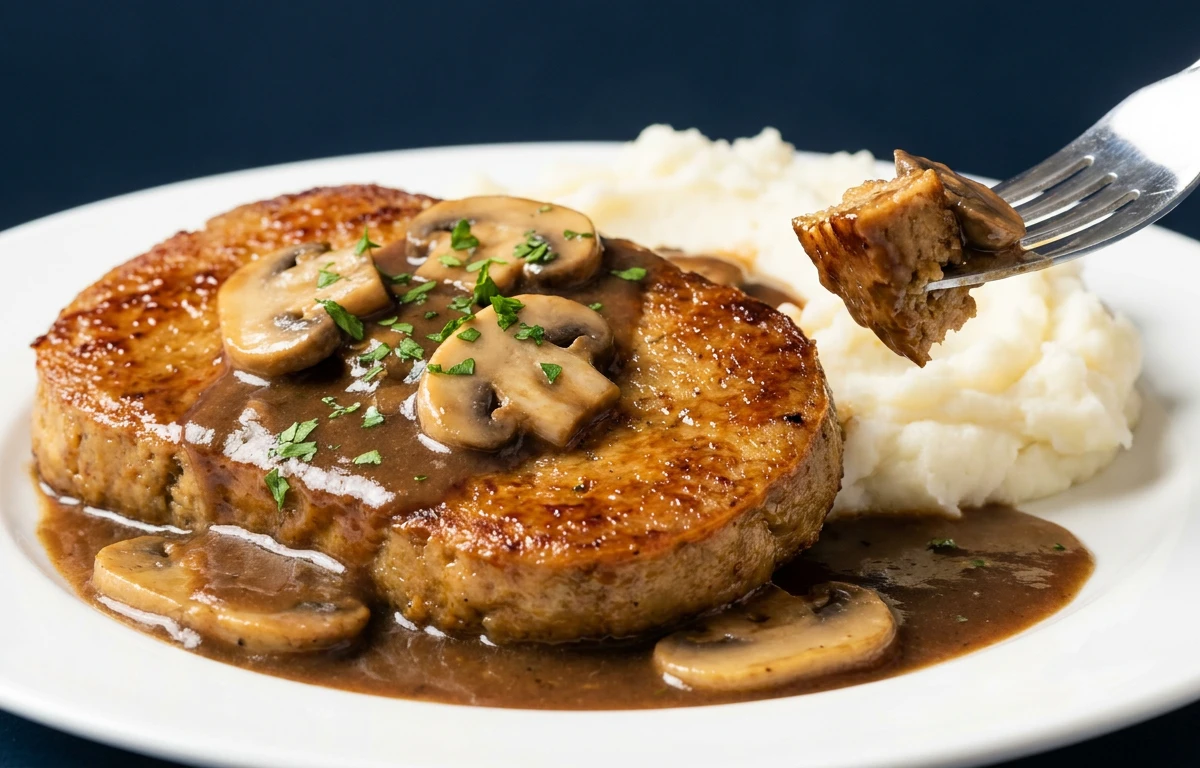
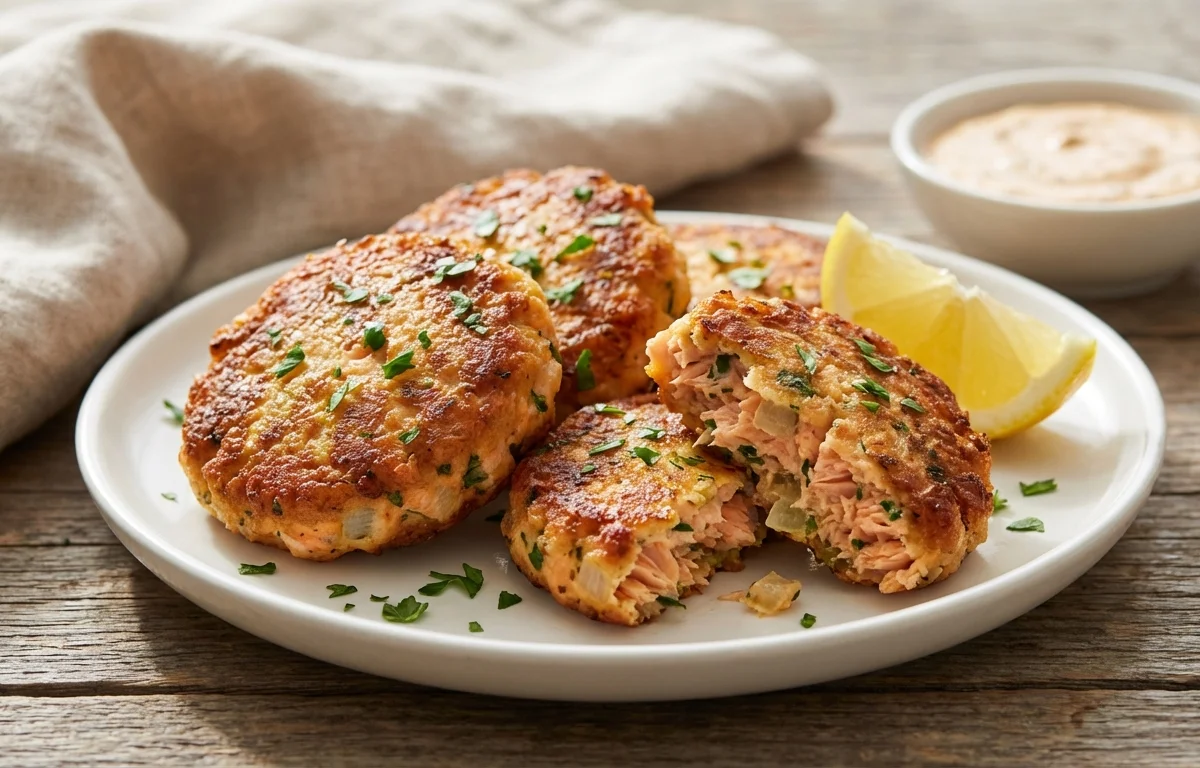
Crispy, golden-brown salmon patties with a tender, flaky interior. Simple pantry staples come together in minutes for a classic weeknight dinner. Serve with lemon wedges and a dollop of tartar sauce for a true Southern comfort food experience.
For 4 servings
- prep · ~5 min
Prepare the salmon mixture.
1.Drain the canned salmon and flake it into a large mixing bowl, removing any large bones or skin.2.Add breadcrumbs, beaten eggs, chopped onion, lemon juice, dijon mustard, garlic powder, smoked paprika, black pepper, and salt.3.Mix gently with a fork until just combined. The mixture should hold together when pressed.TIPDon't overmix — overworking the mixture makes the patties dense. Stop as soon as everything is evenly distributed. - prep · ~3 min
Shape the patties.
1.Divide the mixture into 8 equal portions.2.Shape each portion into a patty about 0.5 inch thick and 2 to 3 inches wide.3.Place shaped patties on a plate or tray.TIPWet your hands lightly with water to prevent the mixture from sticking while shaping. - rest · ~15 min
Chill the patties briefly.
Refrigerate the shaped patties for 10 to 15 minutes. This helps them firm up and hold together better during frying.
TIPIf you are short on time, even 5 minutes in the freezer makes a big difference. - fry · ~10 min
Shallow-fry the salmon patties.
1.Heat 2 tablespoons of oil in a large skillet over medium heat until shimmering.2.Carefully place 4 patties in the skillet, leaving space between them.3.Cook until golden brown and crisp, 3 to 4 minutes per side.4.Transfer to a paper towel-lined plate. Add the remaining 2 tablespoons oil and fry the remaining 4 patties.TIPResist the urge to flip too early. Let a deep golden crust form on the first side before turning — the patties release naturally when they are ready. - serve
Serve hot with lemon wedges.
Arrange the salmon patties on a serving platter. Squeeze fresh lemon juice over the top and serve immediately with additional lemon wedges on the side.
What to keep in mind.
7 tips from the recipe — small details that make a real difference to the final dish.
- 1Chill the shaped patties for at least 10 minutes to help them hold together during frying.
- 2Use panko breadcrumbs for an extra-crispy crust instead of plain breadcrumbs.
- 3Let the patties develop a deep golden crust before flipping — they release naturally when ready.
- 4Drain canned salmon thoroughly and pat dry with paper towels to avoid soggy patties.
- 5Wet your hands lightly with water when shaping to prevent the mixture from sticking.
- 6Cook in batches and don't overcrowd the pan — this keeps the oil temperature steady.
- 7Leftover patties reheat well in a 350°F oven for 5-7 minutes to restore crispness.
Adapt it for your goals.
Gluten-free
Replace breadcrumbs with almond flour or crushed gluten-free crackers — ideal for those with gluten sensitivities.
low carbLow-carb
Substitute breadcrumbs with finely grated Parmesan cheese or crushed pork rinds for a keto-friendly version.
spicy cajunSpicy cajun
Add 1 teaspoon Cajun seasoning and a dash of hot sauce to the mixture for a bold, Southern-style kick.
herb & dillHerb & dill
Fold in 2 tablespoons of fresh chopped dill and 1 tablespoon of chopped chives for a brighter, garden-fresh flavor.
dairy freeDairy-free
Use vegan mayo in place of egg (2 tbsp per patty) and skip the butter — perfect for dairy-sensitive diets.
Why this is on our healthy list.
Rich in Omega-3s
Canned salmon provides heart-healthy omega-3 fatty acids, which support brain function and reduce inflammation.
High-Quality Protein
Each patty delivers a generous amount of complete protein from salmon and eggs, helping build and repair tissues.
Low in Saturated Fat
Using vegetable oil for shallow frying keeps saturated fat low, making these patties a lighter alternative to beef patties.
Good Source of Vitamin D
Salmon is one of the few natural food sources of vitamin D, important for bone health and immune function.
Frequently asked questions
Yes, cook and flake about 1 pound of fresh salmon (baked or poached) and omit the extra salt since fresh salmon is less salty than canned.