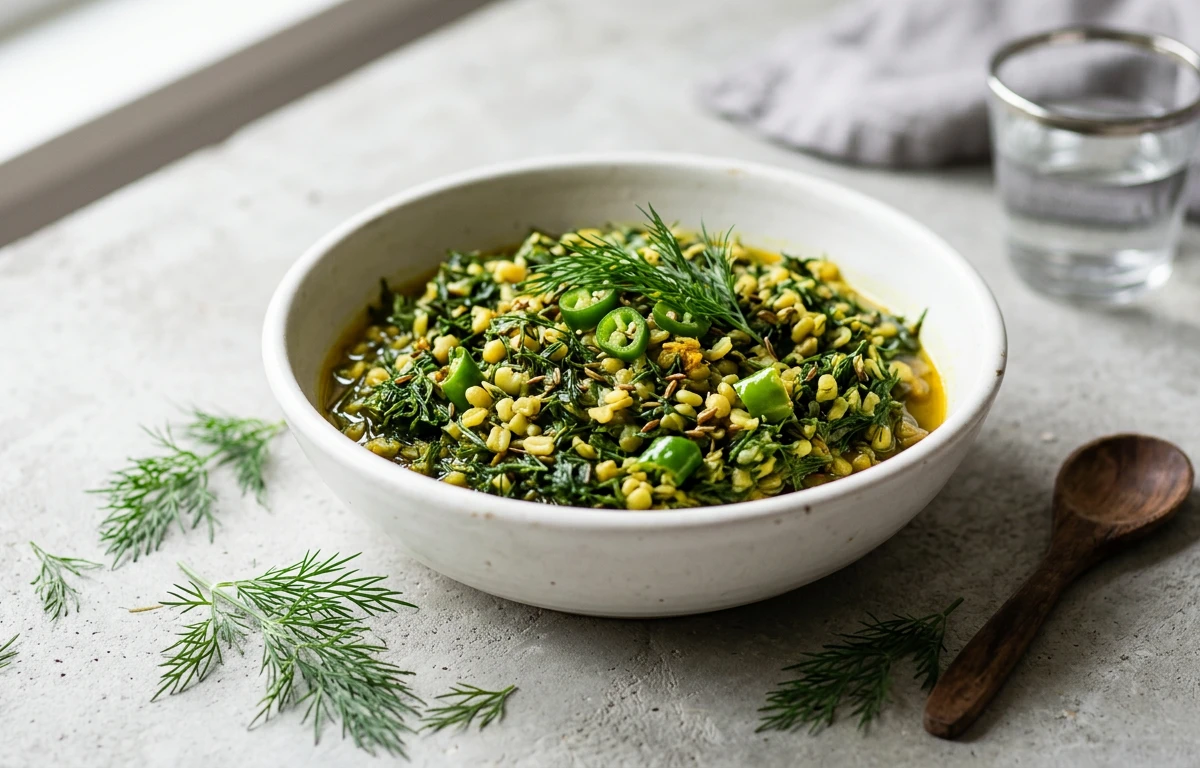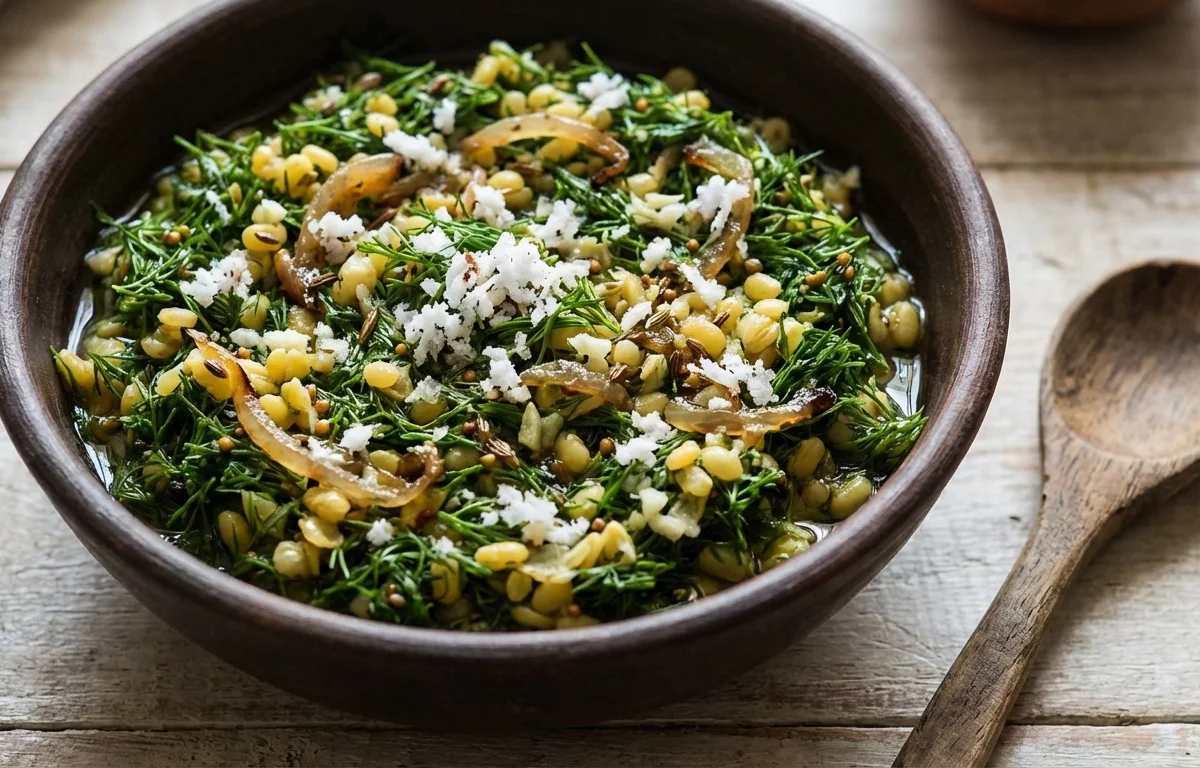
Shepuchi Bhaji
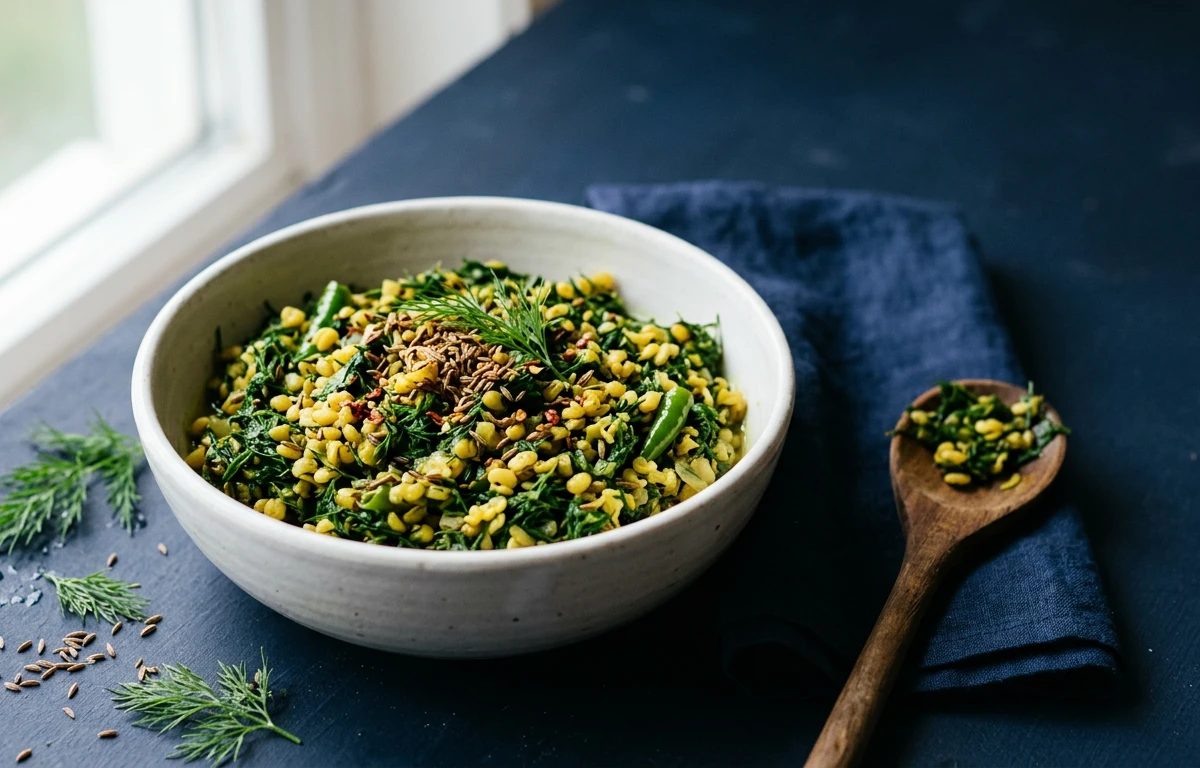
Fresh dill leaves cooked the Maharashtrian way with soft moong dal, green chili, and a simple tempering. This homestyle bhaji is lightly spiced, earthy, and pairs especially well with roti or plain dal rice.
For 4 servings
- prep · ~20 min
Prep the dill and soak the moong dal.
1.Pick the dill leaves from the thicker stems and wash them very well to remove grit.2.Drain and finely chop the dill leaves.3.Rinse the moong dal, soak it for 20 minutes, then drain.TIPDill often holds sand near the stems, so wash in a few changes of water. - temper · ~2 min
Make the tempering.
1.Heat oil in a kadhai or pan over medium heat.2.Add mustard seeds and let them crackle.3.Add cumin seeds and asafoetida.4.Add garlic and green chili and cook for 30 seconds until fragrant. - saute · ~4 min
Cook the onion.
Add the chopped onion and sauté for 3 to 4 minutes until soft and lightly golden. Stir in the turmeric powder.
- simmer · ~12 min
Cook the dal and dill together.
1.Add the drained moong dal and stir for 1 minute.2.Add the chopped dill leaves and salt, then mix well.3.Pour in the water and cover the pan.4.Cook on low heat until the dal is tender and the dill is soft, stirring once or twice.TIPKeep the water minimal so the bhaji stays semi-dry and full of flavor. - garnish · ~2 min
Finish with fresh coconut.
Uncover the pan and cook for 1 to 2 minutes if any extra moisture remains. Sprinkle the grated coconut over the bhaji and fold it in gently.
- serve
Serve hot with roti or bhakri.
What to keep in mind.
7 tips from the recipe — small details that make a real difference to the final dish.
- 1Pick off thick dill stems; they stay stringy even after the leaves soften.
- 2Soak the moong dal just until slightly plumped so it cooks through without turning mushy.
- 3Keep the pan covered on low heat so the dill steams gently and loses its raw bitterness.
- 4Use only a splash of water; this bhaji should stay semi-dry, not saucy.
- 5If the dill tastes slightly bitter, add the coconut only at the end to round it out.
- 6Stir just once or twice while cooking so the dal stays intact and the bhaji doesn’t turn pasty.
- 7This bhaji reheats well the next day; warm it covered with a teaspoon of water to loosen it.
Adapt it for your goals.
Jain
Skip onion and garlic, and increase green chili slightly. The dill, dal, and coconut still give plenty of flavor while keeping it suitable for Jain preferences.
no coconutNo-coconut
Leave out the fresh coconut for a plainer, more rustic bhaji if you want the dill flavor to come through more strongly.
peanut finishPeanut-finish
Replace the coconut with crushed roasted peanuts for a nuttier Maharashtrian-style finish and a little extra texture.
spicierSpicier
Add one extra green chili or a pinch of red chili powder if you like a sharper heat against the earthy dill and moong dal.
Why this is on our healthy list.
Fiber-Rich Greens and Dal
Dill leaves and moong dal together make this bhaji satisfying and wholesome, with fiber that supports fullness and everyday digestion.
Plant-Based Protein Support
Moong dal adds gentle plant protein, making the bhaji more nourishing than a greens-only stir-fry.
Lightly Cooked, Low-Oil Dish
The recipe uses a small amount of oil and minimal water, so the bhaji stays light while still tasting full and comforting.
Aromatic Digestive Spices
Cumin, asafoetida, garlic, and green chili are classic seasonings that add flavor while making a dal-and-greens dish feel easier to enjoy.
Frequently asked questions
You can, but soaked dal cooks more evenly and finishes tender in the same time as the dill. Unsoaked dal may stay too firm unless you add more water and cooking time.



.webp)