
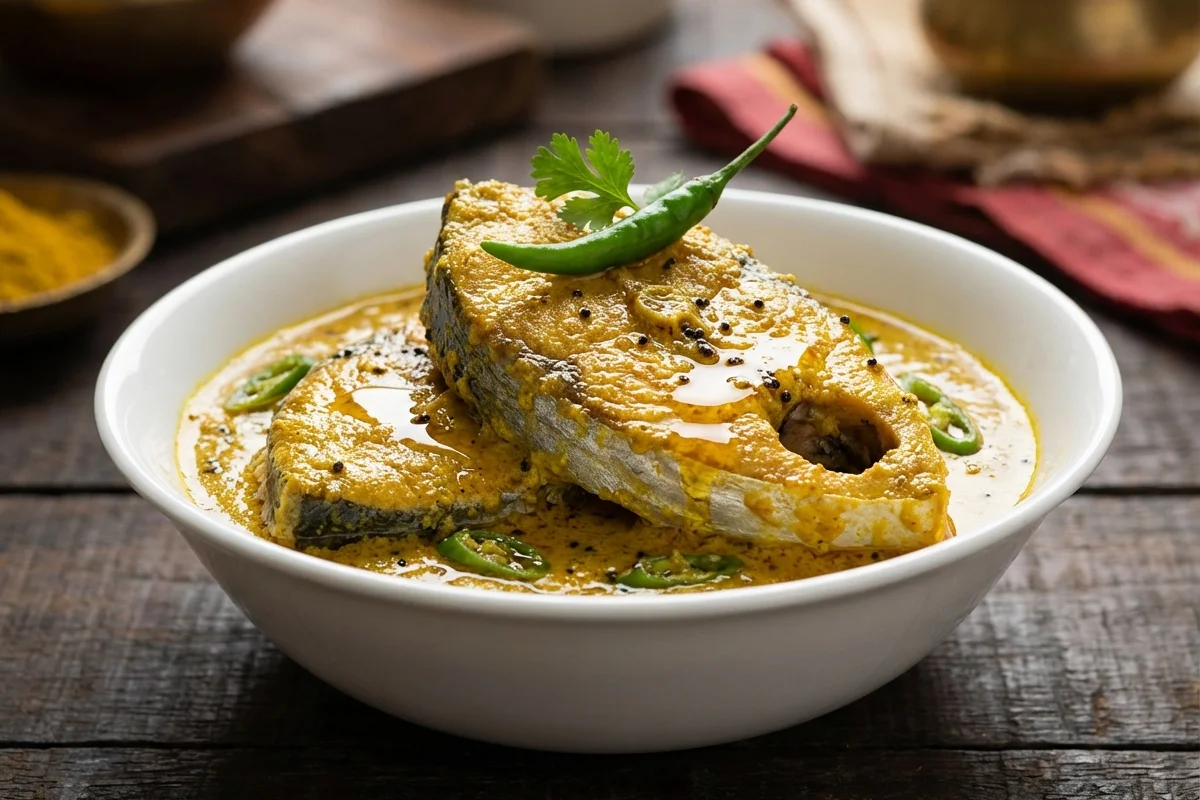
Shorshe Ilish
Tender hilsa steaks gently simmered in a pungent, velvety mustard gravy. This iconic Bengali delicacy balances the bold heat of freshly ground mustard with the natural richness of hilsa, creating a dish that's both deeply comforting and aromatic. Traditionally enjoyed with plain steamed rice during monsoon.
For 4 servings
- prep · ~30 min
Soak mustard seeds and make the paste.
1.Soak black and yellow mustard seeds with 2 green chilies in 0.25 cup water for 30 minutes.2.Drain and transfer to a mixer grinder.3.Add a pinch of salt and grind to a smooth, thick paste, adding a tablespoon of water if needed.TIPSoaking mustard seeds reduces bitterness. Don't over-grind, or the paste will turn bitter. - prep · ~10 min
Marinate the hilsa steaks.
1.Pat the hilsa steaks completely dry with a kitchen towel.2.Rub them with turmeric powder, red chili powder, and a pinch of salt.3.Set aside for 10 minutes.TIPEnsure the fish is dry before marinating to avoid splattering and to help the spices adhere. - fry · ~5 min
Lightly fry the fish steaks.
1.Heat 2 tbsp mustard oil in a kadhai over medium heat until it smokes lightly.2.Reduce heat and carefully slide in the marinated hilsa steaks.3.Sear for 1 minute on each side until golden but not fully cooked.4.Remove the fish and set aside on a plate.TIPSmoking the mustard oil is crucial — it drives away the raw pungency and makes the oil sweet. - temper · ~2 min
Temper the mustard paste.
1.In the same pan, add the remaining 1 tbsp mustard oil over medium-low heat.2.Add nigella seeds and let them splutter for 10 seconds.3.Add the slit green chilies and sauté for 20 seconds.4.Lower heat completely and gently stir in the ground mustard paste.TIPKeep the heat low when adding mustard paste — high heat makes it bitter and ruins the flavor. - simmer · ~7 min
Simmer the gravy.
1.Add 1 cup of water and salt to the pan.2.Mix well and increase heat to bring the gravy to a gentle boil.3.Lower heat and simmer for 5-7 minutes until the raw mustard smell fades and the gravy thickens slightly.TIPDo not cover the pan while simmering the mustard gravy; covering can lead to a bitter, overpowering taste. - simmer · ~8 min
Add fish and finish cooking.
1.Gently slide the fried hilsa steaks into the simmering gravy.2.Spoon gravy over the fish.3.Cover the pan and cook on low heat for 6-8 minutes, shaking the pan gently once in between.4.Turn off the heat and let it rest for 5 minutes.TIPHilsa is delicate and cooks quickly. Overcooking will make the flesh tough and dry. - garnish
Garnish and serve hot.
Garnish with freshly chopped cilantro and a drizzle of raw mustard oil. Serve immediately with steamed rice.
TIPA final drizzle of raw, pungent mustard oil at the end elevates the authentic Bengali flavor.
What to keep in mind.
7 tips from the recipe — small details that make a real difference to the final dish.
- 1Soaking the mustard seeds for a full 30 minutes softens them and reduces bitterness.
- 2Always smoke the mustard oil until it just begins to lightly smoke; this mellows its raw pungency.
- 3Keep the heat low when adding the mustard paste to the gravy—high heat turns it bitter.
- 4Do not cover the pan while simmering the mustard gravy; trapping steam can make it taste bitter.
- 5Hilsa steaks are delicate; fry them just 1 minute per side to avoid overcooking.
- 6Let the finished dish rest off the heat for 5 minutes so the fish absorbs the gravy without toughening.
- 7Serve immediately with hot steamed rice; the flavors dull as the dish cools.
Adapt it for your goals.
Low-oil
Reduce mustard oil to 2 tablespoons total and skip the initial frying step—add the marinated fish directly to the simmering gravy. The dish still tastes deeply of mustard and hilsa but uses less oil.
Coconut mustardCoconut-mustard
Add 3 tablespoons of fresh grated coconut to the mustard paste before grinding. This softens the pungency and adds a gentle sweetness, popular in coastal Bengali variations.
Poppy seed twistPoppy-seed twist
Replace 1 tablespoon of black mustard seeds with 1 tablespoon of white poppy seeds (soaked). This creates a thicker, creamier gravy with a milder, nuttier finish.
Why this is on our healthy list.
Rich in Omega-3 Fatty Acids
Hilsa is one of the best natural sources of omega-3s, which support heart health and reduce inflammation.
Good Source of Vitamin D
This fatty fish provides natural vitamin D, essential for bone health and immune function.
Low in Carbohydrates
This dish is naturally low in carbs and gluten-free, making it suitable for low-carb and gluten-sensitive diets.
Digestive Benefits from Mustard
Mustard seeds contain compounds that can stimulate digestion and have mild antimicrobial properties.
Frequently asked questions
Yes. Use any firm, oily fish like salmon steaks, mackerel, or trout. Adjust cooking time based on thickness—cook until just opaque.


-curry.webp)
.webp)