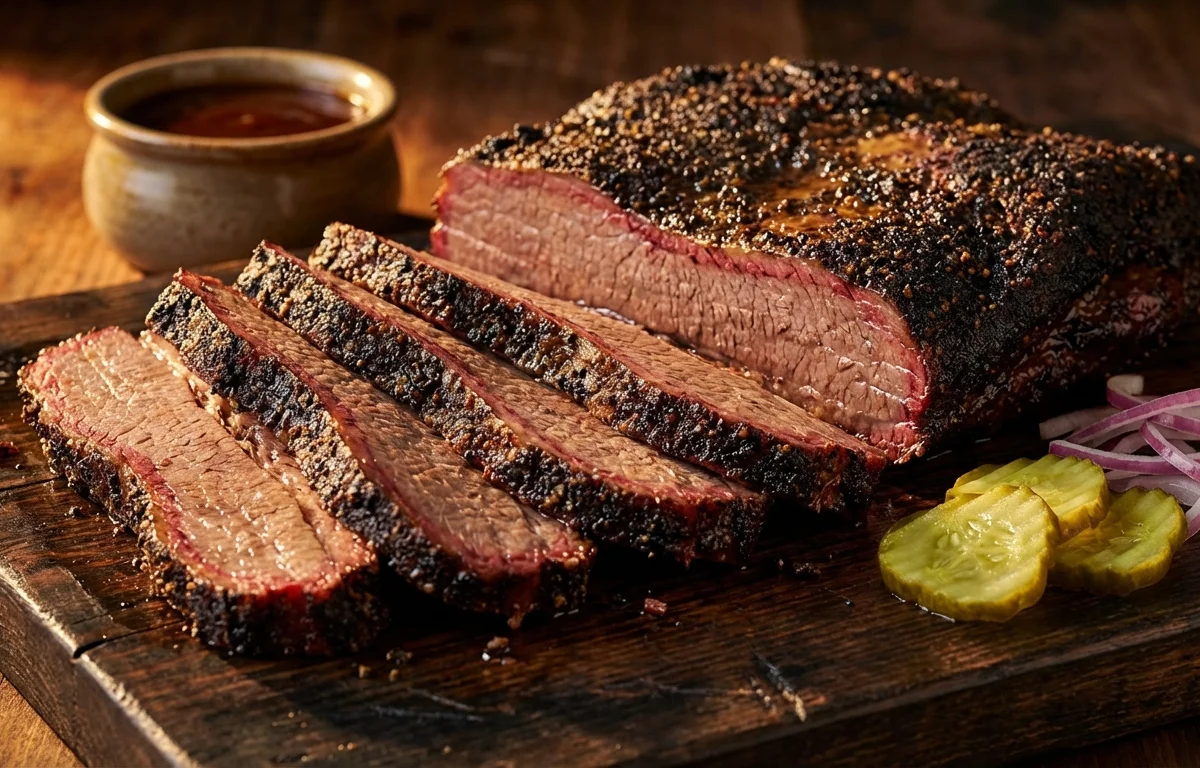
Smoked Brisket
A beautifully barked smoked brisket with a peppery, savory crust and a tender, juicy interior. This Texas-style classic uses a simple rub and long hours over hardwood smoke, letting the beef shine. Perfect for weekend gatherings, sliced against the grain and served on butcher paper.
For 4 servings
- prep · ~10 min
Trim and score the brisket.
Trim the fat cap to about 6mm (1/4 inch) thick, removing any hard fat. Score the remaining fat cap in a cross-hatch pattern. Remove thin, burnt-prone edges from the flat.
- prep · ~30 min
Apply the rub.
Mix salt, black pepper, garlic powder, and onion powder. Apply generously and evenly over the entire brisket — don't skimp. Press firmly to adhere. Let rest at room temperature for 30 minutes before smoking.
- roast · ~20 min
Fire up the smoker and set the water pan.
Bring smoker to 110°C (225°F) to 120°C (250°F) with a water pan placed on the grate. Use oak or pecan wood for classic Texas flavor. Maintain a consistent thin blue smoke.
TIPThin blue smoke is what you want — thick white smoke tastes acrid. - roast · ~360 min
Smoke the brisket unwrapped.
Place brisket fat side up on the smoker grate, away from direct fire. Insert a probe thermometer into the thickest part of the flat. Smoke for 4-6 hours until the internal temperature stalls around 65°C–71°C (150°F–160°F) and a deep mahogany bark has formed.
TIPDon't open the smoker — every peek adds 15 minutes. Monitor temps wirelessly. - roast · ~240 min
Wrap and finish cooking.
Spread a large sheet of butcher paper on the bench. Transfer the brisket to the paper and wrap tightly — paper side against the bark. Return to the smoker and continue cooking until the probe thermometer reads 92°C–96°C (197°F–205°F) and slides in with no resistance. This may take another 3-5 hours.
TIPProbe feel matters more than exact number — it should slide in like butter. - rest · ~60 min
Rest the brisket well.
Once probe-tender, wrap the paper-wrapped brisket in a towel and place in an empty cooler or a turned-off oven. Rest for at least 1 hour — up to 4 hours is better. This redistributes the juices.
TIPDo not unwrap the paper — the rest steam softens the bark just enough to be perfect. - mix · ~2 min
Slice against the grain.
Unwrap the rested brisket. Separate the point from the flat. Slice the flat across the grain into pencil-width pieces. With the point, note the grain direction shifts — rotate to keep cutting against the grain. Serve immediately on butcher paper or a platter.
TIPSlice as you serve — pre-sliced brisket dries out quickly.
What to keep in mind.
7 tips from the recipe — small details that make a real difference to the final dish.
- 1Score the fat cap in a cross-hatch pattern to help render fat and improve bark formation.
- 2Use coarsely ground black pepper for a bold, crunchy crust that defines Texas-style brisket.
- 3Keep the smoker closed during the initial smoke — every peek adds 15 minutes to cooking time.
- 4Wrap in unwaxed butcher paper, not foil, to preserve bark texture while pushing through the stall.
- 5Rest the wrapped brisket in a cooler for at least 1 hour; up to 4 hours keeps it hot and juicy.
- 6Slice only as much as you serve — pre-sliced brisket dries out quickly on the plate.
- 7Save the point meat for burnt ends — it's fattier and crisps up beautifully when cubed and sauced.
Adapt it for your goals.
Texas-style with coffee rub
Add 1 tablespoon of finely ground coffee to the rub for a deeper, earthy flavor that complements the beef without overpowering it.
Mustard binder versionMustard binder version
Coat the brisket with yellow mustard before applying the rub — the mustard adds tang and helps the rub stick, but its flavor disappears during smoking.
Bark only no wrapBark-only no-wrap
Skip wrapping entirely and smoke at 225°F until probe-tender (12–16 hours total). Expect a firmer, crunchier bark and a slightly drier flat — ideal for those who love intense bark texture.
Spicy pepper blendSpicy pepper blend
Replace half the black pepper with coarse cayenne or a Tex-Mex chili powder blend for a spicy kick that builds over the long cook.
Why this is on our healthy list.
High-Quality Protein
Beef brisket is a dense source of complete protein, providing all essential amino acids for muscle repair and satiety.
Rich in Iron and B12
Red meat like brisket delivers heme iron and vitamin B12, which support oxygen transport in the blood and energy metabolism.
Moderate Fat for Energy
The fat cap in brisket provides a source of energy and helps absorb fat-soluble vitamins, though portions can be adjusted for dietary goals.
Contains Zinc and Selenium
Beef is a good source of zinc and selenium, minerals that support immune function and antioxidant defense.
Frequently asked questions
No — leave a 1/4-inch fat cap to keep the meat moist; trim only hard, waxy fat and thin edges that burn easily.