Sundal
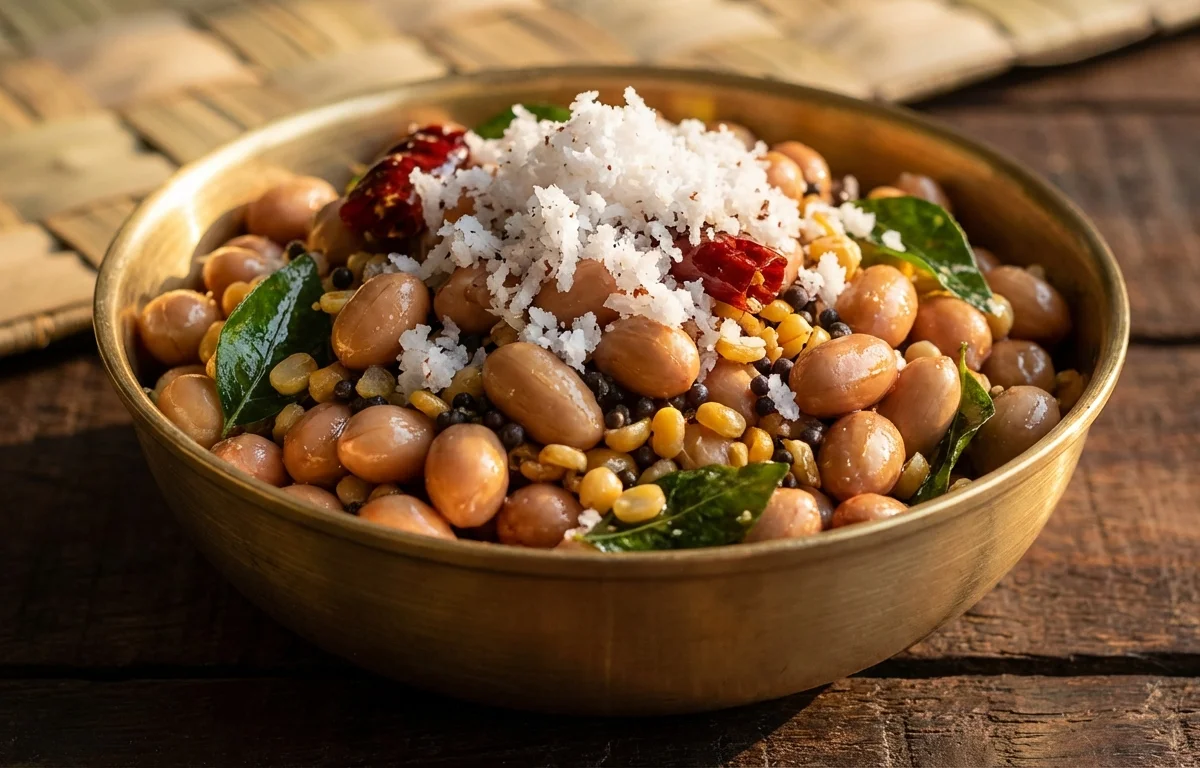
A vibrant South Indian stir-fry made with tender chickpeas, gently tossed with grated coconut, fresh curry leaves, and a crackling tempering of mustard seeds and dried red chilies. This protein-rich snack comes together in minutes and is a beloved offering during Navaratri celebrations, equally wonderful as an after-school bite or a light side with evening tea.
For 4 servings
- pressure cook · ~15 min
Pressure cook the soaked chickpeas.
Drain the soaked chickpeas and transfer to a pressure cooker. Add 2 cups of water and salt. Pressure cook for 4-5 whistles on medium heat, then let the pressure release naturally. The chickpeas should be tender but hold their shape — drain any excess water and set aside.
TIPDon't discard the cooking water — it's flavourful aquafaba you can use in soups or knead into roti dough. - temper · ~2 min
Make the tempering.
1.Heat oil in a heavy-bottomed pan over medium heat.2.Add mustard seeds and let them splutter (30 seconds).3.Add urad dal and sauté until golden (20 seconds).4.Add cumin seeds, dried red chilies, and asafoetida — stir until fragrant (15 seconds).5.Add curry leaves, green chili, and grated ginger — sauté for 30 seconds.TIPKeep the heat steady at medium — too high and the mustard seeds will burn before the dal turns golden. - saute · ~3 min
Toss the chickpeas with the tempering.
1.Add the cooked chickpeas to the pan with the tempering.2.Stir gently to coat every chickpea with the aromatic oil.3.Sauté for 2-3 minutes on low heat, letting the flavours meld. - mix · ~1 min
Finish with coconut and lemon.
1.Turn off the heat.2.Add grated coconut and toss well.3.Squeeze fresh lemon juice over the sundal and mix gently.TIPAlways add coconut off the heat — cooking it makes it dry and chewy. Fresh coconut stays moist and sweet this way. - garnish
Garnish with coriander leaves and serve warm.
Transfer to a serving bowl, scatter chopped coriander leaves on top, and serve warm or at room temperature.
TIPSundal tastes even better after resting 10 minutes — the coconut absorbs the tempering flavours.
What to keep in mind.
6 tips from the recipe — small details that make a real difference to the final dish.
- 1Soak chickpeas overnight for even cooking and a creamy texture.
- 2Pressure cook chickpeas until just tender; overcooking makes them mushy.
- 3Let mustard seeds fully splutter before adding urad dal to avoid bitterness.
- 4Add coconut only after turning off the heat to keep it moist and sweet.
- 5Rest sundal for 10 minutes after cooking for flavors to meld beautifully.
- 6Use fresh curry leaves for authentic aroma; dried ones lack depth.
Adapt it for your goals.
Low-oil
Reduce oil to 1 teaspoon and dry-roast the urad dal and mustard seeds before adding a splash of water for tempering. Perfect for those watching their fat intake.
high proteinHigh-protein
Swap chickpeas with sprouted moth beans or soybean chunks for an extra protein punch. Cook sprouts similarly until tender.
jainJain
Skip the ginger, asafoetida, and garlic (if any), and use only green chilies and mustard seeds. Ideal for Jain dietary restrictions.
veganVegan
This recipe is already vegan. For a richer version, add a tablespoon of roasted peanuts or cashews along with the coconut.
Why this is on our healthy list.
High in Plant Protein
Chickpeas are an excellent source of plant-based protein, supporting muscle repair and keeping you full longer.
Rich in Dietary Fiber
The fiber from chickpeas aids digestion and helps maintain stable blood sugar levels.
Source of Healthy Fats
Fresh coconut provides medium-chain triglycerides (MCTs) that offer quick energy and support brain health.
Packed with Antioxidants
Curry leaves, ginger, and asafoetida contain compounds that help reduce inflammation and boost immunity.
Frequently asked questions
Yes, use two 15-ounce cans, drained and rinsed. Skip pressure cooking and sauté directly with the tempering for 3-4 minutes.