Talawa Gosht
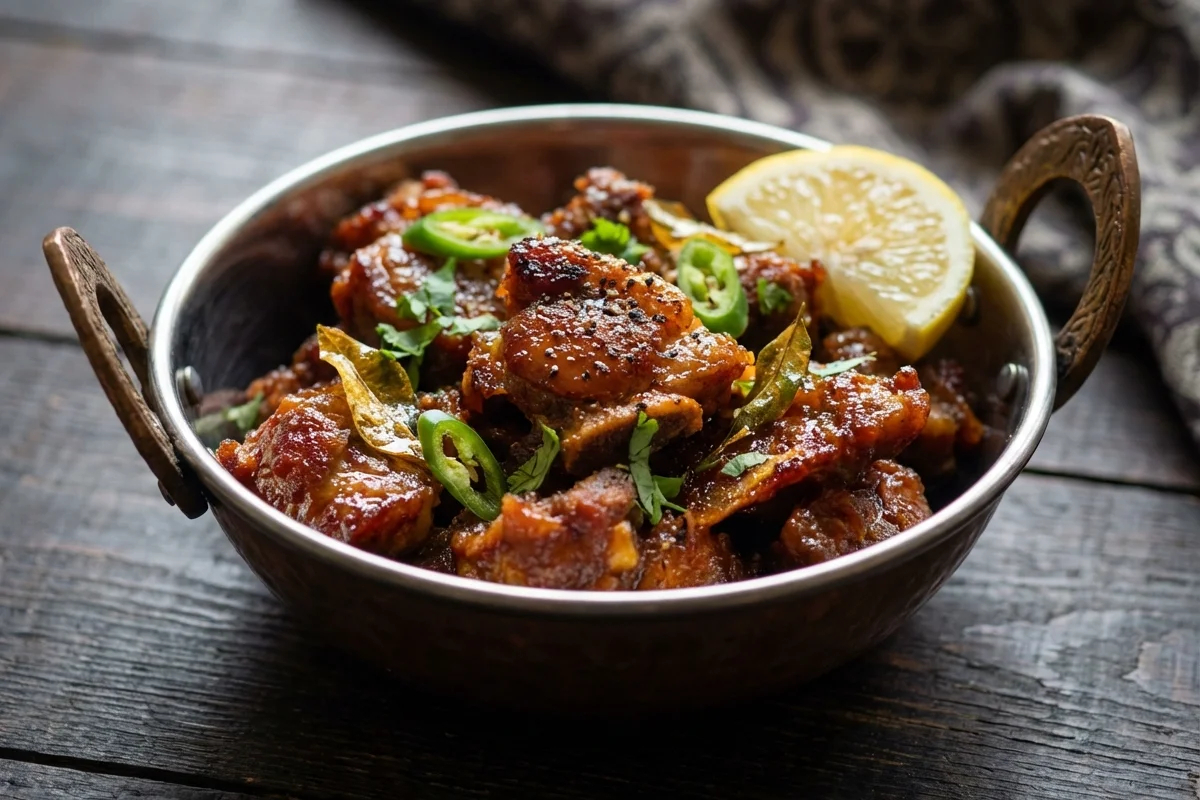
Talawa Gosht is a rich, pan-fried mutton dish from Indian Muslim home cooking, where tender meat is cooked down with onions, yogurt, black pepper, and whole spices until the masala clings to every piece.
For 4 servings
- prep · ~10 min
Prep the meat and aromatics.
1.Wash the mutton and drain well.2.Slice the onions thinly.3.Whisk the yogurt until smooth.4.Slit the green chilies and chop the coriander leaves. - saute · ~9 min
Cook the whole spices and onions.
1.Heat oil in a pressure cooker over medium heat.2.Add cumin seeds, bay leaf, cloves, green cardamom, and cinnamon.3.Let the spices sizzle for 30 seconds until fragrant.4.Add the sliced onions and cook until light golden, 6 to 8 minutes. - saute · ~2 min
Build the masala base.
1.Add ginger-garlic paste and green chilies.2.Cook for 1 minute until the raw smell fades.3.Add red chili powder, turmeric powder, coriander powder, black pepper, and salt.4.Stir well for 20 seconds on low heat.TIPKeep the heat low after adding the spice powders so they do not scorch. - mix · ~5 min
Coat the mutton with the masala.
Add the mutton and mix well so every piece is covered with the onion-spice mixture. Cook for 4 to 5 minutes, stirring often, until the meat changes color.
- mix · ~3 min
Stir in the yogurt and water.
Lower the heat and add the whisked yogurt gradually, stirring continuously. Add water and mix well, scraping the bottom of the cooker.
TIPAdding yogurt on low heat helps keep the gravy smooth and stops it from splitting. - pressure cook · ~30 min
Pressure cook the mutton until tender.
Close the cooker and cook on medium heat until the mutton is tender, about 20 to 25 minutes after the first whistle. Let the pressure drop naturally before opening.
- saute · ~15 min
Fry down the masala.
Open the cooker and cook the mutton uncovered over medium heat, stirring often, until most of the liquid dries and the masala turns thick and clings to the meat.
TIPDo not leave the pan unattended at this stage; the masala can catch at the bottom as it dries. - garnish
Finish with lemon juice and coriander leaves.
Turn off the heat and mix in the lemon juice and chopped coriander leaves for a fresh finish.
- serve
Serve the Talawa Gosht hot.
What to keep in mind.
7 tips from the recipe — small details that make a real difference to the final dish.
- 1Drain the washed mutton well so the onions fry properly and the masala doesn’t turn watery.
- 2Brown the onions only to light golden; very dark onions can make the final masala taste bitter.
- 3Add the whisked yogurt in batches on low heat, stirring constantly to keep it smooth and prevent splitting.
- 4After pressure cooking, let the pressure fall naturally so the mutton stays juicy and tender.
- 5During the final fry-down, stir and scrape the bottom often because the onion-yogurt masala catches quickly.
- 6Finish lemon juice off the heat for a brighter taste; boiling it can dull the fresh tang.
- 7Talawa Gosht tastes even better after a short rest, when the peppery masala settles onto the meat.
Adapt it for your goals.
Spicier
Increase green chilies and black pepper for a sharper, more robust Muslim home-style finish.
bonelessBoneless
Use boneless mutton for easier serving; reduce pressure-cooking time slightly since it can soften faster.
stovetopStovetop
If not using a pressure cooker, simmer covered with extra water until the mutton is tender, then fry down as written.
chickenChicken
Make it with bone-in chicken for a quicker version; shorten cooking time and keep the masala slightly looser before the final fry.
Why this is on our healthy list.
Protein-Rich Main Dish
Mutton and yogurt make this a satisfying, protein-rich dish that can help keep the meal filling.
Digestive Aromatics
Ginger, garlic, cumin, and black pepper add depth while bringing traditional digestive-supporting spices to the dish.
Herb and Spice Antioxidants
Coriander leaves, turmeric, cloves, and cinnamon contribute plant compounds from herbs and warming whole spices.
Frequently asked questions
Usually the heat was too high or the yogurt was added too quickly. Lower the heat, whisk it smooth first, and stir continuously while adding.