
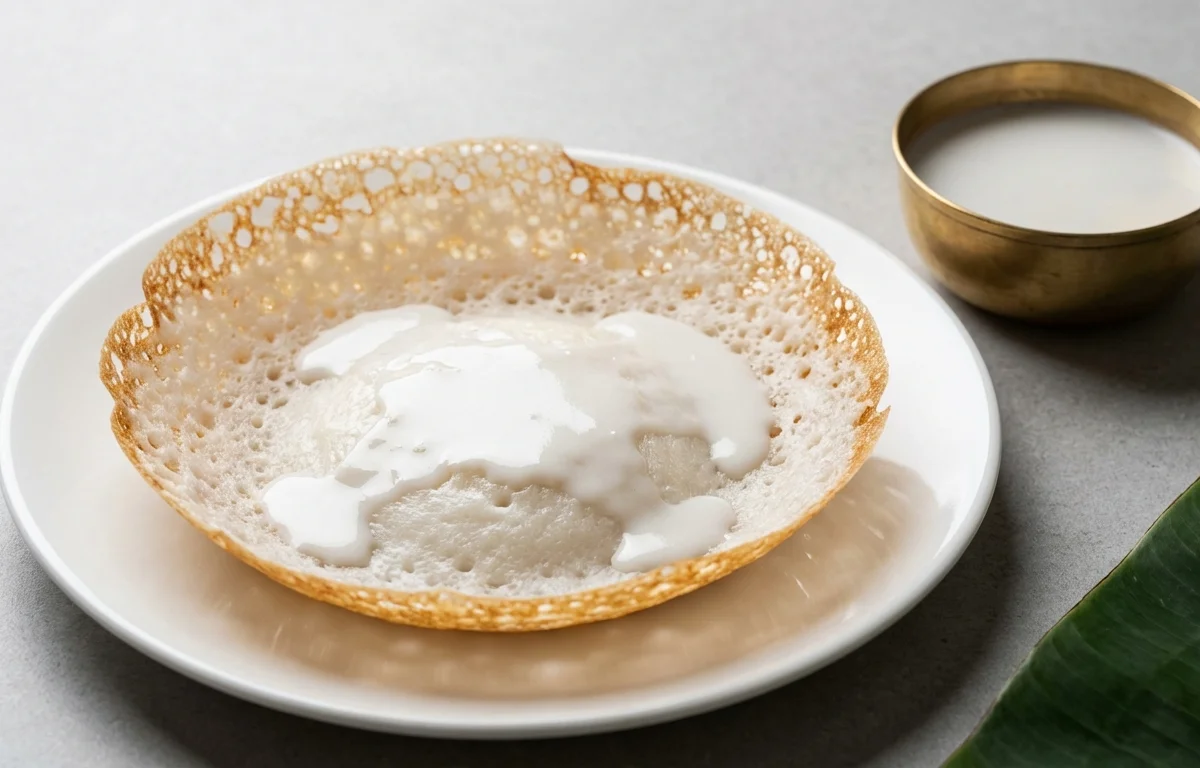
Thengai Paal Appam
These lacy South Indian appams have crisp edges and a soft, spongy center, finished with lightly sweetened coconut milk. They make a comforting breakfast or light dinner and taste especially lovely served warm.
For 4 servings
- prep · ~240 min
Soak the rice.
Wash the raw rice well and soak it in enough water for 4 hours. Drain completely before grinding.
TIPWell-soaked rice grinds smoother and gives the appam its soft center. - mix · ~8 min
Grind the batter.
1.Add the soaked rice to a blender.2.Add grated coconut, cooked rice, sugar, instant yeast, and a little water.3.Grind to a smooth, pourable batter.4.Add salt and mix well. - rest · ~480 min
Ferment the batter.
Transfer the batter to a large bowl, cover loosely, and let it ferment in a warm place for 8 hours until slightly risen and airy.
TIPThe batter should look light and bubbly, not sour and over-fermented. - mix · ~2 min
Prepare the coconut milk.
Mix the thick coconut milk with sugar and cardamom powder until the sugar dissolves. Keep it chilled or at room temperature until serving.
- fry · ~3 min
Cook the appams.
1.Heat an appam pan over medium heat and lightly grease it with oil.2.Pour a small ladle of batter into the center.3.Lift the pan and swirl the batter around to form thin edges and a thicker middle.4.Cover and cook until the center is set and the edges are lacy and lightly crisp.TIPDo not flip the appam. It cooks through with the lid on. - serve · ~1 min
Serve the appams with sweet coconut milk.
Make the remaining appams the same way. Serve them warm with the prepared thengai paal poured over or alongside.
What to keep in mind.
7 tips from the recipe — small details that make a real difference to the final dish.
- 1Keep the batter slightly thinner than dosa batter so it swirls easily into lacy edges.
- 2If the batter has fermented too much, stir in a little fresh rice flour slurry or water to rebalance texture.
- 3Grease the appam pan very lightly; excess oil prevents the batter from climbing the sides properly.
- 4Pour the batter only after the pan is evenly hot, or the center will turn dense instead of spongy.
- 5Cover while cooking so the thick middle steams through without needing to flip the appam.
- 6Sweetened coconut milk is best added just before serving so the crisp edges do not soften too quickly.
- 7Leftover batter can be refrigerated overnight; let it sit out briefly and stir gently before making more appams.
Adapt it for your goals.
Jaggery-sweetened
Replace sugar in the coconut milk with melted strained jaggery for a deeper, more caramel-like sweetness.
veganVegan
This dish is naturally vegan; just ensure the sugar used is vegan-friendly if that matters to you.
less sweetLess-sweet
Reduce the sugar in the thengai paal so the appams can be paired with stew or vegetable curry as well.
coconut lightCoconut-light
Use slightly thinner coconut milk for serving if you want a lighter finish that still keeps the classic flavor.
Why this is on our healthy list.
Gentle fermented batter
The fermented rice batter is often easier to digest than an unfermented batter and gives the appams a light texture.
Energy-giving rice base
Raw rice and cooked rice provide comforting carbohydrates that make this a satisfying breakfast or light dinner.
Coconut-based richness
Fresh coconut and coconut milk add richness and natural flavor, making the dish filling without dairy.
Frequently asked questions
The batter may be too thick or the pan may not be hot enough. Thin the batter slightly and swirl immediately after pouring.


