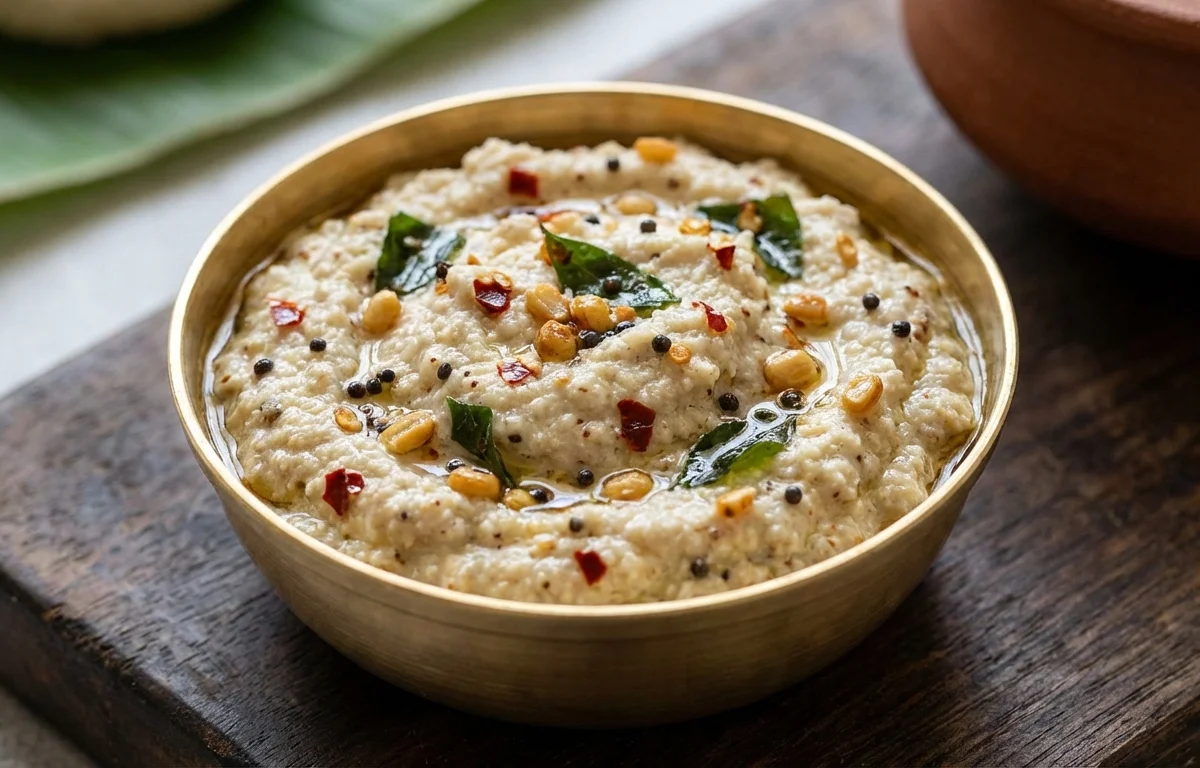
Thengai Thuvaiyal
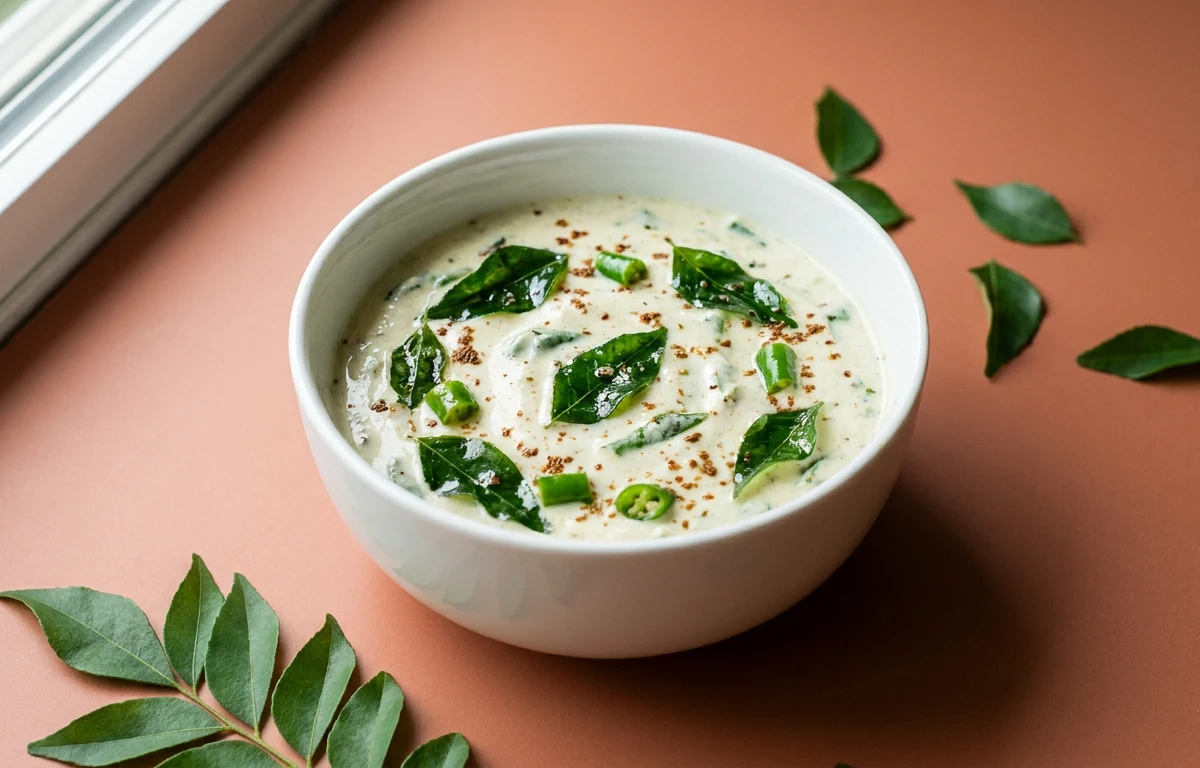
A rustic, deeply flavorful South Indian chutney made from fresh coconut, roasted lentils, and dried red chilies ground to a coarse paste. Finished with a crackling mustard seed tempering, it has a nutty, spicy character that pairs wonderfully with steamed rice and a drizzle of gingelly oil.
For 12 servings
- roast · ~3 min
Roast the lentils and chilies.
1.Heat a small pan over medium heat. Add urad dal and roast, stirring constantly, until golden and fragrant (1-2 min).2.Add dried red chilies and roast for 30 seconds until they darken slightly and release their aroma.3.Transfer to a plate and let cool completely.TIPKeep a close eye on the dal — it goes from golden to burnt very quickly. - mix · ~2 min
Grind the chutney base.
1.Add the cooled urad dal and red chilies to a mixer grinder.2.Pulse a few times until coarsely powdered.3.Add fresh coconut, tamarind, and salt. Add 2 tbsp of water.4.Grind to a coarse, slightly grainy paste. Scrape down the sides and add the remaining water as needed for consistency.TIPThengai thuvaiyal should be coarser than regular chutney — stop grinding while it still has some texture. Avoid turning it into a smooth paste. - temper · ~1 min
Make the tempering.
1.Wipe the same pan clean and heat coconut oil over medium heat until shimmering.2.Add mustard seeds and let them splutter completely (30 sec).3.Add asafoetida and curry leaves. Fry for 10 seconds until the leaves turn crisp.TIPUse coconut oil for the tempering — it amplifies the nutty aroma of the chutney. - mix · ~1 min
Combine and serve.
Pour the hot tempering over the ground chutney. Stir well to combine. Transfer to a serving bowl.
What to keep in mind.
6 tips from the recipe — small details that make a real difference to the final dish.
- 1Use freshly grated coconut for the best texture and flavor — frozen or desiccated will not yield the same rustic mouthfeel.
- 2Roast the urad dal until it's just golden and smells nutty; over-roasting makes the chutney bitter.
- 3Let the roasted dal and chilies cool completely before grinding, or the heat will create steam and make the chutney pasty.
- 4Add water sparingly while grinding — the ideal consistency is a coarse, moist crumble that holds together when pressed.
- 5For maximum flavor, pour the hot tempering over the chutney just before serving and stir well to release the aromas.
- 6Store leftovers in an airtight container in the fridge for up to 3 days; the texture will firm up — stir before serving.
Adapt it for your goals.
Spicier Version
Increase the dried red chilies to 5-6 pieces or include a teaspoon of red chili flakes for extra heat. Great for those who love fiery chutneys.
Mint Coconut ThuvaiyalMint-Coconut Thuvaiyal
Add a handful of fresh mint leaves while grinding for a refreshing, herbaceous twist. This brightens the chutney and pairs well with dosas or rice.
No Oil / Low FatNo-Oil / Low-Fat
Skip the tempering entirely and simply mix the ground chutney with a pinch of asafoetida. The chutney is still flavorful and much lighter, ideal for calorie-conscious meals.
With GarlicWith Garlic
Add 2 small cloves of garlic to the grinding step for a pungent, savory note. This variant is popular in some Tamil households and pairs beautifully with idlis.
Why this is on our healthy list.
Rich in Healthy Fats
Coconut provides medium-chain triglycerides (MCTs), which are easily metabolized for energy and support heart health.
Good Source of Plant Protein
Urad dal (black gram lentils) adds a boost of protein and dietary fiber, making this chutney more satiating.
Digestive Support
Asafoetida and tamarind aid digestion and can help reduce bloating, a common benefit in traditional South Indian cooking.
Antioxidant-Rich
Curry leaves and dried red chilies are packed with antioxidants like vitamin C and beta-carotene, supporting immune function.
Frequently asked questions
You can, but the texture and flavor will be less rich. If using desiccated, soak it in a little warm water for 10 minutes before grinding, and reduce added water.