Thimare Chutney
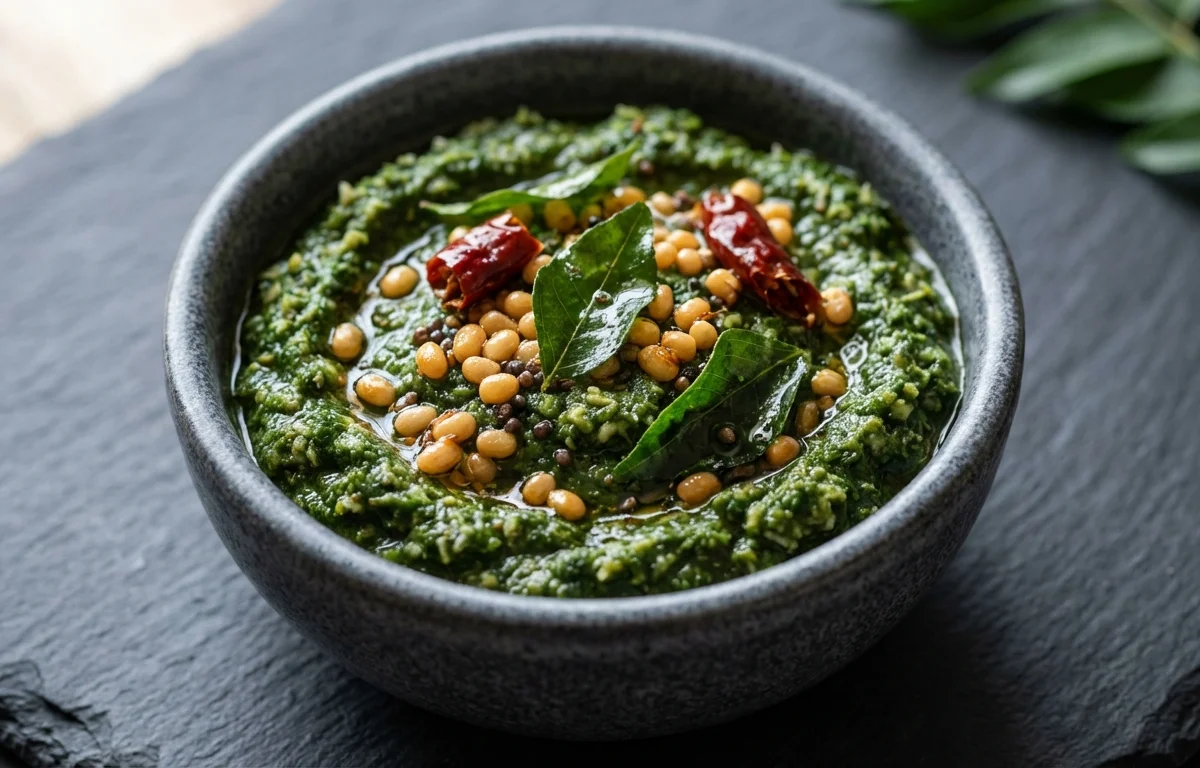
A vibrant, nutrient-packed South Indian chutney made with fresh Indian pennywort leaves. Lightly sautéed with green chilies, cumin, and a touch of tamarind, then ground to a smooth paste. A quick tempering of mustard seeds and curry leaves in hot oil finishes this earthy, slightly tangy condiment that pairs perfectly with steamed rice or dosa.
For 8 servings
- prep
Wash and prep the greens.
1.Pluck the Indian pennywort leaves from stems, discarding any yellow or wilted ones.2.Wash thoroughly under running water, drain, and roughly chop. - saute · ~3 min
Sauté the leaves and spices.
1.Heat 1 tsp oil in a small pan over medium heat.2.Add cumin seeds and let them sizzle for 15 seconds.3.Add green chilies and the chopped pennywort leaves. Sauté until leaves just wilt, about 2 minutes.4.Turn off the heat and let the mixture cool slightly.TIPDon't overcook the greens — a quick wilt preserves their bright color and nutrients. - mix · ~2 min
Grind to a smooth chutney.
1.Transfer the sautéed mixture to a blender.2.Add grated coconut, tamarind paste, salt, and 2 tbsp water.3.Grind to a smooth, slightly coarse paste. Add a splash more water only if needed to get the blades moving. - temper · ~2 min
Make the tempering.
1.In the same small pan, heat the remaining 1 tsp oil over medium heat.2.Add mustard seeds and let them splutter.3.Toss in curry leaves and dried red chili. Fry until fragrant, about 20 seconds.4.Immediately pour the tempering over the ground chutney and stir well.TIPPour the tempering while it's still sizzling — the hot oil blooming into the chutney unlocks the best aroma. - serve
Serve the chutney.
Transfer to a serving bowl and serve with hot rice and a drizzle of ghee, or as a side for dosa and idli.
What to keep in mind.
6 tips from the recipe — small details that make a real difference to the final dish.
- 1Use only the tender leaves and soft stems of pennywort for a smoother chutney texture.
- 2Do not overcook the leaves; a quick 2-minute wilt preserves their vibrant green color and nutrients.
- 3If using frozen coconut, thaw it completely and squeeze out excess moisture before adding to the blender.
- 4Adjust the amount of green chili to control heat — remove seeds for a milder chutney.
- 5Store leftover chutney in an airtight container in the fridge for up to 2 days; the tempering may soften.
- 6For a thicker chutney, reduce water to 1 tablespoon and add more coconut.
Adapt it for your goals.
No-Coconut Version
Omit the grated coconut and replace with 2 tablespoons of roasted chana dal or peanuts for a nutty, protein-rich chutney that stays fresh longer.
Low Oil OptionLow-Oil Option
Reduce cooking oil to just 1/2 tsp for sautéing and skip the tempering entirely; simply stir in a pinch of asafoetida and mustard powder before grinding for a lighter, equally flavorful chutney.
Mint Coriander BlendMint-Coriander Blend
Replace half the pennywort leaves with equal parts fresh mint and cilantro for a brighter, more herb-forward chutney that pairs beautifully with grilled meats or kebabs.
Vegan & Jain FriendlyVegan & Jain-Friendly
This recipe is already vegan. For Jain diets, omit onion and garlic (none are used) and replace curry leaves with a pinch of asafoetida in the tempering.
Spicy Smoky VersionSpicy Smoky Version
Add a small piece of charcoal (placed in a steel bowl) to the blender after grinding, cover, and let the chutney absorb smoke for 5 minutes — remove charcoal before serving.
Why this is on our healthy list.
Rich in Brain-Boosting Nutrients
Indian pennywort (gotu kola) is traditionally used in Ayurveda to support cognitive function and memory.
High in Antioxidants
The green leaves, coconut, and curry leaves provide a natural source of antioxidants that help fight oxidative stress.
Supports Digestion
Cumin, tamarind, and mustard seeds stimulate digestive enzymes, making this chutney a tasty digestive aid.
Low-Calorie Condiment
With minimal oil and no added sugar, this chutney adds big flavor without excess calories.
Frequently asked questions
Fresh leaves are best for vibrant color and flavor. If using frozen, thaw and squeeze dry before sautéing to prevent excess water in the chutney.