
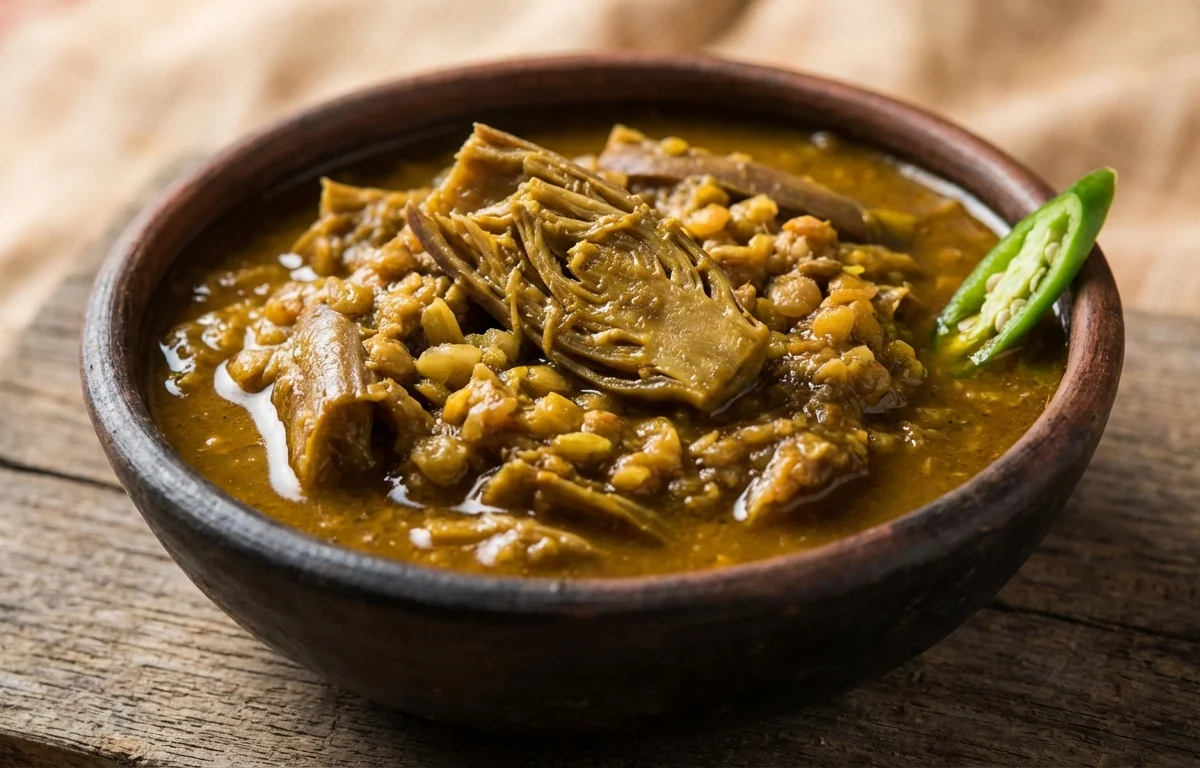
Tita Phoolor Khar
A rustic Assamese delicacy where tender banana flowers simmer in a mild, alkaline khar broth. The slight bitterness of the banana blossom, tamed by the khar, creates a uniquely comforting dish that pairs beautifully with steamed rice.
For 4 servings
- prep · ~15 min
Prepare the banana flower.
1.Apply a little mustard oil to your palms to prevent staining.2.Remove the tough outer purple bracts from the banana flower one by one.3.Collect the pale inner bracts and the central tender core, discarding the tough outer ones and the tiny florets.4.Finely chop the tender collected parts and immediately soak them in a bowl of water to prevent discoloration.TIPWork quickly and keep the chopped flower submerged in water. Discard the florets, as they are too fibrous for this dish. - boil · ~12 min
Boil the banana flower with khar.
1.Drain the soaked chopped banana flower and transfer it to a saucepan.2.Add 1.5 cups of fresh water, the khar, and salt.3.Bring it to a boil over medium-high heat.4.Reduce the heat to medium and cook until the banana flower is tender and the water has almost evaporated, about 10-12 minutes.TIPThe khar neutralizes the raw acridity of the banana flower. Cook until it is fully tender to the bite. - saute · ~3 min
Sauté the aromatics.
1.Push the boiled banana flower to one side of the pan.2.Drizzle the mustard oil into the space in the pan and let it heat until it reaches its smoking point.3.Add the crushed garlic and slit green chilies to the hot oil.4.Sauté for 30 seconds until the garlic turns fragrant and lightly golden.TIPHeating mustard oil to its smoking point is crucial; it removes the raw pungency and brings out a wonderful nutty aroma. - mix · ~3 min
Combine everything together.
1.Mix the sautéed garlic and chili thoroughly with the cooked banana flower.2.Stir and cook together for another 2-3 minutes on low heat to let the flavors meld.3.Check for seasoning and adjust salt if required.TIPUse a light hand while mixing to keep the texture of the banana flower intact. - serve
Serve the Tita Phoolor Khar hot.
Transfer the khar to a serving bowl and serve immediately. It is traditionally enjoyed at the beginning of an Assamese meal with plain steamed rice.
What to keep in mind.
7 tips from the recipe — small details that make a real difference to the final dish.
- 1Apply mustard oil on your palms before handling the banana flower to prevent staining.
- 2Discard the tiny inner florets as they are too fibrous and can ruin the texture.
- 3Keep the chopped banana flower submerged in water until ready to cook to avoid oxidation.
- 4Heat the mustard oil until it reaches its smoking point to mellow its raw pungency.
- 5Cook the banana flower in khar until the water is almost evaporated for best tenderness.
- 6This dish can be made ahead and stored in the fridge for up to 2 days; reheat gently.
- 7Serve tita phoolor khar as the first item on the plate with hot rice for authentic experience.
Adapt it for your goals.
High-protein
Add 1/2 cup of cooked black chickpeas or skinned urad dal along with the banana flower while boiling. This boosts protein content and adds a hearty texture, making the dish more substantial as a one-pot meal.
low oilLow-oil
Reduce mustard oil to 1 teaspoon and dry-roast the crushed garlic and slit chilies in a non-stick pan before adding the boiled banana flower. This cuts calories while retaining the characteristic aroma.
jainJain
Omit garlic entirely and replace with 1/2 teaspoon of asafoetida (hing) added to the hot oil. This keeps the dish Jain-friendly while still providing a pungent, savory depth.
veganVegan
The recipe is already vegan. For a gluten-free variation, ensure the khar is from a pure plant-based source (traditional cola khar or filtered banana-ash water) and serve with rice.
Why this is on our healthy list.
Rich in Dietary Fiber
Banana flower is an excellent source of insoluble fiber, which aids digestion and promotes regular bowel movements, making this dish a gut-friendly addition to a balanced meal.
Good Source of Antioxidants
The banana flower contains flavonoids and tannins that help combat oxidative stress, while mustard oil provides omega-3 fatty acids that support heart health.
Alkaline-Balancing Properties
Khar, made from filtered plant ash, imparts mild alkalinity to the dish, which can help neutralize excess stomach acid and support overall digestive balance when eaten with rice.
Low in Saturated Fat
With mustard oil as the primary fat and minimal added oil, this dish is low in saturated fats, making it suitable for those monitoring their cholesterol levels.
Frequently asked questions
Khar is a traditional Assamese alkaline water made by filtering water through the ashes of dried banana peels or other plant materials. It is available in Assamese grocery stores or online; alternatively, you can substitute a pinch of baking soda mixed with water, though the flavor will differ slightly.


