
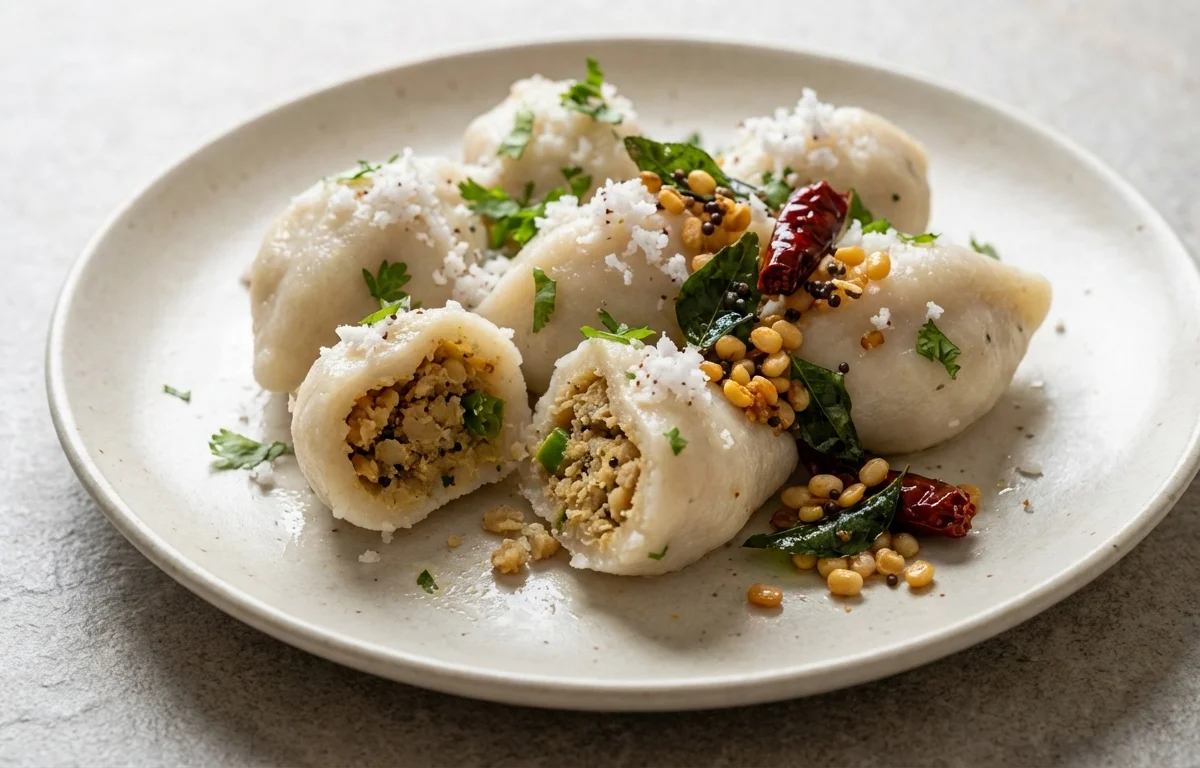
Ulundu Kozhukattai
Soft, pillowy steamed rice dumplings with a savory, spiced urad dal filling. A cherished South Indian snack or breakfast, often made during Ganesh Chaturthi, that pairs perfectly with coconut chutney or a hot cup of filter coffee.
For 4 servings
- prep · ~60 min
Soak the urad dal for the filling.
Rinse half a cup of urad dal thoroughly and soak in water for 1 hour. Drain completely and set aside.
TIPGrinding with very little water gives the filling the right crumbly texture. - mix · ~5 min
Make the rice flour dough.
Boil 1.5 cups of water with a pinch of salt and 1 tsp oil. Once boiling, reduce heat to low and add rice flour in a steady stream, stirring continuously to avoid lumps. Cook until it forms a smooth, soft ball of dough.
- rest · ~10 min
Cool and knead the dough.
Transfer the cooked dough to a wide plate. Once cool enough to handle, apply a little oil to your palms and knead for 2-3 minutes until smooth and pliable. Cover with a damp cloth and set aside.
- prep · ~3 min
Grind the filling mixture.
Place the soaked, drained urad dal, green chili, and ginger in a mixer grinder. Add salt. Grind to a coarse paste without adding any water. The mixture should be crumbly, not a smooth paste.
- other · ~8 min
Cook the urad dal filling.
1.Heat 2 tsp oil in a pan over medium heat. Add mustard seeds and let them splutter.2.Add cumin seeds, urad dal (for tempering), and a pinch of asafoetida. Sauté until the dal turns golden.3.Add curry leaves and sauté for a few seconds until fragrant.4.Add the ground urad dal mixture. Stir-fry on low heat for 4-5 minutes until the mixture is cooked, dry, and crumbly.5.Turn off the heat and mix in the grated coconut. Let the filling cool completely.TIPKeep the heat low and stir constantly; the dal burns easily and tastes bitter. - assemble · ~10 min
Shape the kozhukattais.
1.Divide the dough into 8 equal portions. Roll each into a smooth ball.2.Flatten a ball into a small disc, about 2.5 inches wide, using greased fingers or a banana leaf.3.Place a generous spoonful of the urad dal filling in the center.4.Gently bring the edges together and seal, reshaping into an oval or round dumpling.TIPKeep the dough covered while working to prevent it from drying out. - steam · ~10 min
Steam the kozhukattai.
Place the shaped dumplings on a greased steamer plate or a muslin cloth-lined idli tray. Steam for 8-10 minutes over medium heat until the outer layer looks shiny and slightly translucent.
TIPDo not over-steam, or the outer skin will harden. Remove from the steamer immediately. - serve · ~2 min
Rest briefly and serve hot.
Let the kozhukattais cool for 2 minutes before removing from the steamer. Serve warm with coconut chutney.
What to keep in mind.
6 tips from the recipe — small details that make a real difference to the final dish.
- 1For a pliable, non-cracking dough, knead it while it's still warm to the touch.
- 2Grind the soaked urad dal with minimal water to keep the filling pleasantly crumbly.
- 3Fry the ground urad dal on low heat, stirring constantly, to prevent burning and bitterness.
- 4Keep the dough balls covered with a damp cloth as you shape to avoid dry edges.
- 5Steam until the dumplings look glossy and slightly translucent — about 8-10 minutes.
- 6Remove kozhukattais from the steamer immediately after cooking to keep the skin soft.
Adapt it for your goals.
Why this is on our healthy list.
High in Plant Protein
Urad dal is a rich source of plant-based protein, making these dumplings a satisfying and energizing snack.
Good Source of Dietary Fiber
Both urad dal and rice flour contribute fiber, which supports healthy digestion and sustained energy release.
Low in Saturated Fat
Using minimal oil for tempering and no deep-frying keeps these steamed dumplings light and heart-friendly.
Frequently asked questions
The dough may have cooled too much or dried out. Knead it again with a few drops of warm water, and keep it covered while shaping.


