
Loading...
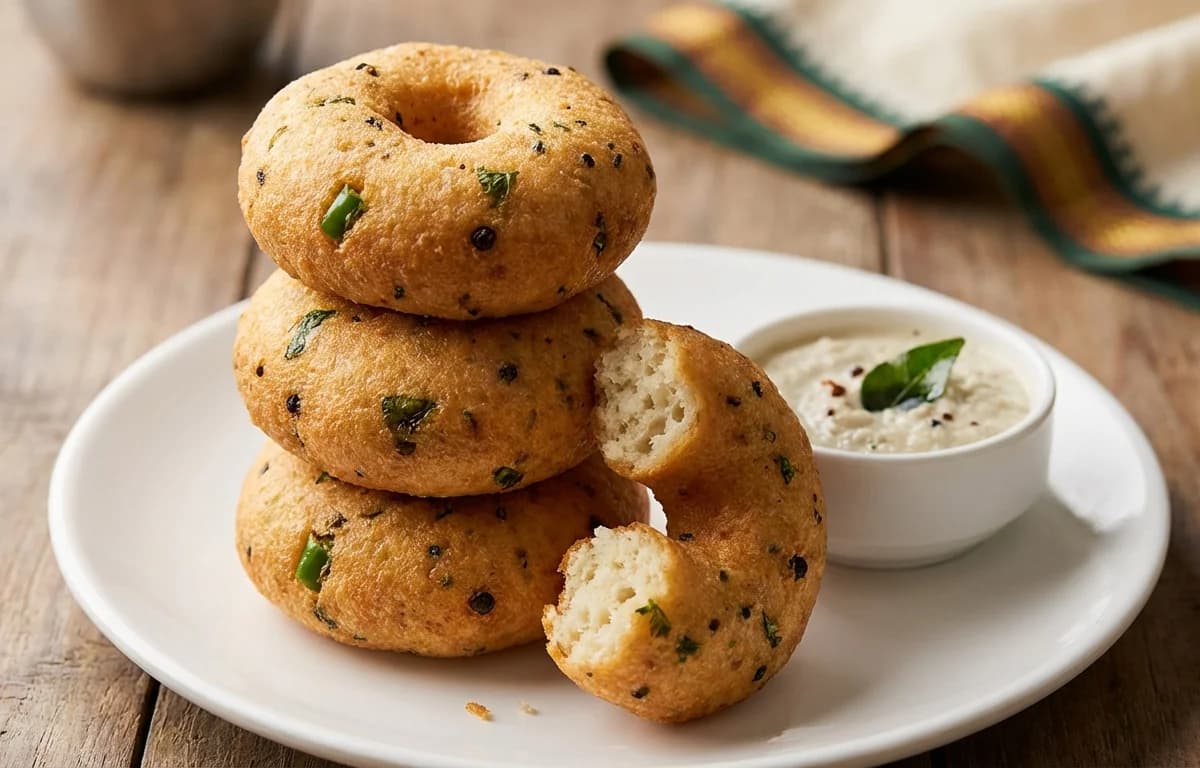
Crispy on the outside, soft and fluffy on the inside, these savory lentil doughnuts are a beloved South Indian breakfast and snack. Made from urad dal batter, they are perfect for dipping into hot sambar and fresh coconut chutney.
For 4 servings
Soak the Dal
Grind the Batter
Flavor and Aerate the Batter
Crisp green beans stir-fried with mustard seeds, lentils, and fresh coconut. This simple South Indian side dish, known as poriyal, is light, flavorful, and comes together in just 15 minutes.
A classic Karnataka one-pot meal, reimagined for a low-glycemic diet. This version uses wholesome foxtail millet instead of rice, combined with lentils and vegetables in a fragrant, spicy tamarind broth. It's comfort food that's both hearty and healthy.
A wholesome and savory South Indian pancake made with a low-glycemic blend of millets, brown rice, and mixed lentils. Packed with fiber and protein, this diabetic-friendly adai is a delicious and guilt-free choice for breakfast or dinner.
Crispy, golden crepes made from a fermented rice and lentil batter, filled with a savory spiced potato mixture. A beloved South Indian classic, perfect for a hearty breakfast or light dinner, best served with sambar and coconut chutney.
Crispy on the outside, soft and fluffy on the inside, these savory lentil doughnuts are a beloved South Indian breakfast and snack. Made from urad dal batter, they are perfect for dipping into hot sambar and fresh coconut chutney.
This south_indian recipe takes 40 minutes to prepare and yields 4 servings. At 308.32 calories per serving with 12.62g of protein, it's a moderately challenging recipe perfect for breakfast or snack or appetizer.
Shape and Fry the Vadas
Serve
Soak the fried vadas in warm water for 15 minutes, gently squeeze out the water, and then submerge them in sweetened, spiced yogurt (dahi). Garnish with cumin powder, red chili powder, and sweet tamarind chutney.
Serve the hot vadas in a bowl and pour generous amounts of hot, flavorful sambar over them. Garnish with chopped onions and a dollop of ghee.
A lighter alternative to Sambar Vada. Soak the vadas in hot, tangy rasam for a delightful and comforting snack.
Add finely grated carrots or chopped spinach to the batter for added nutrition and color.
Urad dal is an excellent source of plant-based protein, which is essential for muscle repair, building tissues, and overall body function.
The high dietary fiber content in urad dal aids in digestion, promotes regular bowel movements, and can help prevent constipation.
Urad dal is a good source of iron, which helps in the production of hemoglobin and improves blood circulation, thereby boosting energy levels and preventing fatigue.
Rich in minerals like magnesium, iron, potassium, phosphorus, and calcium, urad dal plays a vital role in improving bone mineral density and maintaining skeletal health.
A single Urad Dal Vada contains approximately 70-90 calories, depending on its size and the amount of oil absorbed during frying. A serving of 4 vadas would be around 280-360 calories.
Urad dal itself is very healthy, being rich in protein, fiber, and iron. However, since these vadas are deep-fried, they are high in calories and fat. For a healthier option, you can try making them in an air fryer or a paniyaram/appe pan with less oil.
This usually happens if the batter is not aerated enough. Ensure you beat the batter well for 3-4 minutes after grinding and that it passes the 'float test'. Also, grinding the dal for too long without enough aeration can make the batter pasty and result in hard vadas.
There are two common reasons. First, the oil temperature might be too low. Ensure the oil is at a steady medium heat. Second, the batter might be too thin or watery. A thick batter absorbs less oil. Over-soaking the dal can also contribute to this.
Yes, you can store the ground batter (without salt or onions) in an airtight container in the refrigerator for up to 2 days. When you're ready to use it, let it come to room temperature, beat it again to aerate, then add the onions, salt, and other flavorings just before frying.