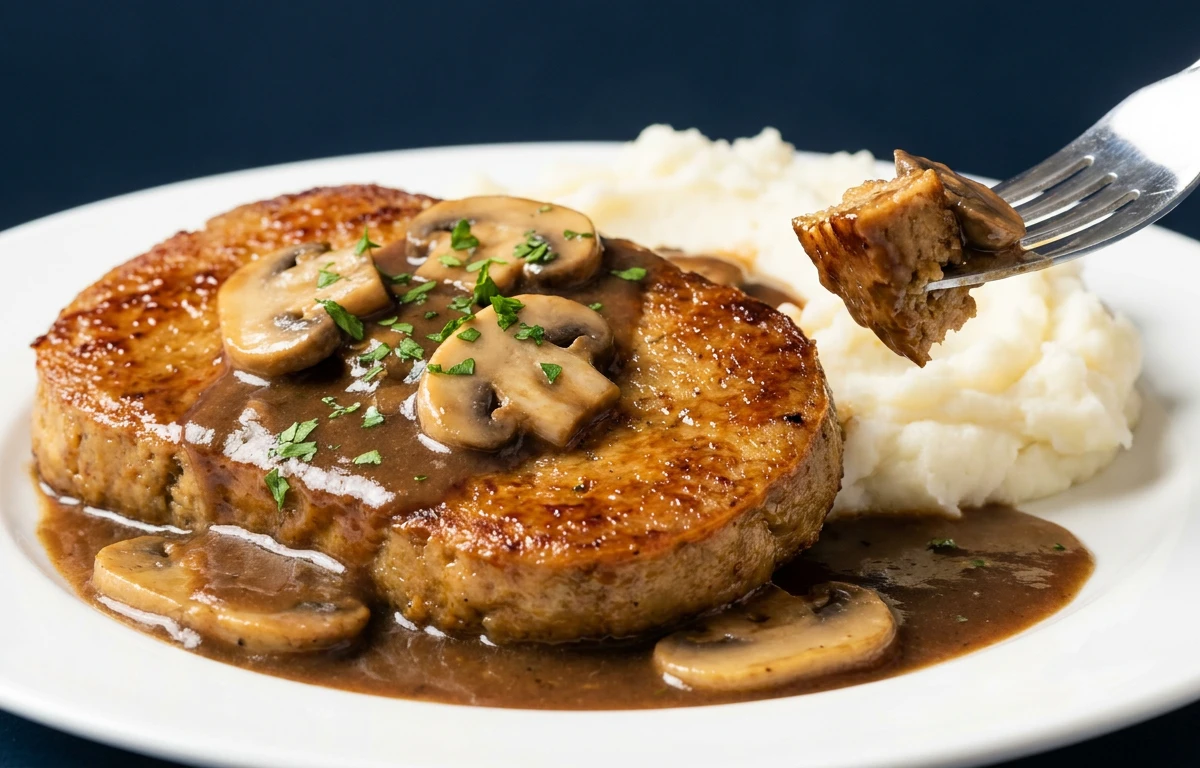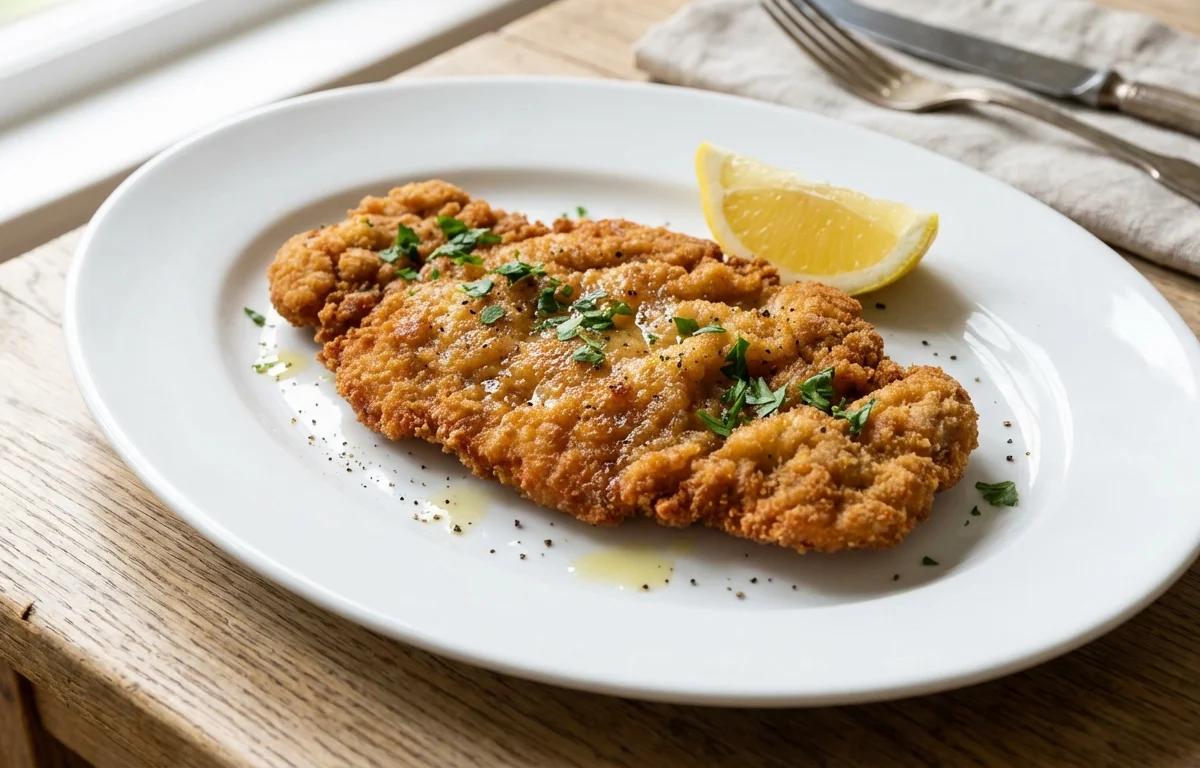
Veal Schnitzel
Thin, tender veal cutlets pounded until they're almost translucent, then breaded and pan-fried to golden, crispy perfection. This classic German-American dish takes just minutes in the skillet and comes out with a shatteringly crisp crust giving way to juicy meat inside. Serve it with lemon wedges and a simple side for a restaurant-quality dinner any night of the week.
For 4 servings
- prep · ~8 min
Pound the veal cutlets thin.
1.Place one veal cutlet between two sheets of plastic wrap.2.Using a meat mallet or heavy pan, pound evenly to about 0.5 cm thickness.3.Repeat with all 4 cutlets.4.Pat the pounded cutlets dry with paper towels.5.Season both sides of each cutlet with salt and black pepper.TIPPound from the center outward in short, glancing strokes — not straight down. This spreads the meat evenly without tearing. - prep · ~2 min
Set up the breading station.
1.Place flour in the first shallow bowl.2.Beat the eggs in the second shallow bowl until thoroughly blended.3.Place breadcrumbs in the third shallow bowl. - mix · ~5 min
Bread the schnitzels one by one.
1.Dredge a cutlet in flour, shaking off excess.2.Dip into beaten egg, letting excess drip back into the bowl.3.Press firmly into breadcrumbs, coating both sides evenly.4.Place breaded cutlet on a clean plate and repeat with remaining pieces.TIPKeep one hand for dry ingredients and one for wet — this prevents your fingers from turning into breaded mess. - fry · ~12 min
Pan-fry the schnitzels until golden and crisp.
1.Heat oil in a large skillet over medium-high heat until shimmering (about 175°C or 350°F).2.Carefully lay 1-2 schnitzels into the hot oil — do not crowd the pan.3.Fry for 2 to 3 minutes per side until deep golden brown.4.Transfer to a wire rack set over a baking sheet to drain excess oil.5.Repeat with remaining schnitzels, keeping finished ones warm in a low oven.TIPThe schnitzel should float slightly in the oil and bubble around the edges. If it sinks and sits flat, the oil isn't hot enough. - garnish · ~1 min
Garnish with parsley and serve with lemon wedges.
Arrange the schnitzels on a warm platter, scatter chopped parsley over the top, and tuck lemon wedges alongside. Squeeze lemon over each piece just before eating.
TIPServe immediately while the crust is at peak crispness — schnitzel waits for no one.
What to keep in mind.
6 tips from the recipe — small details that make a real difference to the final dish.
- 1Pound the veal from the center outward in short strokes to avoid tearing the meat.
- 2Keep one hand for dry ingredients and one for wet to prevent clumpy fingers during breading.
- 3Let the breaded schnitzels rest 5 minutes before frying so the coating adheres better.
- 4The oil should shimmer and the schnitzel should float slightly—test with a breadcrumb.
- 5Fry in batches; overcrowding drops oil temperature and makes the crust soggy.
- 6Drain fried schnitzels on a wire rack, not paper towels, to keep the crust crisp.
Adapt it for your goals.
Chicken Schnitzel
Substitute boneless chicken breast pounded thin for a leaner, crowd-pleasing twist that cooks just as quickly.
Pork SchnitzelPork Schnitzel
Use pork loin cutlets for a more economical yet equally tender and flavorful schnitzel.
Gluten FreeGluten-Free
Replace breadcrumbs with fine almond flour or gluten-free panko for a crisp, celiac-friendly option.
Parmesan CrustedParmesan-Crusted
Mix 1/4 cup grated Parmesan into the breadcrumbs for an extra nutty, savory crust with a deeper golden color.
Why this is on our healthy list.
Rich in Lean Protein
Veal cutlets provide high-quality, complete protein that supports muscle repair and satiety without excessive fat.
Good Source of B Vitamins
Veal is naturally rich in B12, niacin, and B6, essential for energy metabolism and nervous system health.
Low in Carbohydrates
With minimal flour and breadcrumbs, this dish fits well into moderate-carb or balanced meal plans.
Mineral Boost from Parsley
Fresh parsley adds vitamin K, vitamin C, and iron, supporting bone health and immunity.
Frequently asked questions
The cutlets likely weren't pounded thin enough, or you forgot to make small slits around the edges to prevent curling.