Wiener Schnitzel
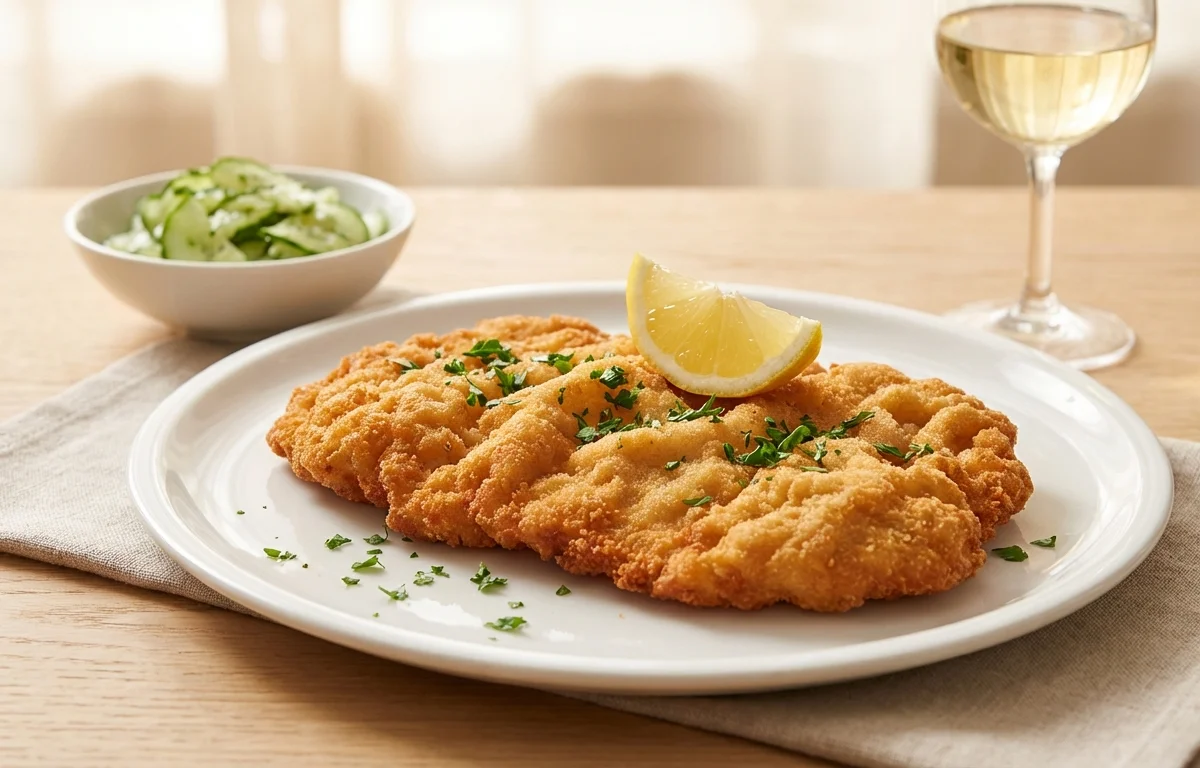
Thin, tender veal cutlets coated in a light, golden, and ultra-crispy breadcrumb crust that puffs up as it fries. A classic Austrian dish that made its way into American home kitchens, served simply with a squeeze of lemon and a side of potato salad or lingonberry jam. Ready in under 30 minutes, it's the kind of elegant comfort food that impresses at any table.
For 4 servings
- prep · ~8 min
Pound the veal cutlets until very thin.
1.Place one veal cutlet between two sheets of plastic wrap or parchment paper.2.Using a meat mallet or heavy rolling pin, pound evenly to about 5 mm (1/4 inch) thickness, working from center outward.3.Repeat with all 4 cutlets.4.Season both sides of each cutlet lightly with salt and black pepper.TIPEven thickness is key—thin spots tear, thick spots won't cook through in the short frying time. - prep · ~2 min
Set up the breading station.
1.Place flour in the first shallow dish.2.Place beaten eggs in the second shallow dish.3.Place breadcrumbs in the third shallow dish. - prep · ~5 min
Bread the cutlets one at a time.
1.Dredge one cutlet in flour, turning to coat evenly, then shake off all excess flour.2.Dip the floured cutlet into the beaten egg, letting excess drip off.3.Place into breadcrumbs and gently toss to coat—do not press the breadcrumbs onto the meat.4.Set breaded cutlet aside on a plate and repeat with remaining cutlets.TIPShake off flour and egg well between steps—excess creates gluey spots. Don't press the crumbs; a light, loose coating puffs into that classic wavy crust. - fry · ~3 min
Heat the oil for frying.
Pour the oil into a heavy skillet to a depth of about 1 cm (1/2 inch). Heat over medium-high heat until shimmering but not smoking, about 175°C (350°F). A breadcrumb dropped in should sizzle immediately.
TIPOil temperature matters more than you think—too cool and the schnitzel absorbs oil and turns greasy; too hot and the crust burns before the veal cooks through. - fry · ~8 min
Fry the schnitzels until golden and crisp.
1.Carefully slide one breaded cutlet into the hot oil.2.Fry for 2 to 3 minutes on the first side until deep golden brown.3.Flip carefully with tongs and fry the second side for 2 to 3 minutes.4.Transfer to a wire rack lined with paper towels to drain.5.Repeat with the remaining cutlets, frying no more than 2 at a time to avoid crowding.TIPSwirl the pan gently while the schnitzel fries—the hot oil washing over the top helps create that puffed, wavy crust characteristic of authentic Wiener Schnitzel. - garnish · ~1 min
Garnish with lemon wedges and fresh parsley.
Arrange the schnitzels on a warm platter or individual plates. Scatter fresh parsley over the top and tuck lemon wedges alongside. Serve immediately while hot and crispy.
TIPSqueeze the lemon over the schnitzel just before eating—it brightens the rich, crispy crust perfectly.
What to keep in mind.
6 tips from the recipe — small details that make a real difference to the final dish.
- 1Pound the veal to an even 5mm thickness for uniform cooking and tender texture.
- 2Shake off excess flour and egg between steps to avoid a gluey, heavy crust.
- 3Do not press breadcrumbs into the meat; a loose coating puffs up into the signature wavy crust.
- 4Use a thermometer to keep oil at 175°C (350°F) — too low makes greasy schnitzel, too high burns the crust.
- 5Fry no more than two cutlets at a time to maintain steady oil temperature.
- 6Swirl the pan gently while frying so hot oil washes over the top, helping the crust puff.
Adapt it for your goals.
Pork schnitzel
Substitute boneless pork loin or pork chops pounded thin. It's more affordable and widely available, with a slightly richer flavor that pairs well with the same breading.
chicken schnitzelChicken schnitzel
Use boneless, skinless chicken breast pounded to an even 5mm. The lean meat stays tender and juicy, making it a lighter weeknight-friendly option.
gluten freeGluten-free
Replace all-purpose flour with a gluten-free blend and breadcrumbs with crushed gluten-free crackers or almond flour. Ideal for those avoiding gluten without sacrificing crunch.
Why this is on our healthy list.
Lean Protein Source
Veal cutlets provide high-quality, lean protein essential for muscle repair and satiety, with moderate fat content when pan-fried in a controlled amount of oil.
Rich in B Vitamins
Veal is a good source of B vitamins like B12 and niacin, which support energy metabolism and nervous system function.
Low in Carbohydrates
With only a light flour coating and minimal breadcrumbs, this dish is naturally low in carbs, suitable for moderate low-carb eating patterns.
Frequently asked questions
Yes — pork loin or chicken breast pounded thin are common substitutes. Adjust frying time slightly; pork may need one extra minute per side.