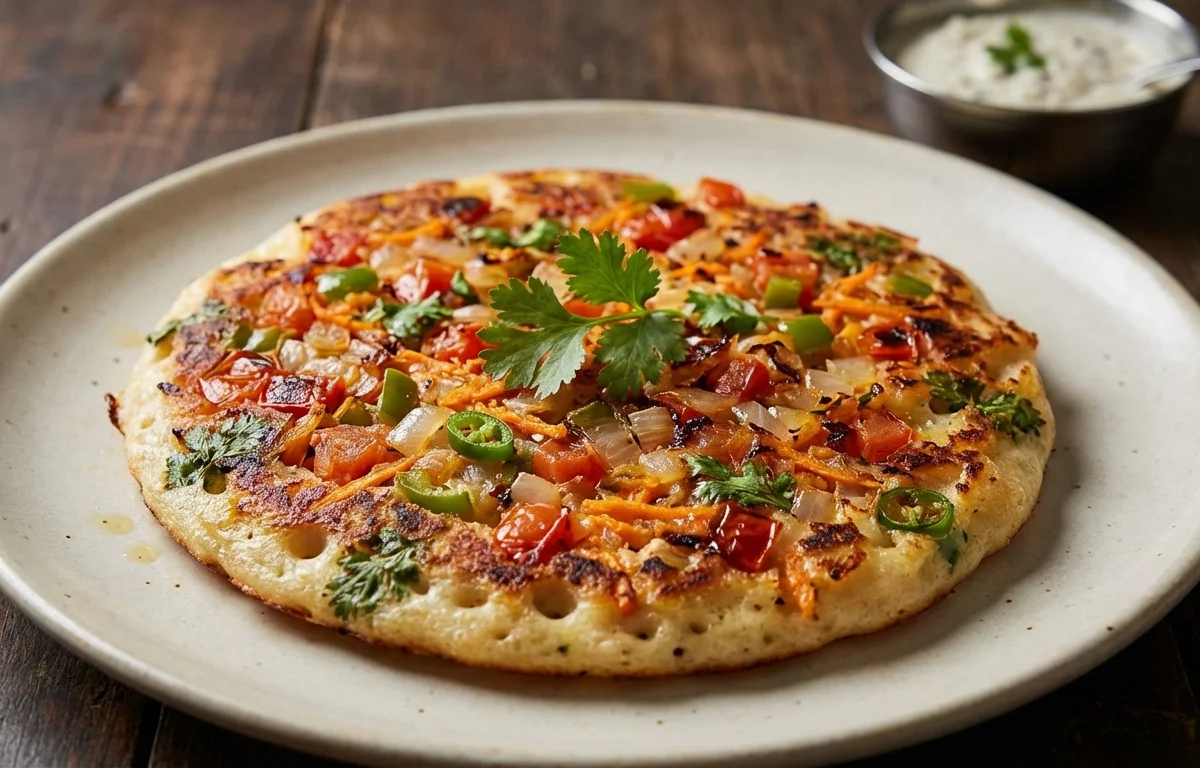
Vegetable Uttapam
Thick, crispy-on-the-edges, soft-in-the-center rice and lentil pancakes loaded with colorful vegetables. These savory South Indian breakfast cakes come together with a simple fermented batter, topped with onions, tomatoes, bell peppers, and carrots that cook right into the surface.
For 4 servings
- prep
Soak the rice and dal.
1.Wash 2 cups idli rice in 3-4 changes of water until water runs clear.2.Wash ¾ cup urad dal separately, drain well.3.Soak rice and dal in separate bowls with enough water to cover by 2 inches for 4 hours.4.Wash ¼ cup poha 20 minutes before grinding and soak separately.TIPCold water helps parboiled rice absorb water evenly without getting mushy. - mix · ~20 min
Grind the batter.
1.Drain the urad dal, add to wet grinder with ¼ cup cold water. Grind to a smooth, fluffy paste (15-20 min).2.Transfer urad dal paste to a large bowl.3.Drain rice and poha together, add to grinder with ½ cup water. Grind to a slightly coarse paste.4.Pour rice-poha paste into the urad dal bowl, add ½ tsp salt, and mix vigorously by hand for 2 minutes.TIPMixing by hand introduces warmth and natural bacteria that help fermentation. - rest
Ferment the batter overnight.
Cover the bowl loosely with a lid or cloth. Let the batter ferment in a warm place for 8-10 hours, or until it doubles in volume and has tiny bubbles on the surface.
TIPIn cold weather, place the bowl inside a turned-off oven with the light on — it creates the perfect warm environment. - prep · ~10 min
Prepare the vegetable topping.
Finely chop the onion, tomato, bell pepper, green chilies, and cilantro. Grate the carrot and ginger. Mix all vegetables together in a bowl — keep them raw so they cook directly on the uttapam.
TIPChop vegetables as finely as possible so they stick to the batter and cook quickly on the tawa. - prep · ~2 min
Get the batter to pouring consistency.
Gently stir the fermented batter without deflating too much. If it feels too thick (it should be thicker than dosa batter), add 2-3 tablespoons of water. Taste and adjust salt if needed.
TIPUttapam batter should be thick enough to spread only slightly on its own — it should hold a mound shape. - fry · ~5 min
Cook the first uttapam.
1.Heat a dosa tawa over medium heat. Sprinkle a few drops of water — it should sizzle and evaporate immediately.2.Pour a ladleful of batter (about ½ cup) in the center. Gently spread from inside out to form a 6-inch circle, keeping it thick (½ inch).3.Immediately sprinkle a generous handful of mixed vegetables over the top and press them in gently with the spatula.4.Drizzle ½ teaspoon oil around the edges and a few drops in the center.5.Cover with a lid and cook on medium-low heat for 2-3 minutes until the bottom is golden and crisp.TIPCooking covered steams the vegetables on top while the bottom turns beautifully golden. - fry · ~2 min
Flip and cook the other side.
1.Check that the bottom is golden and the vegetables have softened slightly.2.Gently flip the uttapam using a flat spatula.3.Cook uncovered for 1-2 minutes until the vegetable side is lightly charred and the vegetables are cooked through.4.Flip back and transfer to a plate, vegetable side up.TIPDon't press down hard while flipping — let the uttapam keep its thick, fluffy texture. - mix
Repeat with remaining batter.
Stir the batter gently between each uttapam. Repeat the process, making 8 uttapams in total. Wipe the tawa with a paper towel between batches if needed.
- serve
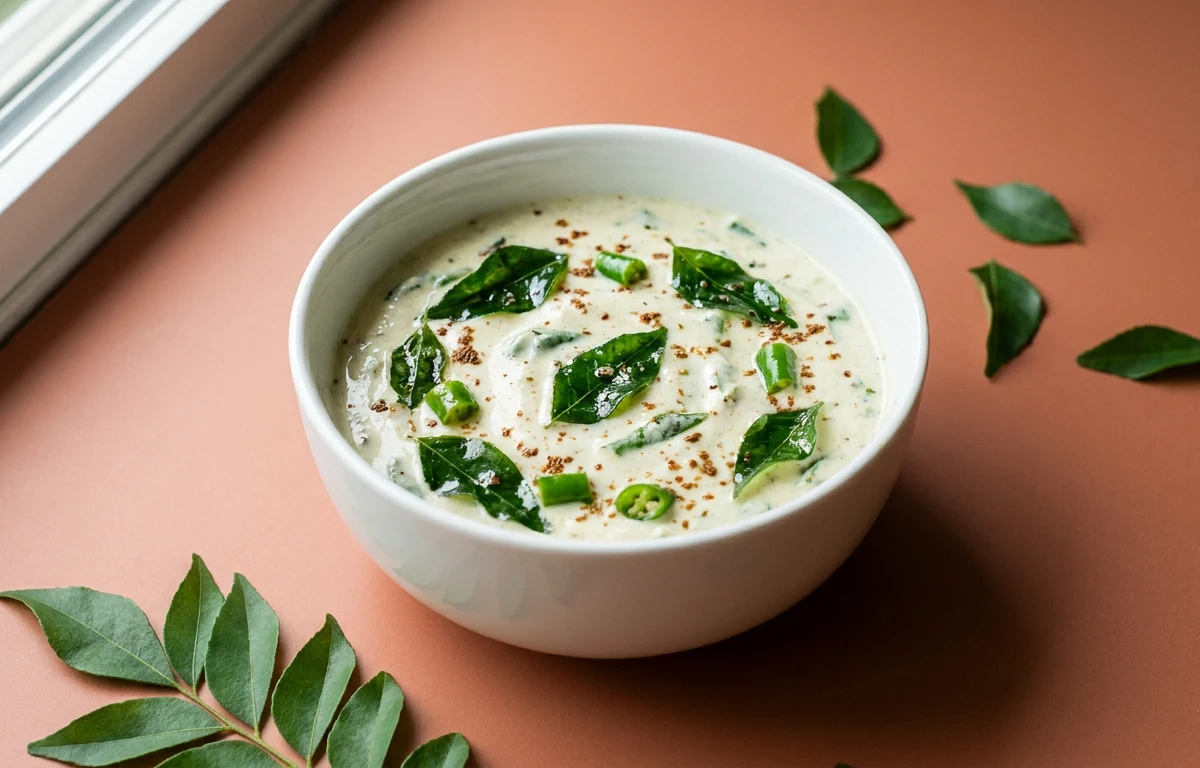
Serve hot with coconut chutney and sambar.
Stack the uttapams on a plate, vegetable side facing up. Serve immediately while the edges are still crisp, accompanied by fresh coconut chutney and a bowl of warm sambar.
TIPUttapam is best eaten fresh off the tawa — it loses its crispness if held too long.
What to keep in mind.
7 tips from the recipe — small details that make a real difference to the final dish.
- 1Ensure the urad dal is ground to a fluffy, airy paste for a light and well-fermented batter.
- 2Test the tawa heat by sprinkling water — it should sizzle and vanish instantly before pouring batter.
- 3Do not overspread the batter; keep it thick (about ½ inch) for that signature spongy center.
- 4Press the chopped vegetables gently into the batter so they embed and cook without falling off.
- 5Cook the first side covered to steam the veggies and guarantee a golden, crispy bottom.
- 6Stir the batter gently between each uttapam to keep it aerated without deflating it.
- 7Serve uttapam immediately after cooking; it loses its crisp edge if left to sit.
Adapt it for your goals.
Cheesy uttapam
Sprinkle 2 tablespoons of grated mozzarella or cheddar over the vegetables before covering. The cheese melts into the batter, adding richness and a golden, bubbly crust.
protein boostProtein boost
Mix ¼ cup of crumbled paneer or firm tofu into the vegetable topping. This variation adds a mild, creamy protein without altering the traditional flavor profile.
south indian spicedSouth-indian-spiced
Add ½ teaspoon of sambar powder or a pinch of asafoetida to the vegetable mix. It deepens the earthy, savory notes and enhances the dish's authenticity.
Why this is on our healthy list.
Plant-Based Protein
Urad dal and rice together provide a complete protein profile, making these pancakes a sustaining vegetarian breakfast.
Rich in Dietary Fiber
The mix of onions, carrots, bell peppers, and tomatoes adds natural fiber, supporting digestion and prolonged satiety.
Naturally Low in Fat
With only a teaspoon of oil per pancake, this dish is a light, low-fat alternative to fried breakfast options.
Probiotic from Fermentation
The overnight fermentation boosts beneficial bacteria, aiding gut health and nutrient absorption from the grains and lentils.
Frequently asked questions
Ensure the environment is warm (75–85°F), use fresh urad dal, and avoid adding salt before fermentation — salt slows the process.