
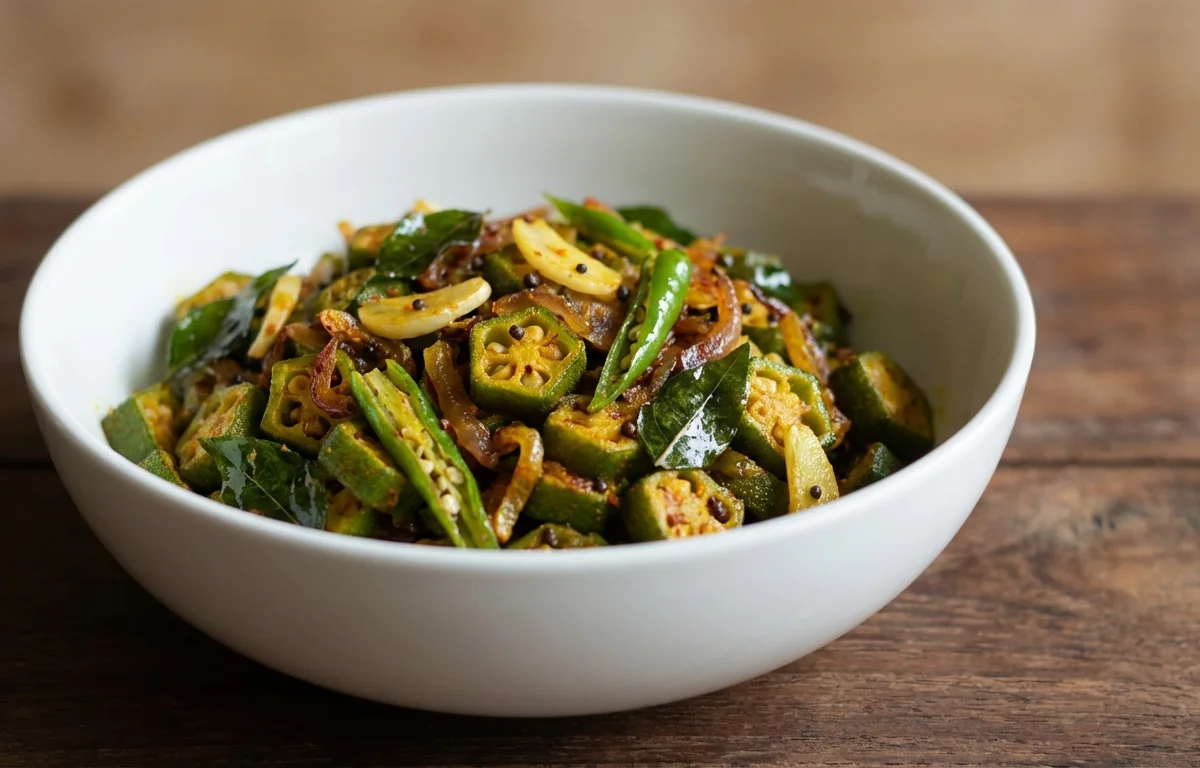
Vendakka Mezhukkupuratti
A simple Kerala-style okra stir-fry where tender vendakka is cooked with onion, curry leaves, and a little spice until lightly crisp and flavorful. It makes a lovely dry side for rice and curry.
For 4 servings
- prep · ~15 min
Prepare the vendakka.
1.Wash the okra and wipe it completely dry with a clean cloth.2.Trim the ends and slice it into thin rounds.3.Slice the onion and slit the green chilies.TIPDry okra well before cutting so the stir-fry stays less slimy. - temper · ~2 min
Make the tempering.
1.Heat coconut oil in a wide pan over medium heat.2.Add mustard seeds and let them splutter.3.Add curry leaves and green chilies and cook for a few seconds. - saute · ~4 min
Cook the onion.
Add the sliced onion and sauté for 3 to 4 minutes until softened and lightly golden at the edges.
- saute · ~12 min
Add the okra and spices.
1.Add the sliced okra and mix gently.2.Sprinkle in turmeric powder, red chili powder, and salt.3.Cook uncovered over medium heat, stirring occasionally, until the okra turns tender and lightly crisp.TIPStir only every couple of minutes; too much mixing makes okra sticky. - serve
Serve hot.
Serve Vendakka Mezhukkupuratti hot as a dry side with rice, dal, or a Kerala-style curry.
What to keep in mind.
7 tips from the recipe — small details that make a real difference to the final dish.
- 1Dry the okra completely before slicing; even a little moisture makes it slimy in the pan.
- 2Use a wide, heavy pan so the okra cooks in a shallow layer and crisps instead of steaming.
- 3After adding the okra, keep the pan uncovered and stir only occasionally to preserve the pieces.
- 4Let the onions turn lightly golden at the edges before adding okra for a sweeter base flavor.
- 5If the okra starts releasing slime, cook it a bit longer without stirring and it will dry out.
- 6Slice the vendakka into even thin rounds so it cooks uniformly and lightly crisps at the same time.
- 7This stir-fry is best served fresh, but leftovers reheat well in a dry pan rather than the microwave.
Adapt it for your goals.
Low-oil
Use less coconut oil and cook in a very wide pan, stirring minimally, for a lighter everyday version that still stays fairly dry.
spicierSpicier
Increase the green chilies or red chili powder for a hotter mezhukkupuratti that pairs especially well with plain rice and moru curry.
shallotShallot
Replace onion with thinly sliced Kerala shallots for a sweeter, more traditional flavor and slightly richer texture.
garlicGarlic
Add a few sliced garlic cloves with the onions for a more robust home-style version that goes nicely with dal and sambar.
Why this is on our healthy list.
Vegetable-forward side dish
Okra and onion make this a simple plant-based accompaniment that adds fiber and variety to a rice-based meal.
Includes antioxidant-rich spices
Turmeric, chili, curry leaves, and mustard seeds contribute aromatic compounds and beneficial plant antioxidants.
Lightly cooked ingredients
The quick stir-fry method keeps the vegetables tender while preserving their fresh character and texture.
Frequently asked questions
Wash the okra early, dry it fully, cook it uncovered in a wide pan, and avoid frequent stirring once it goes into the oil.



.webp)
.webp)