Puffed rice feels like the ultimate light, 'healthy' snack. It's mostly air, right? And while it's low in fat and calories by volume, the story changes when you look at it by weight. What you're eating is a highly processed, refined grain that hits your bloodstream fast. It's not a villain, but it's definitely not the health food many people think it is. The trick is to see it as an ingredient for adding crunch, not as a nourishing base.
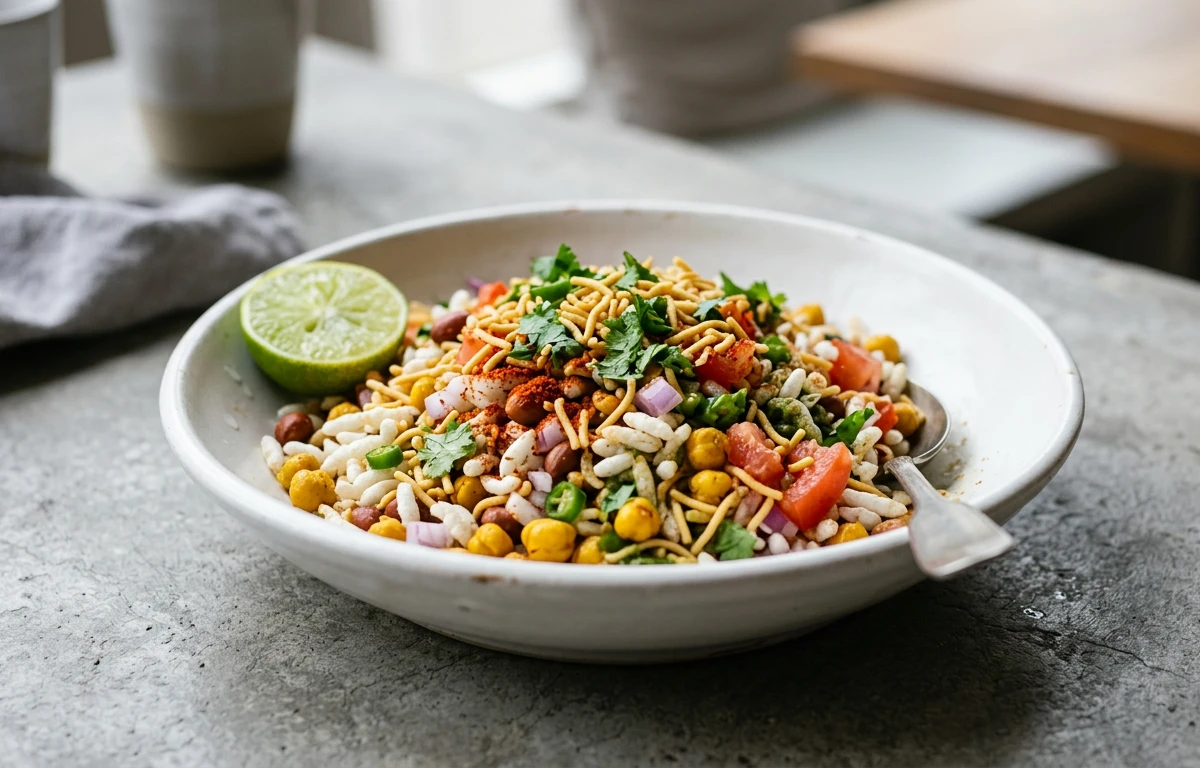
↑ Puffed rice: mostly air and fast-acting carbohydrate.
The 'healthy' snack myth
Walk down the cereal or snack aisle, and puffed rice seems like a smart choice. It's light, crunchy, and has that halo of being low-fat. But here's the thing: puffing rice is an industrial process that fundamentally changes how the grain behaves in your body.
The process, called extrusion, blasts rice kernels with steam and pressure. This makes them expand and become light and crispy, but it also breaks down their structure, making the starch incredibly easy for your body to digest. That means it turns to sugar in your bloodstream very, very quickly.
IN ONE LINE
Puffed rice is a highly-refined, high-glycemic carbohydrate with minimal fiber, protein, or micronutrients. Think of it as a crunchy, edible air.
Puffed rice nutrition facts
The numbers for puffed rice are a story of what's not there. A 100-gram serving is quite large (about 4-5 cups), so while the calorie count looks high, a typical one-cup serving is much lower. But that cup still offers very little in the way of real nutrition.
Note the nearly 78 grams of carbohydrate next to only 2.6 grams of fiber. That's a classic signature of a refined grain. There's a little protein, but almost no fat and a virtual absence of vitamins and minerals. You're getting calories and carbs, but not much else.
Puffed rice's glycemic index
This is the most important part of the story. Glycemic index (GI) ranks how fast a food raises blood sugar. Anything over 70 is considered high. Puffed rice isn't just high; it's one of the highest-GI foods you can find, often scoring higher than pure table sugar or white bread. The puffing process makes its starch so accessible that it requires almost no work from your digestive system.
GLYCEMIC INDEX · PUFFED RICE vs COMMON FOODS
Puffed rice is in the very high-GI band
Apple
whole fruit
LOW
Watermelon
whole fruit
HIGH
White bread
refined
HIGH
Cornflakes
refined
HIGH
Puffed Rice
refined
HIGH
SCALE 0–90
04590
The smart way to eat it
Given its profile, you can't treat puffed rice like you'd treat oatmeal. It's a food that needs to be handled with care to avoid a blood sugar rollercoaster.
01
Use it as a topping, not a base.
Sprinkle a tablespoon or two on yogurt or a smoothie bowl for crunch. Don't fill a bowl and add milk.
02
Always pair with protein and fat.
Never eat it alone. The protein and fat from nuts, seeds, or yogurt will slow down the carb absorption and blunt the sugar spike.
03
Keep portions tiny.
Think of it as a condiment. A small handful is more than enough. Its lightness is deceptive and leads to overeating.
04
Make it part of a mix.
If you're making a trail mix, use puffed rice to add volume, but make sure the bulk of the mix is nuts, seeds, and maybe some dried fruit.
What puffed rice is good for
01
Adding Volume & Crunch
Its main talent. It adds a satisfying crunch and bulk to recipes for very few calories per spoonful, making food seem more substantial.
~15
cal / tbsp
02
Easy Digestion
Because it's a simple, low-fibre carbohydrate, it's very easy on the stomach. This makes it suitable for some bland or recovery diets.
Low
FODMAP
03
A Blank Slate
Being low in fat, sodium, and sugar (in its plain form), it's a neutral base that can be used in both sweet and savory dishes.
<1%
sodium DV
What to pair it with
Pairing is everything with puffed rice. The goal is always to add what it's missing: fiber, protein, and healthy fats.
Eat freely — or be mindful?
Three ways to eat it
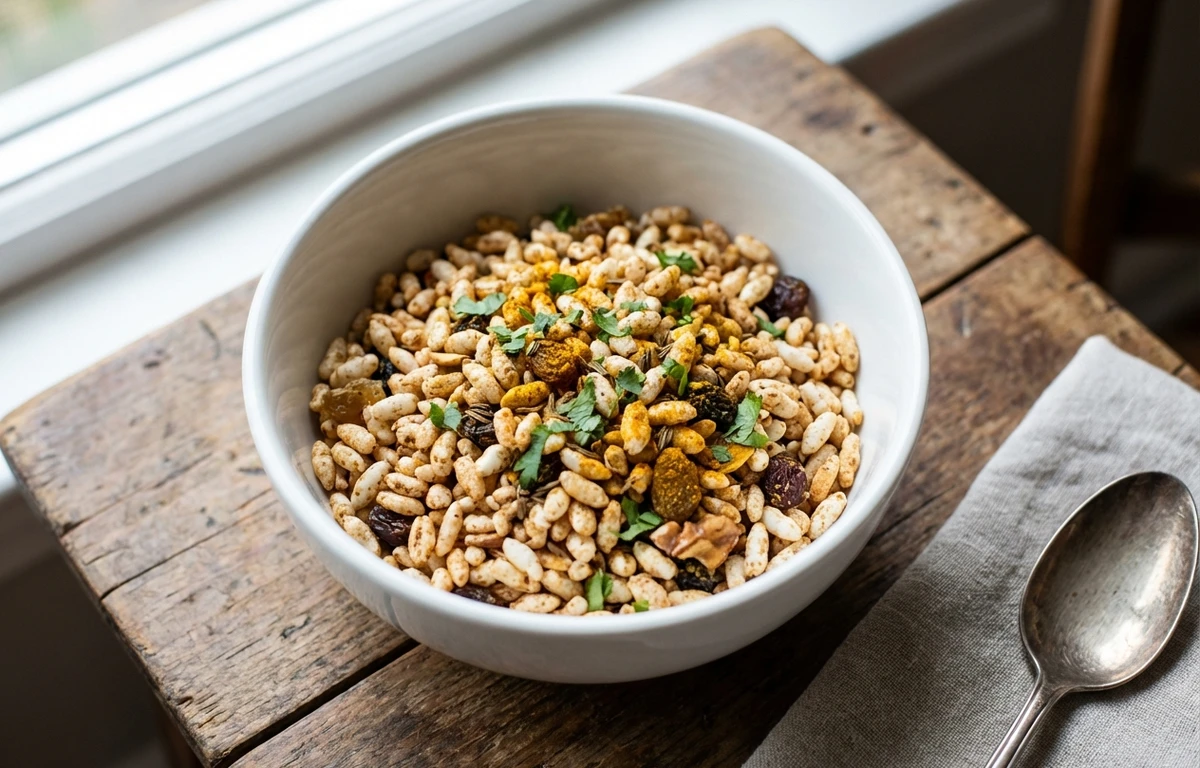
Here are three ways to use puffed rice that respect its nutritional profile — using it in small amounts, paired with balancing ingredients.
Want carbs worked into a balanced week — without the guesswork?
Our meal planner knows how to handle high-GI foods: in small portions, paired with fiber and protein. Get a plan that balances energy, with a single grocery list for the week.
Build my weekly plan →SOURCES & REFERENCES · 3
One more thing
Eating well is rarely about willpower. It’s about having a short list of dinners you actually want to eat. Pick two from this list. Make them next week. The rest will follow.
If you want these on autopilot, our weekly meal planner can drop the picks above into your calendar with one click and build a single grocery list from the merged ingredients.
FREQUENTLY ASKED QUESTIONS
Frequently asked questions
Is puffed rice good for weight loss?
It's tricky. A cup is low in calories, but it's not filling due to the lack of fiber and protein. For many, its high-GI nature can lead to a quick crash and more hunger, making weight loss harder. It's better to choose a more satiating snack like popcorn.
Is puffed rice healthy?
Not particularly. It's a highly processed, refined grain that's stripped of most nutrients. Its main redeeming qualities are that it's low in fat and easy to digest. It's not actively 'unhealthy' in small amounts, but it offers almost no positive nutritional benefits.
Is puffed rice good for people with diabetes?
No. Due to its extremely high glycemic index, puffed rice can cause a rapid and large spike in blood sugar. Most dietitians and diabetes educators would advise against it, or recommend consuming it in only very small, condiment-like quantities paired with plenty of protein and fat.
Is puffed rice better than white rice?
Nutritionally, they are very similar in terms of being a refined carbohydrate. However, the puffing process makes the starch in puffed rice even more readily available, giving it a higher glycemic index than plain boiled white rice. From a blood sugar perspective, regular white rice is slightly better.
METHODOLOGY
How this article was created
Built using verified nutrition databases, culinary research, and traditional cooking knowledge — every claim is cross-referenced against the sources listed in the article.
· USDA data· Culinary research· Quality reviewed
Read our methodology →TRANSPARENCY
About this content
Articles are curated using trusted food databases (USDA FoodData Central, IFCT), culinary literature, and dietary guidelines, then structured by our editorial team for clarity, accuracy, and usefulness.
· Verified data sources· Culinary research· Quality reviewed
Read our editorial policy →RELATED RECIPES
Cook from this article
EXPLORE OUR MEALS
Meals that fit this article

AMERICAN · 1677 CAL
Almonds with Sliced Apple + supplement + iron

MEDITERRANEAN · 809 CAL
Greek Yogurt with Berries Almonds and Granola + supplement + iron

GENERAL_HEALTHY · 705 CAL
Banana with Peanut Butter Pregnancy + supplement + iron

MODERN · 982 CAL
Hummus with Crudits and Pita with Fresh Orange Snack + supplement + iron
TAGGED
KEEP READING