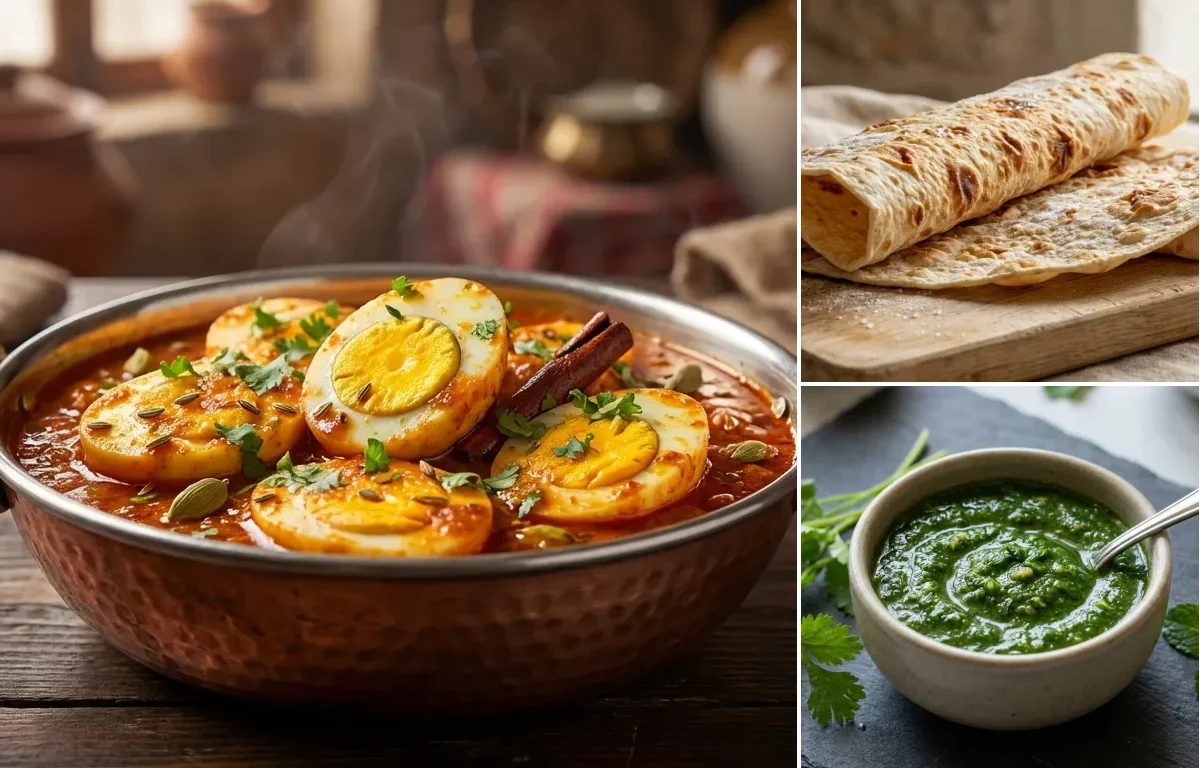
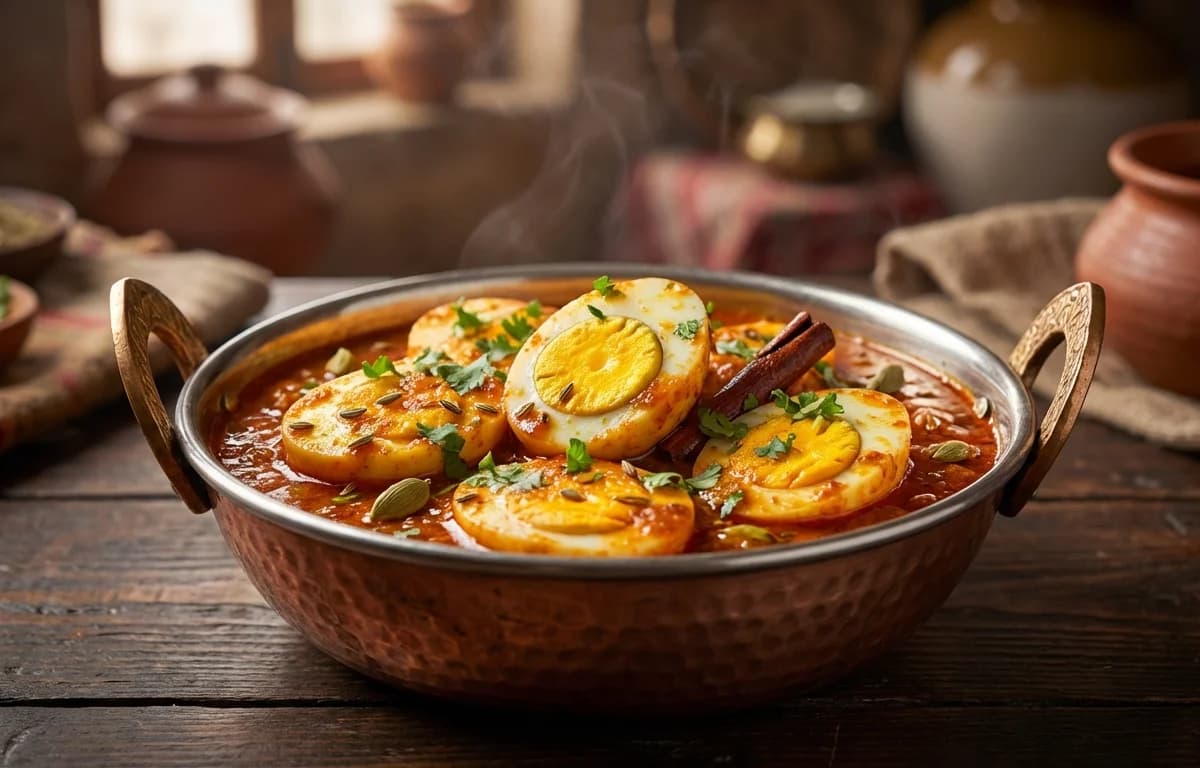
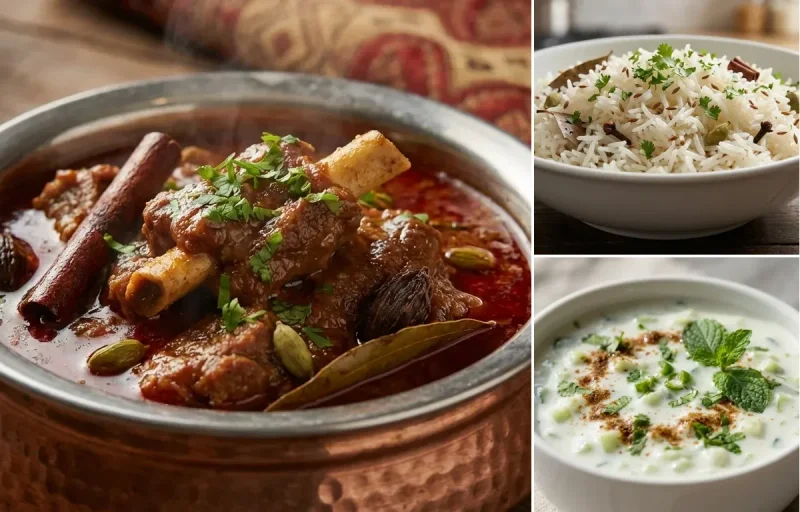
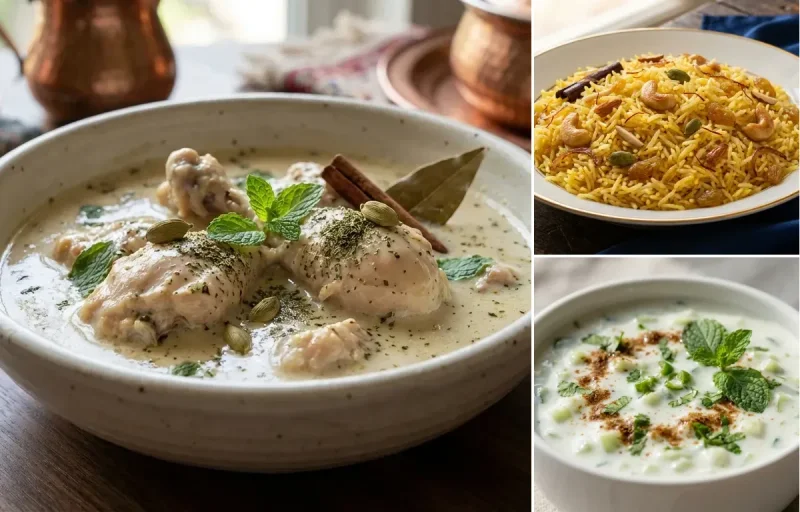
Hard-boiled eggs are fried until golden and then simmered in a fragrant, yogurt-based gravy spiced with fennel and ginger. A classic dish from the Kashmir valley, perfect with steamed rice.
Prep15 min
Cook30 min
Servings4
Serving size: 1 serving(2 eggs and about 1 cup of gravy)
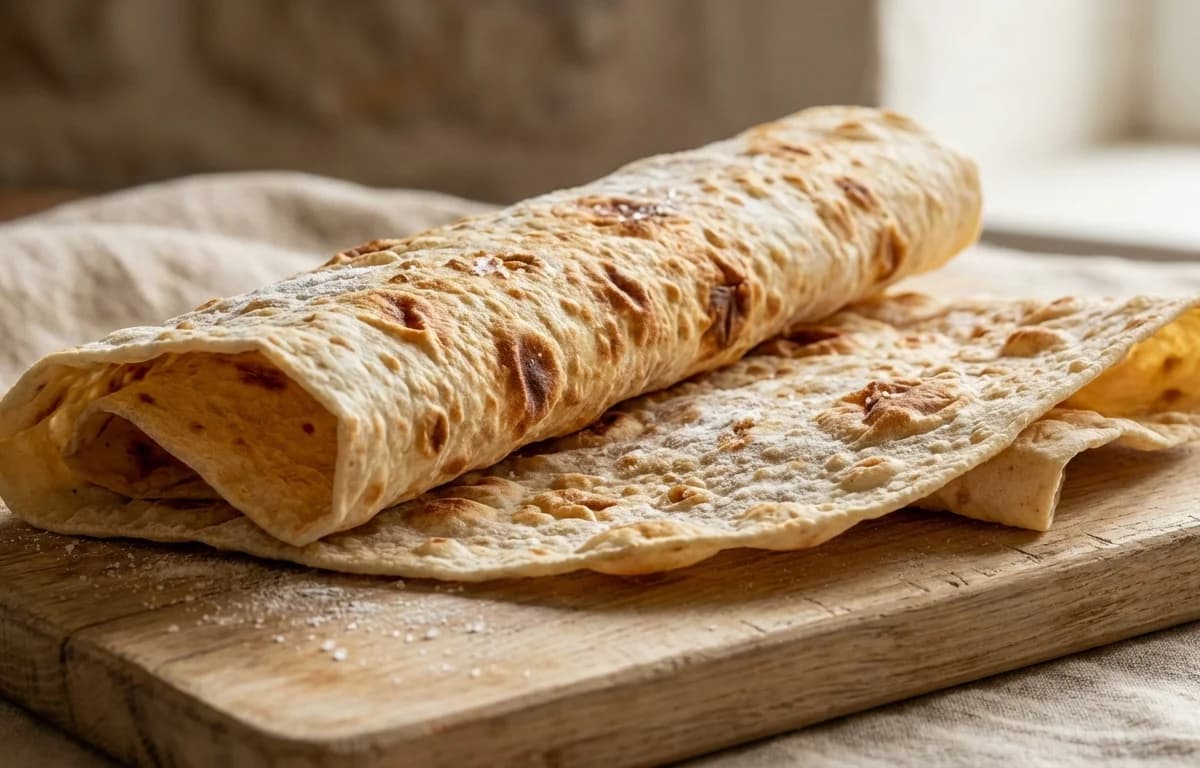
A classic Armenian staple, this thin, soft unleavened flatbread is incredibly versatile and a UNESCO Intangible Cultural Heritage. Traditionally baked in a tonir (clay oven), this recipe adapts the process for a home kitchen using a hot skillet. Perfect for wraps, scooping dips, or enjoying with cheese and herbs.
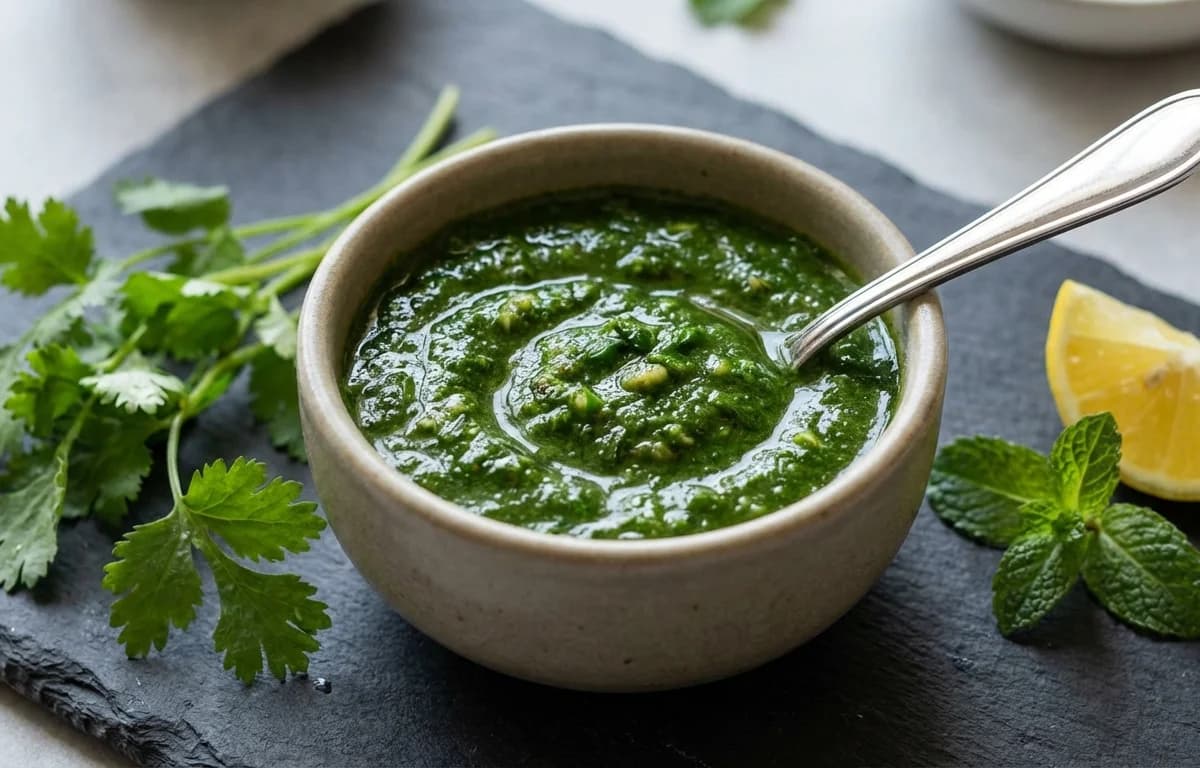
A vibrant and refreshing green chutney made with fresh coriander and mint leaves. This versatile Indian condiment is the perfect zesty accompaniment to snacks like samosas, pakoras, and sandwiches.
Prep10 min
Cook0 min
Servings8
Serving size: 1 serving
About Kashmiri Egg Masala, Lavash Bread and Coriander Mint Chutney
Aromatic, perfectly spiced Kashmiri Egg Masala with soft Lavasa bread and tangy chutney. Protein-packed comfort food!
This kashmiri dish is perfect for dinner. With 575.1899999999999 calories and 22.24g of protein per serving, it's a nutritious choice for your meal plan.
Other Cuisines to Explore
Discover authentic meals from cuisines around the world.
1.5 tsp Fennel Powder (also known as Saunf powder)
1 tsp Dry Ginger Powder (also known as Sonth)
0.5 tsp Turmeric Powder
0.5 tsp Garam Masala
1 tsp Salt (or to taste)
1.5 cup Water (use warm water)
2 tbsp Coriander Leaves (chopped, for garnish)
Instructions
1
Prepare and Fry the Eggs
Take the hard-boiled and peeled eggs. Using a fork or toothpick, prick them all over. This crucial step allows the gravy to penetrate the eggs.
Heat 2 tablespoons of mustard oil in a heavy-bottomed pan or kadai over medium heat. Wait until it's slightly smoking to reduce its pungency.
Carefully slide the pricked eggs into the hot oil. Shallow fry for 4-5 minutes, turning them gently, until they develop a golden-brown, slightly blistered, and chewy skin. Remove with a slotted spoon and set aside.
2
Sauté Aromatics and Onions
In the same pan, add the remaining 2 tablespoons of mustard oil. Heat it over medium flame.
Add the whole spices: cloves, green cardamom, and cinnamon stick. Sauté for 30 seconds until they become fragrant.
Add the hing, followed by the finely chopped onions. Cook for 8-10 minutes, stirring frequently, until the onions are deeply golden brown. This caramelization is key to the gravy's flavor and color.
Add the ginger-garlic paste and cook for another minute until its raw aroma disappears.
3
Create the Yogurt-Spice Base
In a separate bowl, whisk the curd until it's completely smooth. Add all the powdered spices: Kashmiri red chilli powder, fennel powder, dry ginger powder, turmeric powder, and salt. Mix thoroughly to form a smooth paste.
Reduce the pan's heat to the absolute lowest setting. Slowly pour the yogurt-spice mixture into the pan, stirring continuously and vigorously. This prevents the yogurt from curdling.
Continue to cook on low heat for 3-4 minutes, stirring constantly, until the masala thickens and you see oil separating at the edges.
4
Simmer the Curry
Pour in 1.5 cups of warm water and stir well to combine everything into a smooth gravy. Bring it to a gentle boil over medium heat.
Carefully place the fried eggs back into the gravy.
Cover the pan, reduce the heat to low, and let the curry simmer for 8-10 minutes. This allows the eggs to absorb all the aromatic flavors.
5
Garnish and Serve
Turn off the heat. Sprinkle the garam masala over the curry and give it a gentle stir.
Garnish with freshly chopped coriander leaves.
Let the Kashmiri Egg Masala rest for at least 5-10 minutes before serving. This helps the flavors to meld beautifully. Serve hot with steamed rice or naan.
204cal
5gprotein
36gcarbs
4gfat
Ingredients
3 cup All-Purpose Flour (plus extra for dusting)
1 cup Warm Water (around 105-115°F or 40-46°C)
2 tbsp Olive Oil
1 tsp Salt
1 tsp Sugar (Optional, helps with browning)
Instructions
1
Prepare the Dough
In a large mixing bowl, whisk together the all-purpose flour, salt, and optional sugar.
Create a well in the center and pour in the warm water and olive oil.
Using a spoon or your hands, mix until a shaggy, cohesive dough forms.
2
Knead and Rest
Turn the dough out onto a lightly floured surface. Knead for 8-10 minutes until the dough is smooth, soft, and elastic.
Form the dough into a ball and place it in a lightly oiled bowl, turning to coat.
Cover the bowl with a damp cloth or plastic wrap and let it rest in a warm spot for 60 minutes. This allows the gluten to relax, making it easier to roll.
3
Divide and Roll
Gently punch down the rested dough and transfer it to a floured surface.
Divide the dough into 8 equal portions and roll each portion into a smooth ball.
Working with one ball at a time (keep the others covered), use a rolling pin to roll it out into a very thin circle or oval, about 10-12 inches in diameter. The dough should be almost translucent.
4
Cook the Lavash
Heat a large, dry cast-iron skillet, tawa, or non-stick pan over medium-high heat. Do not add any oil.
Carefully lift the rolled-out dough and place it onto the hot pan.
Cook for about 30-60 seconds, until large bubbles start to form and the underside has light brown spots.
5
Finish and Keep Soft
Flip the lavash and cook the other side for another 30 seconds. Be careful not to overcook, as it will become crispy.
Immediately transfer the cooked lavash to a plate and cover it with a clean kitchen towel.
Stack the remaining cooked lavash on top as you finish them, keeping the stack covered. The trapped steam is essential for keeping the bread soft and pliable.
2 cup Coriander Leaves (Packed, with tender stems)
1 cup Mint Leaves (Packed, stems discarded)
3 whole Green Chilies (Adjust to your spice preference)
1 inch Ginger (Peeled and roughly chopped)
3 clove Garlic (Peeled)
2 tbsp Roasted Chana Dal (Also known as Dalia or Bhuna Chana)
2 tbsp Lemon Juice (Freshly squeezed for best flavor)
0.5 tsp Chaat Masala
0.5 tsp Black Salt (Also known as Kala Namak)
0.5 tsp Sugar (Optional, helps balance the tanginess)
0.25 tsp Salt (Adjust to taste)
3 whole Ice Cubes (Or use 3-4 tbsp of ice-cold water)
Instructions
1
Prepare the Herbs (3 minutes)
Thoroughly wash the coriander and mint leaves under cold running water to remove any grit or dirt.
Pluck the mint leaves from their stems; discard the thicker stems as they can be bitter.
For the coriander, use both the leaves and the tender upper stems, which are packed with flavor. Roughly chop the bunch.
2
Combine Ingredients in Blender (2 minutes)
Place the washed coriander and mint leaves into a high-speed blender jar.
Add the green chilies (broken in half), chopped ginger, garlic cloves, roasted chana dal, lemon juice, chaat masala, black salt, sugar (if using), and salt.
3
Blend to a Smooth Paste (2 minutes)
Add the ice cubes or 3 tablespoons of ice-cold water. Using ice is highly recommended as it prevents the herbs from oxidizing and helps maintain a vibrant green color.
Blend for 1-2 minutes, scraping down the sides of the jar as needed, until you achieve a completely smooth, uniform paste.
Avoid over-blending, as the heat from the motor can darken the chutney. If the mixture is too thick, add one more tablespoon of cold water and pulse briefly to combine.
Taste and adjust the seasoning. You may want to add more salt for savoriness, lemon juice for tanginess, or a pinch of sugar to balance the flavors.
For best results, let the chutney rest for 10-15 minutes to allow the flavors to meld. Serve fresh with snacks like samosas, dhokla, or use as a spread in sandwiches.