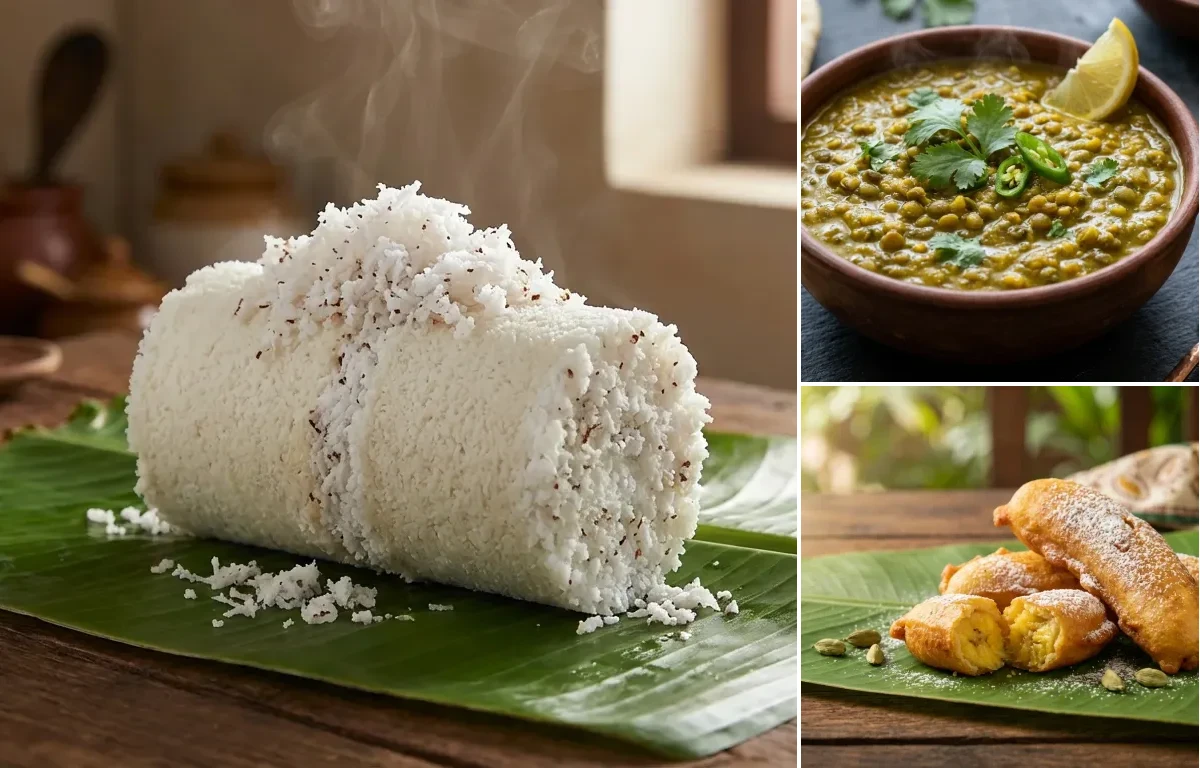
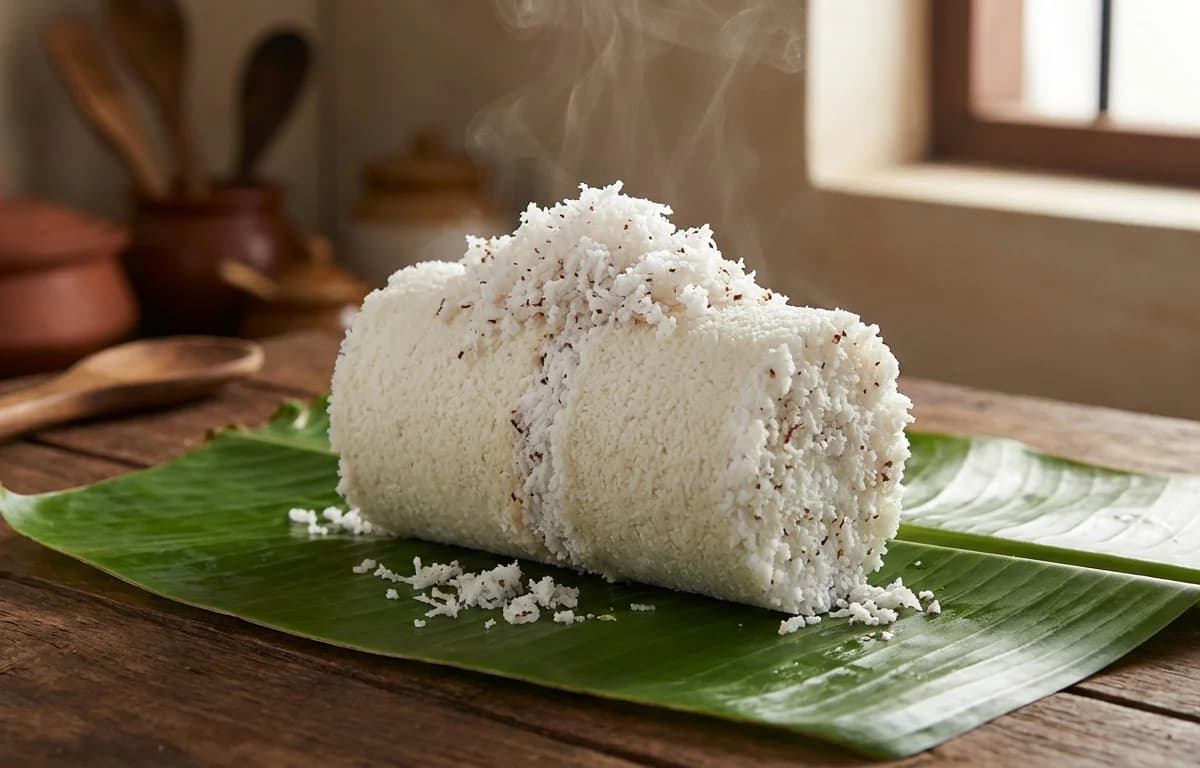
A quintessential Kerala breakfast, these steamed cylinders of rice flour and coconut are wonderfully soft and light. This traditional dish pairs beautifully with kadala curry, banana, or a sprinkle of sugar. The key to perfect puttu lies in achieving the right 'wet sand' moisture level in the flour, resulting in a fluffy, non-sticky texture.
Prep15 min
Cook20 min
Servings4
Serving size: 1 serving
331cal
5gprotein
60gcarbs
8g
Ingredients
2 cup Puttu Podi (Use store-bought roasted rice flour specifically for puttu for best results.)
1 cup Grated Coconut (Freshly grated is best, but thawed frozen coconut works well too.)
0.75 cup Warm Water (Amount is approximate; add slowly until the right texture is achieved.)
0.5 tsp Salt (Adjust to taste.)
Instructions
1
Prepare the Puttu Mixture (10-15 minutes)
In a large mixing bowl, combine the puttu podi and salt. Mix thoroughly with your fingertips.
Begin sprinkling the warm water, a little at a time, over the flour. Use your fingertips to rub the water into the flour in a circular motion to ensure even moistening.
Continue this process until the flour achieves a texture resembling coarse, damp breadcrumbs or wet sand. This is the most critical step for soft puttu.
To check for the correct consistency, take a small amount of the mixture in your fist and press firmly. It should hold its shape. When you gently break it with a finger, it should crumble easily.
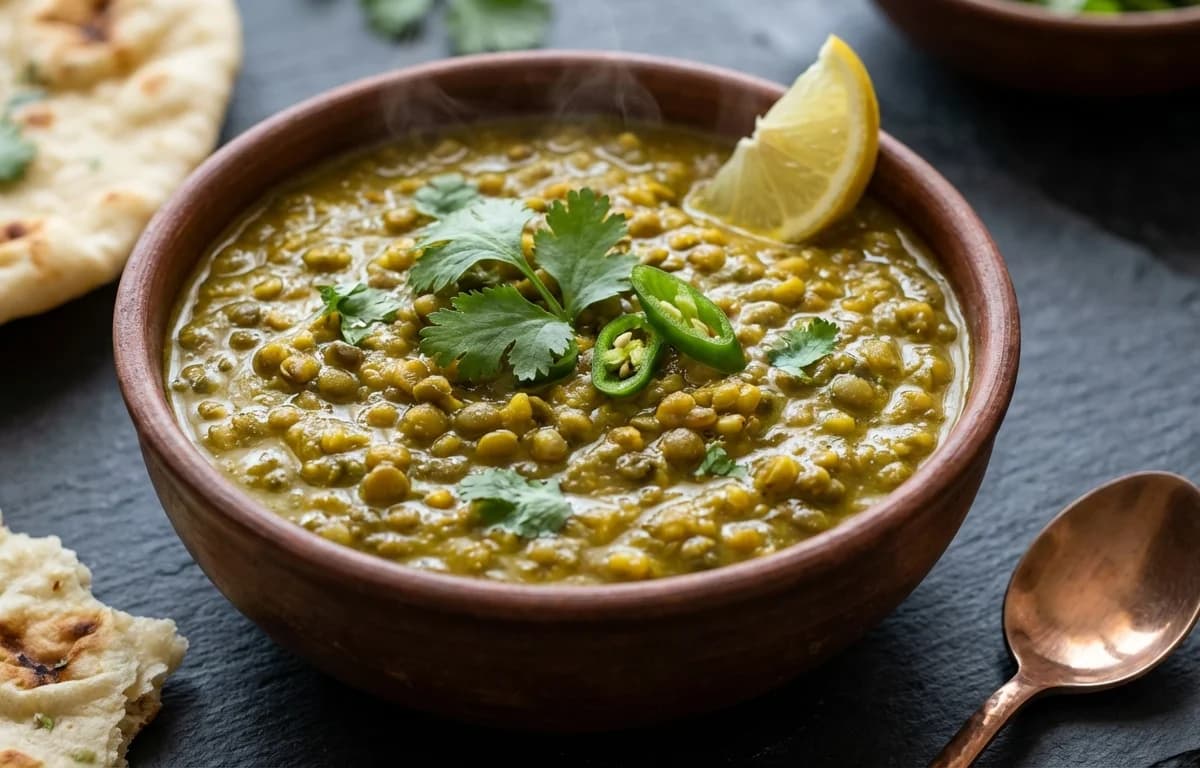
A wholesome and comforting curry made with whole green moong beans, simmered in a simple yet flavorful onion-tomato gravy. This protein-packed dish is perfect with rice or roti for a satisfying everyday meal.
Sweet, ripe plantain slices dipped in a lightly spiced batter and deep-fried to golden perfection. This beloved tea-time snack from Kerala is crispy on the outside and wonderfully soft and sweet on the inside.
Prep10 min
Cook15 min
Servings4
Serving size: 1 serving
About Kerala Puttu, Green Gram Curry and Pazham Pori
Light, steamed Puttu with protein-packed Green Gram Curry & sweet banana – an energy-giving, healthy meal!
This kerala dish is perfect for dinner. With 1037.1200000000001 calories and 22.919999999999998g of protein per serving, it's a nutritious choice for your meal plan.
Other Cuisines to Explore
Discover authentic meals from cuisines around the world.
For a perfectly uniform, lump-free texture, you can pulse the mixture a few times in a mixie/blender or press it through a coarse sieve.
Cover the prepared mixture and let it rest for at least 10 minutes. This allows the rice flour to fully absorb the moisture.
2
Layer the Puttu Maker (5 minutes)
Take the cylindrical puttu maker (puttu kutti) and place the small perforated disc at the bottom.
Start with a base layer of 2-3 tablespoons of grated coconut.
Gently spoon the prepared rice flour mixture on top of the coconut until the cylinder is about half full. Do not press or pack the flour down; it must remain loose.
Add another thin layer of 1-2 tablespoons of grated coconut.
Fill the rest of the cylinder with the flour mixture, leaving about an inch of space at the top. Finish with a final layer of coconut.
3
Steam the Puttu (8-10 minutes per batch)
Fill the base pot (puttu kudam) with 2-3 cups of water and bring it to a vigorous boil.
Carefully place the filled cylinder onto the nozzle of the base pot and close the lid.
Steam on medium-high heat. The puttu is perfectly cooked when a steady stream of steam escapes from the holes on the top lid, which typically takes 8-10 minutes. You will also notice a fragrant aroma of cooked rice and coconut.
Turn off the heat. Using a kitchen towel for safety, carefully remove the hot cylinder from the pot.
4
Serve Hot (5 minutes)
Allow the cylinder to rest for a minute to prevent breakage.
Using the provided rod or the back of a long spoon, gently push the cooked puttu from the bottom out onto a serving plate.
Repeat the layering and steaming process with the remaining mixture.
Serve immediately while hot with kadala curry (black chickpea curry), ripe bananas, pappadam, or a sprinkle of sugar and ghee.
4
Serving size: 1 serving
267cal
13gprotein
38gcarbs
8gfat
Ingredients
1 cup Whole Green Gram (rinsed and soaked for at least 4 hours)
2 tbsp Vegetable Oil
1 tsp Cumin Seeds
0.25 tsp Hing
1 medium Onion (finely chopped)
1 tbsp Ginger Garlic Paste
2 pcs Green Chili (slit lengthwise)
2 medium Tomatoes (pureed)
0.5 tsp Turmeric Powder (divided)
1 tsp Red Chili Powder (adjust to taste)
1.5 tsp Coriander Powder
1.25 tsp Salt (divided, adjust to taste)
0.5 tsp Garam Masala
4 cup Water (3 cups for cooking, 1 cup for gravy adjustment)
2 tbsp Coriander Leaves (freshly chopped, for garnish)
1 tbsp Lemon Juice (optional)
Instructions
1
Soak and Prepare the Green Gram
Rinse 1 cup of whole green gram thoroughly under cold running water.
Place the rinsed gram in a large bowl and cover with 3-4 cups of water. Let it soak for at least 4 hours, or preferably overnight. This step is crucial for even cooking.
After soaking, drain the water completely and give the gram one final rinse.
2
Pressure Cook the Green Gram
Transfer the soaked and drained green gram to a pressure cooker.
Add 3 cups of fresh water, 0.5 tsp of salt, and 0.25 tsp of turmeric powder.
Secure the lid and pressure cook on medium-high heat for 4-5 whistles (approximately 15-18 minutes).
Turn off the heat and allow the pressure to release naturally. The gram should be soft and cooked through but still hold its shape.
3
Prepare the Curry Base (Masala)
While the pressure cooker is cooling, heat 2 tbsp of vegetable oil in a kadai or deep pan over medium heat.
Add 1 tsp of cumin seeds and let them splutter. Immediately add 0.25 tsp of hing.
2 large Ripe Plantains (Use the Nendran variety with blackened skin for authentic sweetness.)
1 cup Maida (Also known as all-purpose flour.)
2 tbsp Rice Flour (This is the key to a crispy coating.)
3 tbsp Sugar (Adjust based on the sweetness of your plantains.)
0.25 tsp Turmeric Powder (Adds the characteristic golden color.)
0.25 tsp Cardamom Powder (For a subtle, sweet aroma.)
0.125 tsp Salt (A small pinch to balance the sweetness.)
0.75 cup Water (Add gradually as needed to achieve the right batter consistency.)
2 cup Coconut Oil (For deep frying; provides an authentic Kerala flavor.)
Instructions
1
Prepare the Plantains
Peel the ripe plantains carefully.
Slice each plantain lengthwise into 3 or 4 even slices, approximately 1/4-inch thick. If the plantains are very long, you can cut them in half crosswise first.
2
Make the Batter
In a medium-sized mixing bowl, combine the maida (all-purpose flour), rice flour, sugar, turmeric powder, cardamom powder, and salt. Whisk the dry ingredients together.
Gradually pour in the water while whisking continuously to create a smooth, lump-free batter.
The batter should be thick enough to coat the back of a spoon, similar to a thick pancake batter. It should not be too runny or too thick.
Let the batter rest for 10-15 minutes. This helps the flavors meld and the flour to hydrate.
3
Fry the Pazham Pori
Heat the coconut oil in a kadai or deep pan over medium-high heat. The oil should be about 350°F (175°C).
To test if the oil is ready, drop a tiny bit of batter into it. If it sizzles and rises to the surface immediately, the oil is at the perfect temperature.
Add the finely chopped onion and sauté for 4-5 minutes until it turns soft and golden brown.
Stir in 1 tbsp of ginger-garlic paste and the slit green chilies. Cook for about 1 minute until the raw aroma disappears.
Add the tomato puree. Cook for 2-3 minutes, stirring occasionally.
Add the remaining 0.25 tsp turmeric powder, 1 tsp red chili powder, 1.5 tsp coriander powder, and the remaining 0.75 tsp salt. Mix well.
Continue to cook the masala for 6-8 minutes, stirring frequently, until it thickens and you see oil separating from the sides.
4
Combine and Simmer the Curry
Once the masala is ready, carefully pour the cooked green gram along with all its cooking water into the kadai.
Stir gently to combine everything. Check the consistency; if it's too thick for your liking, add up to 1 cup of hot water.
Bring the curry to a gentle boil, then reduce the heat to low. Cover and let it simmer for 7-10 minutes, allowing the gram to absorb the flavors of the masala.
5
Finish and Garnish
Turn off the heat. Stir in 0.5 tsp of garam masala and 1 tbsp of lemon juice (if using).
Garnish generously with 2 tbsp of freshly chopped coriander leaves.
Let the curry rest for 5 minutes before serving. Serve hot with steamed basmati rice, jeera rice, or fresh rotis.
Take one plantain slice, dip it into the batter, ensuring it is fully and evenly coated. Let any excess batter drip off for a moment.
Carefully slide the battered slice into the hot oil. Fry in batches of 3-4, avoiding overcrowding the pan.
Fry for 2-3 minutes on each side, until the coating is a deep golden brown and crispy.
Using a slotted spoon, remove the fried pazham pori and place them on a wire rack or a plate lined with paper towels to drain excess oil.
4
Serve
Pazham Pori is best enjoyed hot and fresh.
Serve as a delightful evening snack with a hot cup of chai (tea) or coffee.