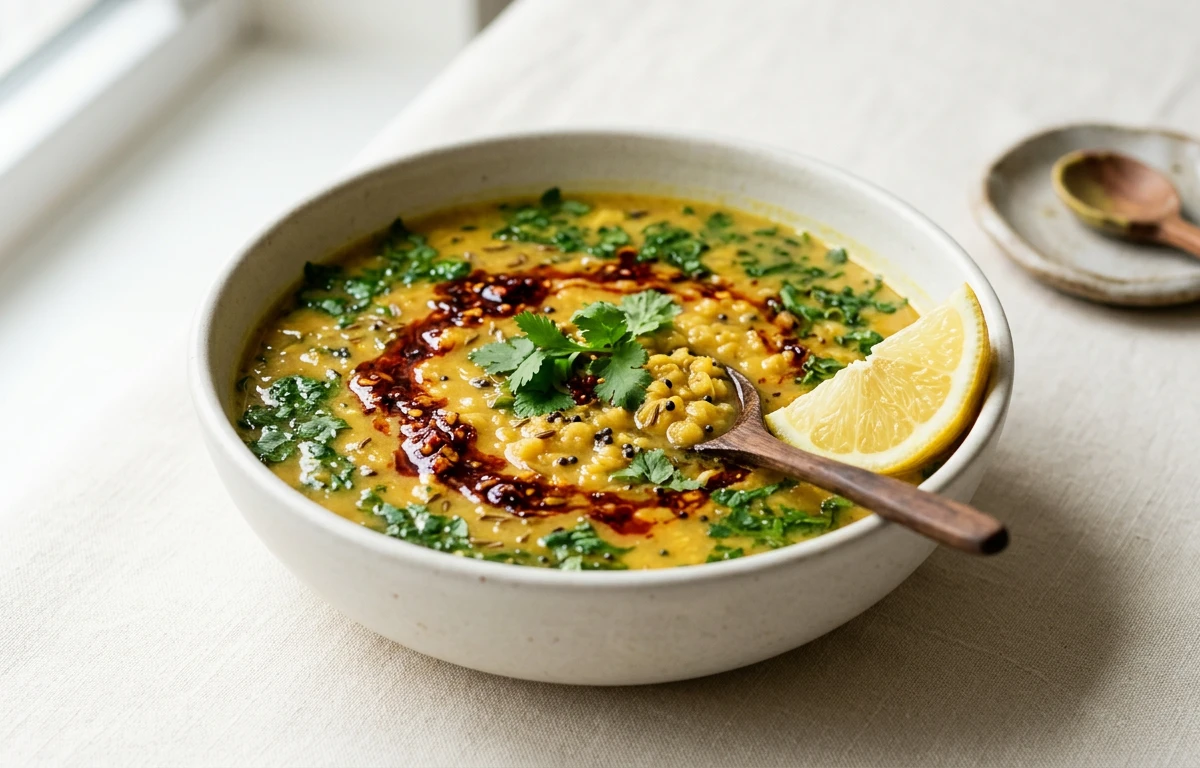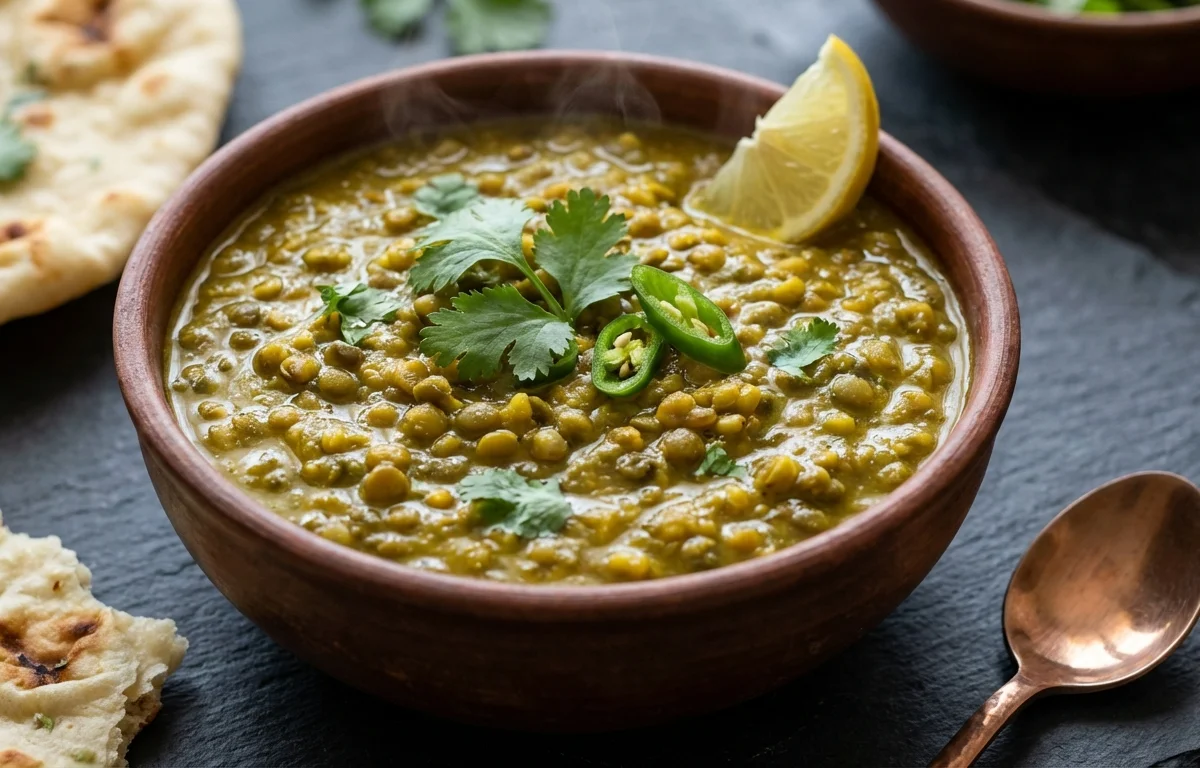
Green Gram Curry
Whole green gram beans simmered in a fragrant onion-tomato gravy with warm Indian spices. This rustic, protein-packed curry is a comforting everyday dal that pairs beautifully with steamed rice or roti.
For 4 servings
- prep
Soak the green gram.
Rinse the whole green gram thoroughly under running water. Soak in enough water for 4 hours. Drain and set aside.
- pressure cook · ~15 min
Pressure cook the soaked gram.
1.Add drained green gram to a pressure cooker with 3 cups of water.2.Close the lid and cook on medium heat until you hear 3-4 whistles.3.Allow pressure to release naturally before opening.TIPThe beans should be soft but still hold their shape. If using a pot, boil for 30-35 minutes instead. - temper · ~2 min
Temper the whole spices.
1.Heat oil in a heavy-bottomed pan over medium heat.2.Add cumin seeds and let them crackle for 30 seconds.3.Toss in the bay leaf and sauté until fragrant, about 10 seconds. - saute · ~13 min
Build the onion-tomato masala.
1.Add finely chopped onion and sauté until golden brown, about 6-7 minutes.2.Stir in ginger-garlic paste and slit green chilies; cook until the raw smell disappears, about 1 minute.3.Add chopped tomatoes, turmeric powder, red chili powder, and coriander powder.4.Cook, stirring often, until tomatoes soften and release oil from the sides, about 5-6 minutes.TIPDeglaze the pan with a splash of water if the masala starts sticking. - simmer · ~15 min
Combine everything and simmer.
1.Add the pressure-cooked green gram along with its cooking liquid to the masala.2.Pour in 1.5 cups of additional water and stir in the salt.3.Bring to a gentle boil, then reduce heat and simmer uncovered for 15 minutes, stirring occasionally.TIPMash a few beans against the side of the pan with your ladle to naturally thicken the curry. - mix
Finish with garam masala and lemon juice.
Sprinkle garam masala over the curry. Turn off the heat and stir in the lemon juice.
TIPAlways add garam masala off the heat to preserve its delicate aroma. - garnish
Garnish and serve hot.
Ladle into bowls, scatter generously with fresh coriander leaves, and serve immediately.
What to keep in mind.
7 tips from the recipe — small details that make a real difference to the final dish.
- 1Soak the whole green gram for at least 4 hours to ensure even cooking and a creamy texture.
- 2After pressure cooking, reserve the cooking liquid and use it in the curry for deeper flavor.
- 3Sauté the onions until deep golden brown to build a rich, sweet base for the masala.
- 4Mash a few cooked beans against the pan with your ladle to naturally thicken the gravy.
- 5Add garam masala only after turning off the heat so its volatile aromas don't dissipate.
- 6A squeeze of lemon juice just before serving brightens all the spices and balances the earthiness.
- 7This curry thickens as it cools; adjust consistency with hot water when reheating.
Adapt it for your goals.
Coconut-Infused
Add 1/4 cup of fresh or frozen grated coconut along with the tomatoes for a subtle sweetness and a Kerala-style coastal twist.
Spinach Green Gram CurrySpinach Green Gram Curry
Stir in 2 cups of chopped spinach during the last 5 minutes of simmering for extra iron, color, and a mild earthy note.
Tadka Dal StyleTadka Dal Style
After simmering, temper the curry with ghee, dried red chilies, and a pinch of asafoetida for a richer, more aromatic finish.
High Protein BowlHigh-Protein Bowl
Serve the curry over a bed of cooked quinoa and top with a dollop of plain yogurt for a complete protein meal with satisfying texture.
Why this is on our healthy list.
Rich in Plant Protein
Whole green gram provides a substantial amount of plant-based protein, making this curry a satisfying and muscle-friendly main dish.
High in Dietary Fiber
The whole mung beans are packed with soluble and insoluble fiber, which supports healthy digestion and helps maintain steady energy levels.
Low in Fat
With only 2 teaspoons of oil in the entire recipe, this curry is a heart-healthy option that keeps saturated fat to a minimum.
Loaded with Antioxidants
Turmeric, coriander, and tomatoes deliver antioxidants like curcumin and lycopene that help combat oxidative stress.
Frequently asked questions
Yes, but reduce soaking time to 30 minutes and pressure cook for 2-3 whistles only, as split gram cooks much faster and can turn mushy.