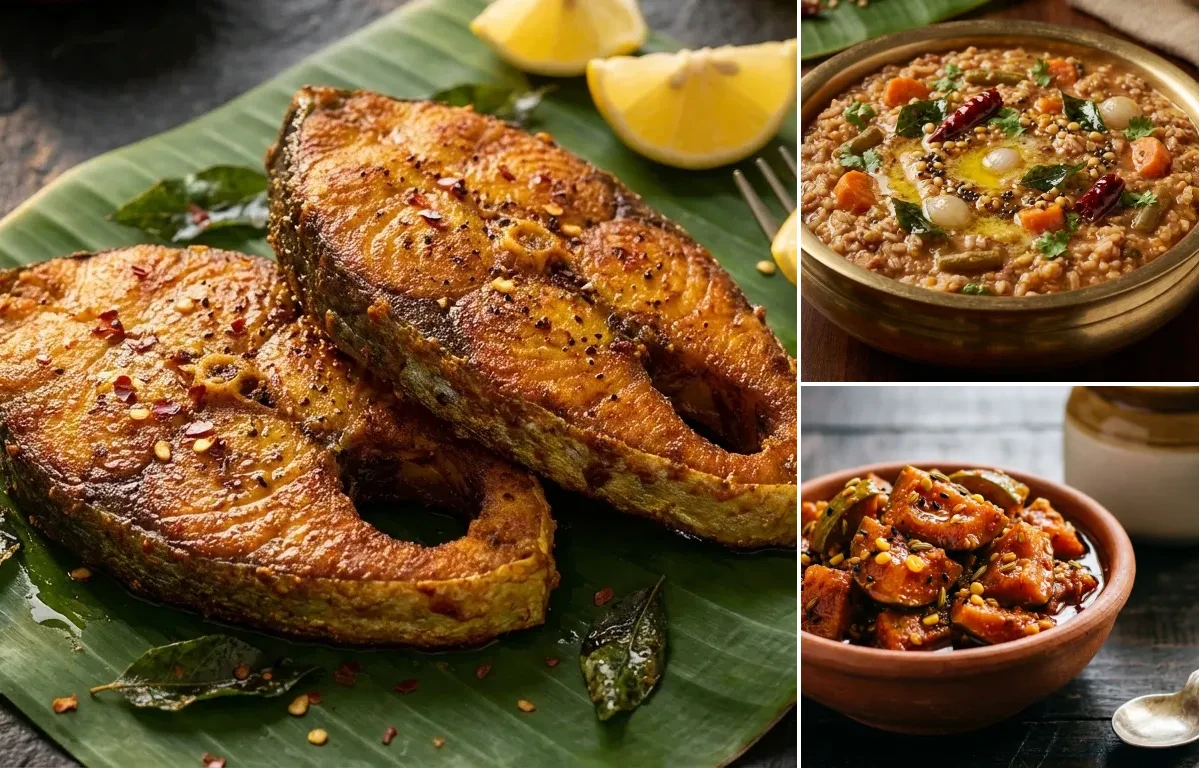
Crispy, spicy pan-fried kingfish steaks coated in a flavorful South Indian masala. A quick and delicious seafood dish that's perfect as an appetizer or a main course with rice and curry.
Prep45 min
Cook15 min
Servings4
Serving size: 1 serving
244cal
33gprotein
8gcarbs
9gfat
Ingredients
600 g Kingfish Steaks (About 4-5 thick steaks, cleaned)
1.5 tbsp Ginger Garlic Paste
1.5 tsp Kashmiri Red Chilli Powder (Adjust to your spice preference)
0.5 tsp Turmeric Powder
1 tsp Coriander Powder
0.5 tsp Black Pepper Powder (Freshly ground for best flavor)
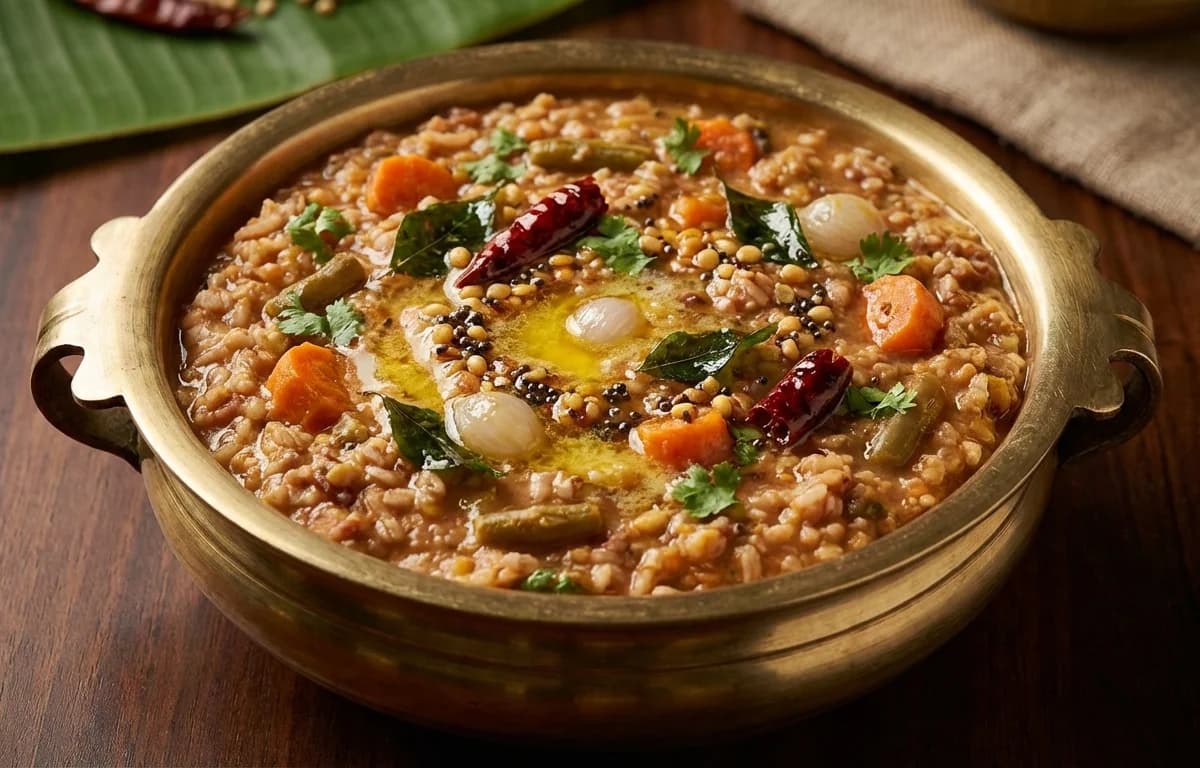
A comforting one-pot meal from Tamil Nadu where rice, lentils, and vegetables are cooked together with aromatic sambar spices. It's wholesome, flavorful, and perfect for a satisfying lunch.
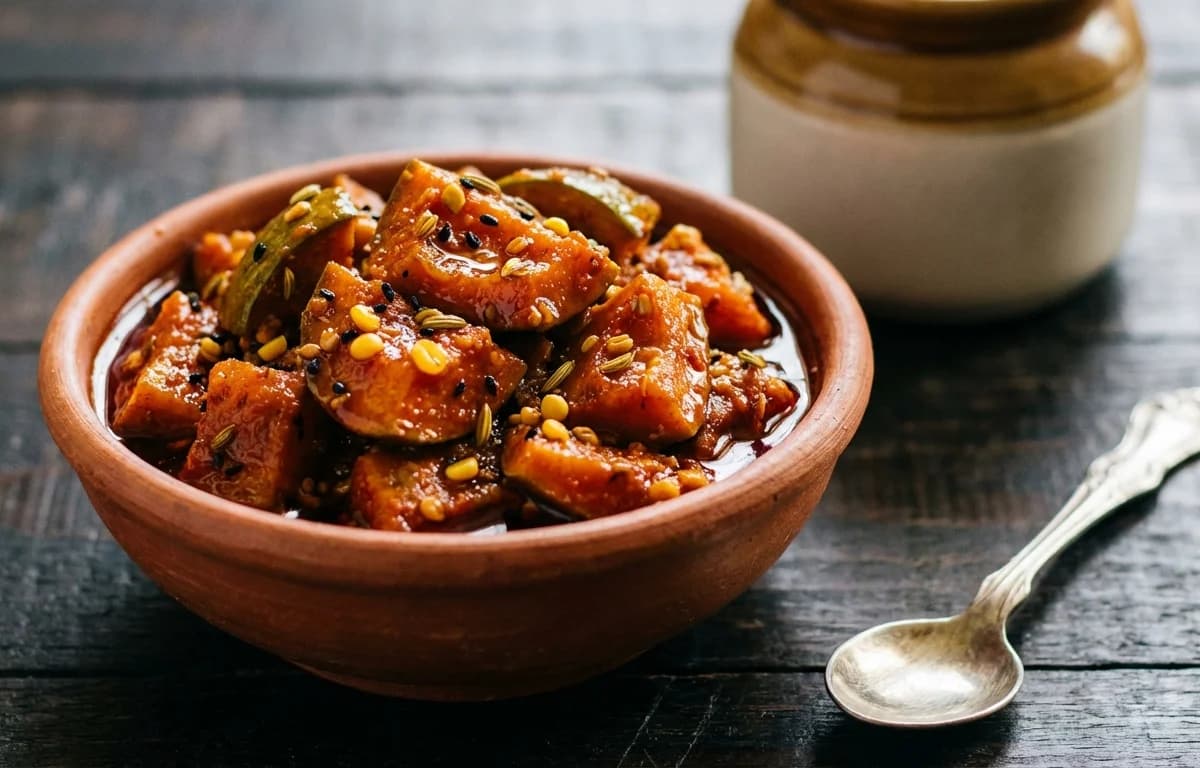
A classic North Indian condiment, 'Aam ka Achar' is made with raw, tangy mangoes, a robust blend of aromatic spices, and pungent mustard oil. This traditional sun-cured pickle is the perfect spicy and sour accompaniment to any meal, from dal-rice to stuffed parathas.
Prep45 min
Cook10 min
Ferment10080 min
About Kingfish Fry, Sambar Sadam and Mango Pickle
Crispy Kingfish fry with tangy sambar rice & a hint of pickle. An energy-giving, truly delicious meal!
This chettinad dish is perfect for dinner. With 830.25 calories and 48.870000000000005g of protein per serving, it's a nutritious choice for your meal plan.
Other Cuisines to Explore
Discover authentic meals from cuisines around the world.
In a wide bowl, combine the ginger-garlic paste, Kashmiri red chilli powder, turmeric powder, coriander powder, black pepper powder, lemon juice, rice flour, and salt.
Add water, one tablespoon at a time, and mix thoroughly to form a thick, smooth paste that can easily coat the fish without being runny. This should take about 2-3 minutes.
2
Marinate the Fish
Rinse the kingfish steaks and pat them completely dry with paper towels. This step is crucial for a crispy crust.
Generously apply the prepared masala paste, ensuring each steak is evenly coated on all sides.
Let the fish marinate for at least 30 minutes at room temperature. For a deeper flavor infusion, you can marinate it for up to 1 hour in the refrigerator.
3
Shallow Fry the Fish
Heat coconut oil in a wide, heavy-bottomed pan or skillet over medium heat. The oil is ready when it starts to shimmer.
Carefully place the marinated fish steaks in the pan in a single layer. Avoid overcrowding; fry in batches if necessary to ensure each piece cooks evenly.
Fry for 5-7 minutes on the first side, undisturbed, until the bottom is golden brown and crisp.
Gently flip the steaks using a spatula and cook for another 5-6 minutes on the other side until it's cooked through and flakes easily with a fork.
4
Garnish and Serve
In the last minute of cooking, toss the curry leaves into the hot oil around the fish. They will become fragrant and crispy in about 30 seconds.
Remove the fish from the pan and place it on a wire rack for a minute to drain excess oil and maintain crispiness.
Garnish with the fried curry leaves and serve immediately with lemon wedges and thinly sliced onions.
4
Serving size: 1 serving
506cal
16gprotein
79gcarbs
15gfat
Ingredients
1 cup sona masuri rice (or any short-grain rice)
0.75 cup toor dal
1.5 cup mixed vegetables (chopped (carrot, beans, drumstick, pumpkin))
1 pcs onion (medium, finely chopped)
2 pcs tomato (medium, chopped)
1 pcs tamarind (small lemon-sized ball, soaked in 1/2 cup warm water)
3 tbsp sambar powder
0.5 tsp turmeric powder
1.5 tsp salt
1 tsp jaggery (grated, optional)
5 cup water
4 tbsp ghee (divided)
1 tsp mustard seeds
1 tsp urad dal
10 pcs curry leaves
2 pcs dried red chillies (broken)
0.5 tsp hing
2 tbsp coriander leaves (chopped, for garnish)
Instructions
1
Wash the rice and toor dal together until the water runs clear. Soak them in water for 30 minutes. Meanwhile, soak the tamarind in 1/2 cup of warm water.
2
Heat 1 tablespoon of ghee in a 5-liter pressure cooker over medium heat. Add the chopped onions and sauté for 2-3 minutes until they turn translucent.
3
Add the chopped tomatoes and cook for another 3-4 minutes until they become soft and mushy. Add all the mixed vegetables and stir well for a minute.
4
Stir in the sambar powder, turmeric powder, and salt. Sauté for 30 seconds until the raw smell of the masalas goes away.
5
Drain the water from the soaked rice and dal, and add them to the cooker. Pour in 5 cups of water and mix everything well. Close the pressure cooker lid.
6
Cook on medium heat for 4-5 whistles, or for about 15 minutes. Turn off the heat and let the pressure release naturally.
7
Once the pressure is gone, open the cooker. Mash the cooked rice and dal mixture gently with the back of a ladle to get a creamy consistency. Squeeze the juice from the soaked tamarind, discard the pulp, and add the tamarind extract to the cooker. Add the jaggery (if using) and mix well.
1 kg Raw Mangoes (Use a firm, sour, pickling variety like Ramkela or Rajapuri)
2 cup Mustard Oil (To be heated to smoking point and then cooled completely)
0.75 cup Salt (Use non-iodized or sea salt for best results)
5 tbsp Red Chili Powder (Adjust to your spice preference)
2 tbsp Turmeric Powder
4 tbsp Fennel Seeds (Also known as Saunf)
4 tbsp Split Mustard Seeds (Also known as Rai ki Dal)
2 tbsp Fenugreek Seeds (Also known as Methi Dana)
2 tsp Nigella Seeds (Also known as Kalonji)
1 tsp Asafoetida (Also known as Hing)
Instructions
1
Prepare the Mangoes (Day 1)
Wash the raw mangoes thoroughly. Wipe them completely dry with a clean kitchen towel. It is critical that there is no moisture.
Cut the mangoes into 1-inch cubes, discarding the inner stone but keeping the peel on.
Place the mango pieces in a large, dry glass or ceramic bowl. Add 1/2 cup of the salt and all the turmeric powder.
Mix well to coat every piece. Cover the bowl with a cloth or a loose lid and let it sit at room temperature for 24 hours. The mangoes will release a significant amount of water.
2
Dry the Mangoes (Day 2)
After 24 hours, drain all the water released by the mangoes. You can discard this brine.
Spread the mango pieces in a single layer on a clean cloth or a large tray.
Let them dry under a fan or in a shady, well-ventilated area for 4-5 hours until the surface moisture has evaporated. They should feel dry to the touch but not hard.
3
Prepare the Spice Mix and Oil
While the mangoes are drying, gently dry roast the fennel seeds and fenugreek seeds in a pan on low heat for 1-2 minutes until fragrant. Let them cool completely.
Simmer the sambar sadam on low heat for 5-7 minutes, stirring occasionally, until it reaches the desired consistency. It will thicken as it cools.
9
Prepare the tempering. Heat 2 tablespoons of ghee in a small pan. Add the mustard seeds and let them splutter. Add the urad dal and fry until it turns light golden. Add the broken dried red chillies, curry leaves, and hing. Sauté for a few seconds until fragrant.
10
Pour the hot tempering over the sambar sadam. Add the final tablespoon of ghee and chopped coriander leaves. Mix well and serve hot.
Grind the roasted seeds along with the split mustard seeds into a coarse powder using a spice grinder or mortar and pestle.
In a large, dry mixing bowl, combine this coarsely ground spice mix, red chili powder, nigella seeds, asafoetida, and the remaining 1/4 cup of salt.
In a separate pan, heat the mustard oil until it reaches its smoking point (you'll see faint white fumes). Turn off the heat and let it cool down completely to room temperature. This step is crucial to mellow the oil's raw pungency.
4
Combine and Bottle the Pickle
Add the dried mango pieces to the bowl containing the spice mix. Toss well until each piece is thoroughly coated.
Pour about 1.5 cups of the completely cooled mustard oil over the mango-spice mixture. Mix everything thoroughly with a clean, dry spoon.
Carefully transfer the pickle into a sterilized, completely dry glass or ceramic jar (a 'barnī'). Pack it down gently to remove air pockets.
5
Mature the Pickle (7-10 Days)
Cover the mouth of the jar with a clean piece of muslin cloth and secure it with a string. This allows moisture to escape while keeping dust out.
Place the jar in direct sunlight for 7 to 10 days. Shake the jar gently or stir with a dry spoon once every day to redistribute the oil and spices.
After 3-4 days, the mango pieces will have softened and settled. Pour the remaining 0.5 cup of cooled mustard oil over the top to create a protective layer that submerges the mangoes.
After the sunning period, the mangoes will have softened and absorbed the flavors. The pickle is now ready. Replace the muslin cloth with an airtight lid and store in a cool, dry place. It can last for over a year.