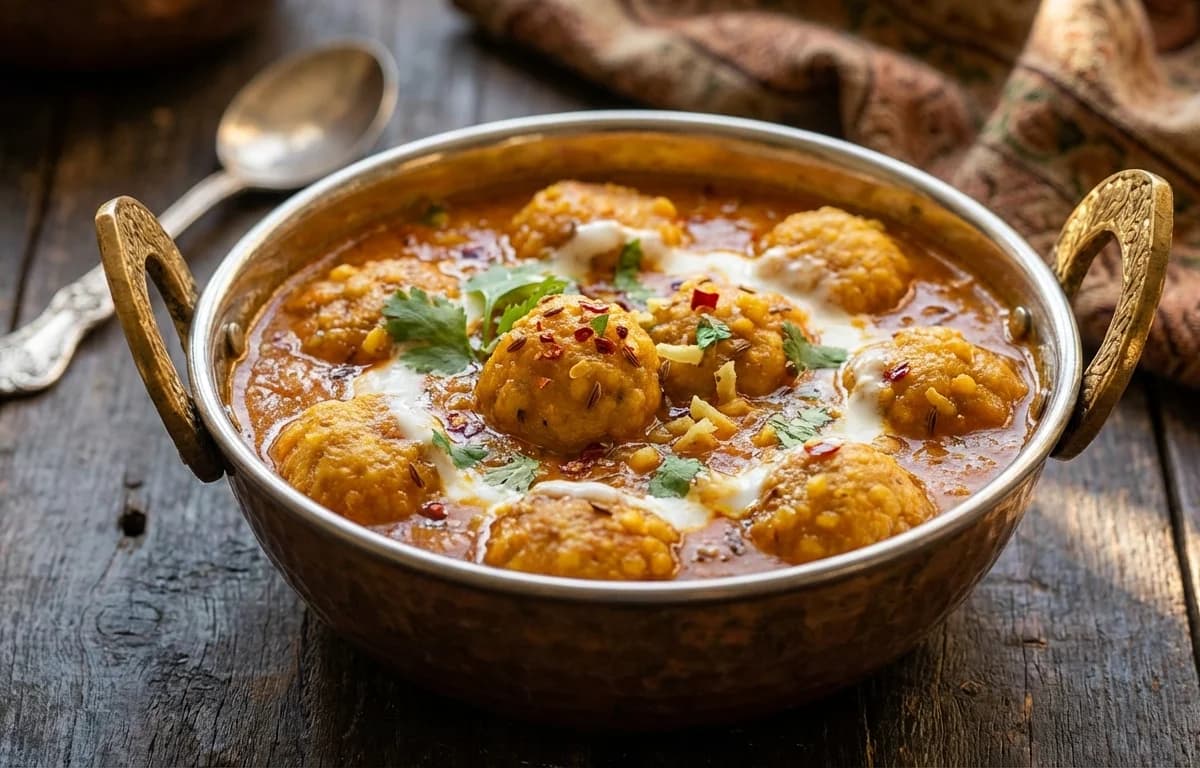
A classic Rajasthani curry made with sun-dried moong dal nuggets (mangodi) simmered in a tangy yogurt-based gravy. This rustic and flavorful dish is a staple in Marwari cuisine and pairs perfectly with hot rotis or bajra roti.
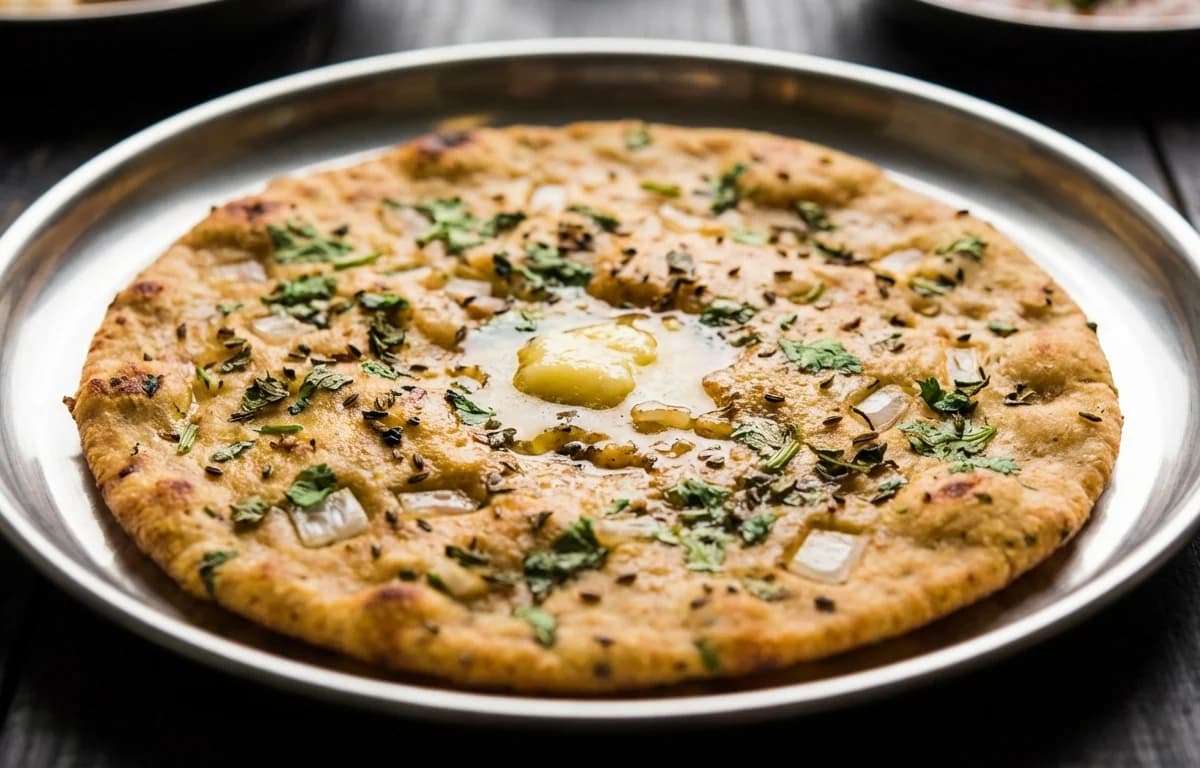
A savory, spiced flatbread from Punjab made with a mix of chickpea and whole wheat flour. Finely chopped onions and fragrant spices like ajwain and kasuri methi give it a unique, rustic flavor. Perfect with dal or yogurt.
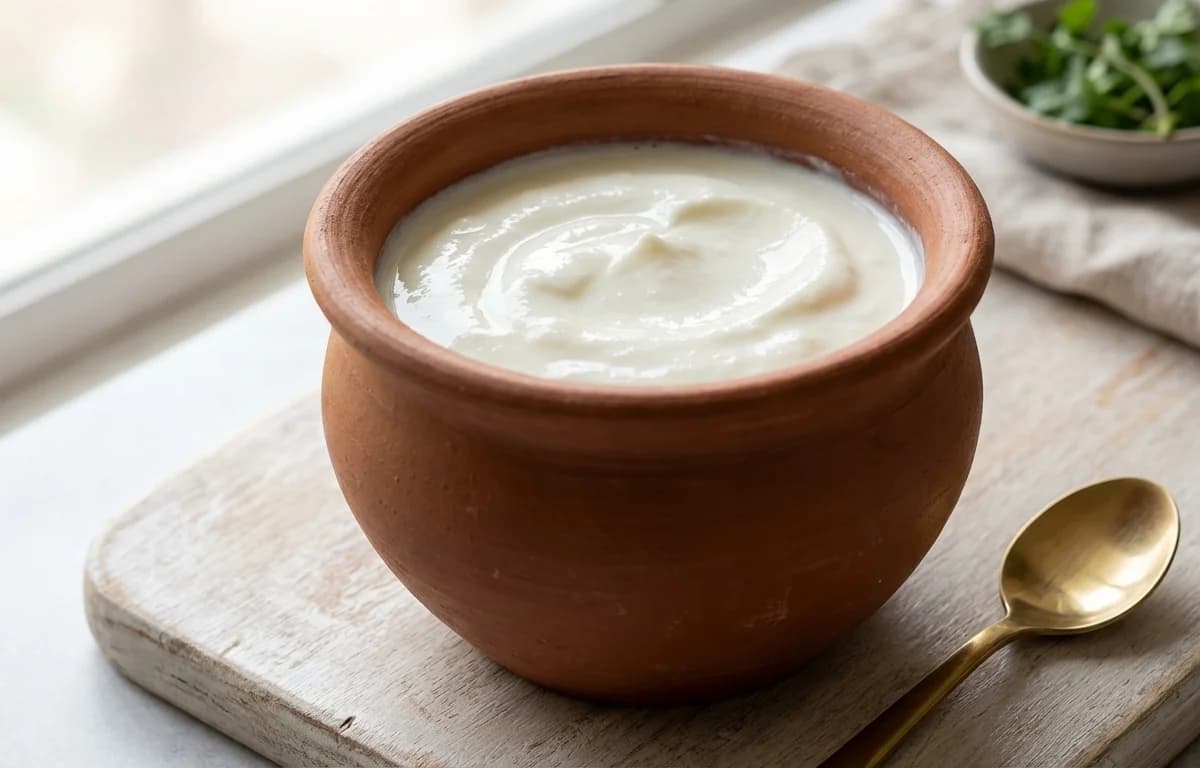
Creamy, tangy, and light homemade curd (dahi), a staple in every Indian household. This simple recipe uses just two ingredients to create a probiotic-rich food perfect for raita, lassi, or enjoying on its own. Note that this recipe requires 6-12 hours of inactive time for fermentation.
Prep5 min
Cook15 min
Ferment480 min
About Mangodi Sabzi, Missi Roti and Curd
Protein-packed Mangodi ki Sabzi with fiber-rich Missi Roti & creamy curd. A perfectly spiced homestyle meal!
This marwari dish is perfect for dinner. With 720.3199999999999 calories and 30.96g of protein per serving, it's a nutritious choice for your meal plan.
Other Cuisines to Explore
Discover authentic meals from cuisines around the world.
2 tbsp Coriander Leaves (Freshly chopped, for garnish)
Instructions
1
Fry the Mangodi
Heat 2 tablespoons of ghee in a heavy-bottomed pan or kadai over medium heat.
Add the moong dal mangodi and shallow-fry, stirring frequently, for about 3-4 minutes until they turn a deep golden brown and become aromatic.
Remove the fried mangodi with a slotted spoon and set aside on a plate.
2
Prepare the Masala Base
In the same pan, add the remaining 2 tablespoons of ghee. Once hot, add the cumin seeds and allow them to splutter.
Add the hing, followed immediately by the finely chopped onion.
Sauté the onions for 5-6 minutes until they are soft, translucent, and lightly browned at the edges.
Add the ginger paste, garlic paste, and slit green chilies. Cook for 1 minute until the raw aroma disappears.
3
Cook the Gravy
Add the tomato puree to the pan. Cook for 4-5 minutes, stirring occasionally, until the mixture thickens and you see ghee separating from the masala.
Add the turmeric powder, red chili powder, and coriander powder. Mix well and cook for another minute until the spices are fragrant.
4
Incorporate the Yogurt
Reduce the heat to the absolute lowest setting. This is crucial to prevent the curd from splitting.
Add the well-whisked curd to the pan. Immediately start stirring continuously in one direction for 2-3 minutes.
Continue stirring until the curd is fully incorporated and the gravy comes to a gentle simmer. Do not stop stirring during this process.
5
Simmer the Curry
Pour in 2.5 cups of hot water and add salt. Stir well to combine.
Bring the gravy to a rolling boil over medium-high heat.
Once boiling, add the fried mangodi to the gravy.
Cover the pan, reduce the heat to low, and let it simmer for 10-15 minutes, or until the mangodi are soft and have absorbed the flavors. Check by pressing one with a spoon; it should break easily.
6
Finish and Serve
Once the mangodi is cooked, turn off the heat. Sprinkle the garam masala over the curry and stir gently.
Garnish with freshly chopped coriander leaves.
Let the sabzi rest for 5 minutes before serving. Serve hot with bajra roti, phulka, or steamed rice.
244cal
10gprotein
41gcarbs
6gfat
Ingredients
1 cup Besan
1 cup Atta (plus more for dusting)
1 medium Onion (finely chopped)
2 pcs Green Chili (finely chopped)
1 inch Ginger (finely grated)
3 tbsp Coriander Leaves (chopped)
1 tsp Ajwain (carom seeds)
0.5 tsp Turmeric Powder
0.75 tsp Red Chili Powder (adjust to taste)
1 tbsp Kasuri Methi (crushed between palms)
1 tsp Salt (or to taste)
1 tbsp Ghee (for the dough)
0.75 cup Water (warm, for kneading)
Instructions
1
Prepare the Dough
In a large mixing bowl, combine the besan, atta, salt, turmeric powder, red chili powder, ajwain, and crushed kasuri methi. Whisk to combine the dry ingredients.
Add the finely chopped onion, green chilies, grated ginger, and coriander leaves. Mix well to distribute them evenly throughout the flour.
Add 1 tbsp of ghee. Using your fingertips, rub the ghee into the flour mixture until it resembles coarse breadcrumbs. This step, known as 'moyan', helps make the rotis crisp.
Gradually add warm water, a little at a time, and knead to form a firm and smooth dough. The dough should be stiffer than chapati dough, as the onions will release moisture upon resting.
Cover the dough with a damp cloth and let it rest for at least 20 minutes. This allows the flours to hydrate and the flavors to meld.
2
Shape the Rotis
After resting, knead the dough for another minute until smooth.
Divide the dough into 8 equal-sized portions and roll them into smooth balls.
Take one ball, flatten it between your palms, and dredge it in dry atta (whole wheat flour).
Place it on a rolling board and roll it out into a circle of about 5-6 inches in diameter. It should be slightly thicker than a regular chapati.
1 litre Whole Milk (Full-fat milk yields the thickest, creamiest curd. You can use low-fat milk, but the result will be less thick.)
1 tbsp Yogurt Starter (Must contain live active cultures. Ensure the starter is fresh and not sour for the best results.)
Instructions
1
Boil the Milk
Pour the milk into a heavy-bottomed pot or saucepan.
Bring the milk to a rolling boil over medium heat, then reduce the heat to low. Let it simmer for 5-7 minutes, stirring occasionally to prevent a skin from forming and to avoid scorching at the bottom. This process helps thicken the milk slightly, resulting in a creamier curd.
2
Cool to Lukewarm Temperature
Turn off the heat and allow the milk to cool down until it is lukewarm. The ideal temperature is between 40-45°C (105-115°F).
To test without a thermometer, dip a clean finger into the milk. You should be able to hold it in for about 10 seconds without it feeling uncomfortably hot. If it's too hot, it will kill the bacteria; if it's too cold, the curd won't set.
3
Inoculate with Starter
In a small bowl, whisk the yogurt starter until it is smooth and lump-free.
Add 2-3 tablespoons of the warm milk to the starter and mix well. This process, called tempering, helps the culture mix evenly without curdling.
Pour this tempered starter mixture back into the pot of milk and stir gently just a few times to combine everything thoroughly.
4
Ferment and Set the Curd
Pour the inoculated milk into the container you wish to set the curd in (earthenware, glass, or steel containers work well).
Cover the container with a lid and place it in a warm, draft-free spot to ferment. An oven (turned off) with the light on, a warm cupboard, or an Instant Pot on the 'Yogurt' setting are great options.
Let it sit undisturbed for 6 to 12 hours. The time will vary based on the climate; warmer weather requires less time (6-8 hours), while colder weather may take longer (10-12 hours).
5
Chill and Serve
Once the curd is set (it should be firm and not jiggle like a liquid), carefully transfer it to the refrigerator without disturbing it.
Chill for at least 3-4 hours. This crucial step stops the fermentation process (preventing it from becoming too sour) and helps the curd to thicken and set further.
Serve chilled as a side dish, or use it as a base for raita, lassi, or marinades.
Heat a tawa (griddle) over medium heat. The tawa should be hot but not smoking.
Place the rolled roti on the hot tawa. Cook for about 45-60 seconds, or until you see small bubbles forming on the surface.
Flip the roti. Cook the other side for about 1-1.5 minutes until golden-brown spots appear.
Flip it again. Using a clean kitchen towel or a flat spatula, gently press down on the edges of the roti to encourage it to puff up.
Spread about ½ tsp of ghee over the top surface, flip, and spread another ½ tsp on the other side. Cook for another 30 seconds until both sides are crisp and golden brown.
Remove from the tawa and place in a casserole or a cloth-lined container to keep warm. Repeat for the remaining dough balls.
4
Serve
Serve the hot Missi Rotis immediately, topped with a dollop of white butter (makhan) or more ghee. They pair wonderfully with dal makhani, plain yogurt, or a spicy Indian pickle.