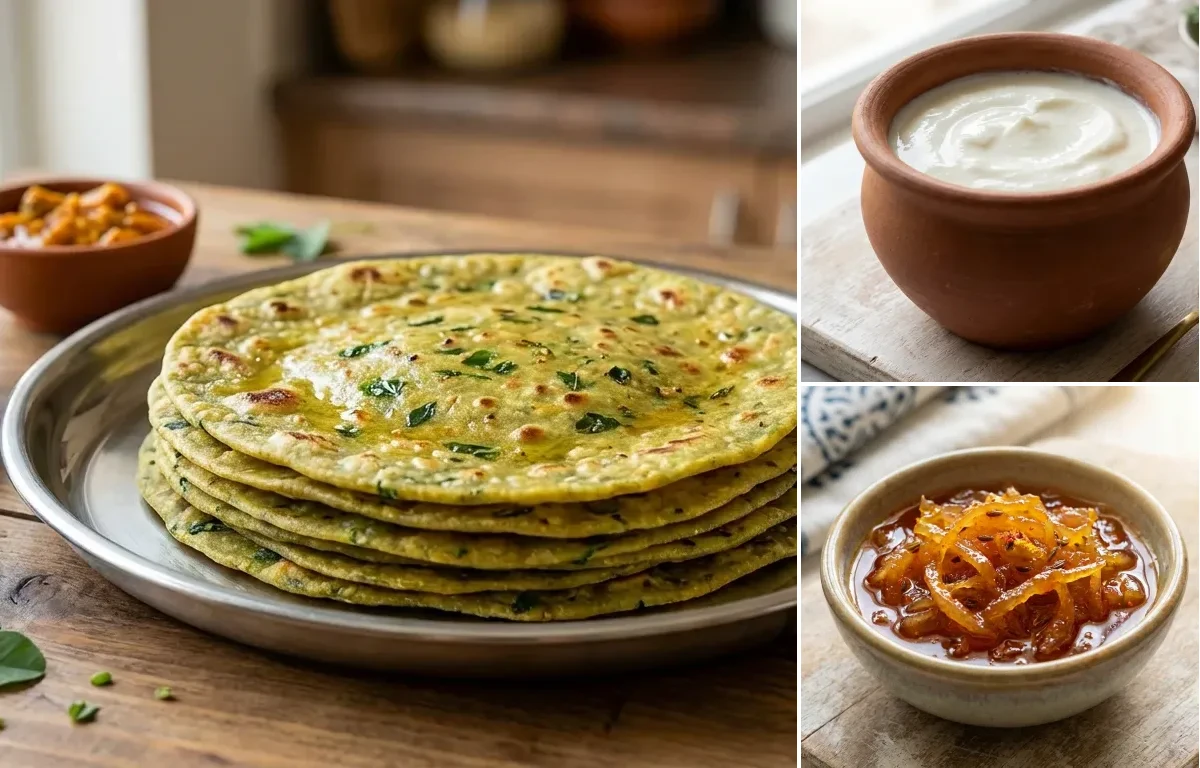
A soft, savory flatbread from Gujarat made with whole wheat flour and fresh fenugreek leaves. Lightly spiced and incredibly versatile, these are perfect for breakfast, lunchboxes, or as a travel snack.
Prep20 min
Cook25 min
Servings4
Serving size: 3 theplas
258cal
8gprotein
39gcarbs
9g
Ingredients
1.5 cup Atta (Whole wheat flour)
0.25 cup Besan (Gram flour)
1 cup Fresh Methi Leaves (Tightly packed and finely chopped)
0.25 cup Plain Yogurt (Full-fat, at room temperature)
1 tsp Ginger-Garlic Paste
2 whole Green Chillies (Finely chopped, adjust to taste)
0.5 tsp Turmeric Powder
1 tsp Red Chilli Powder (Use Kashmiri for mild heat and color)
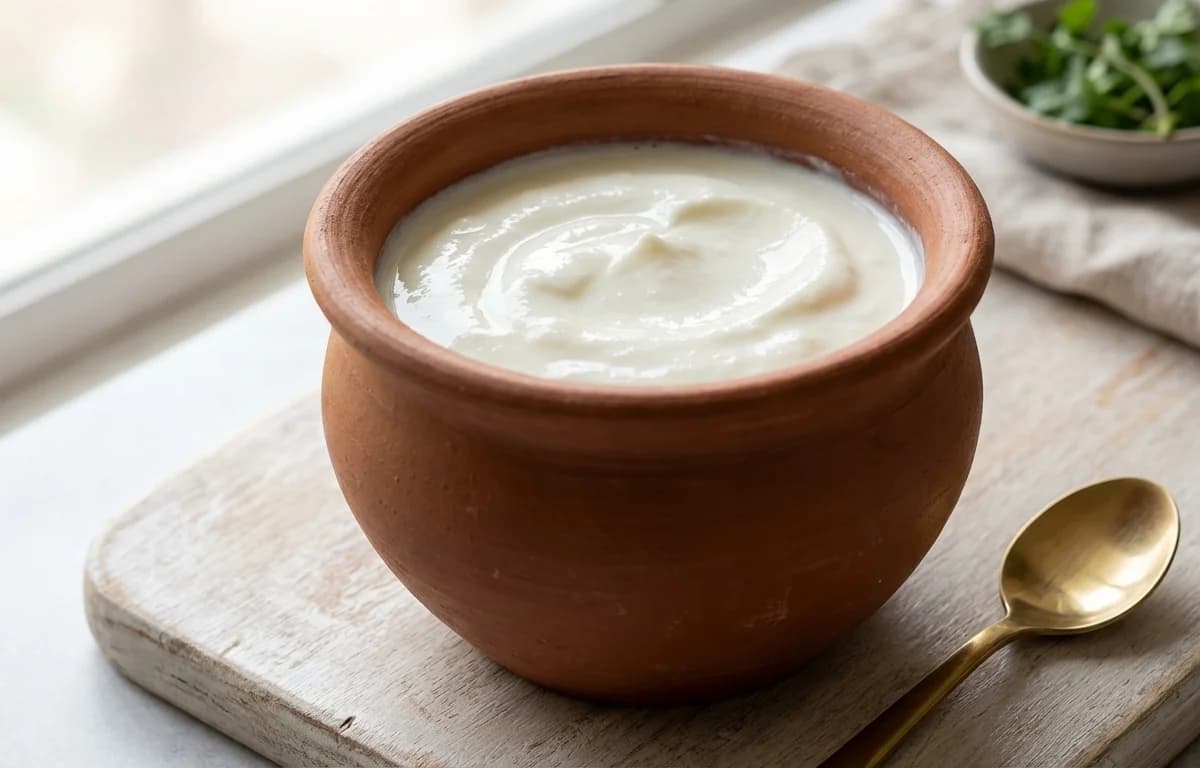
Creamy, tangy, and light homemade curd (dahi), a staple in every Indian household. This simple recipe uses just two ingredients to create a probiotic-rich food perfect for raita, lassi, or enjoying on its own. Note that this recipe requires 6-12 hours of inactive time for fermentation.
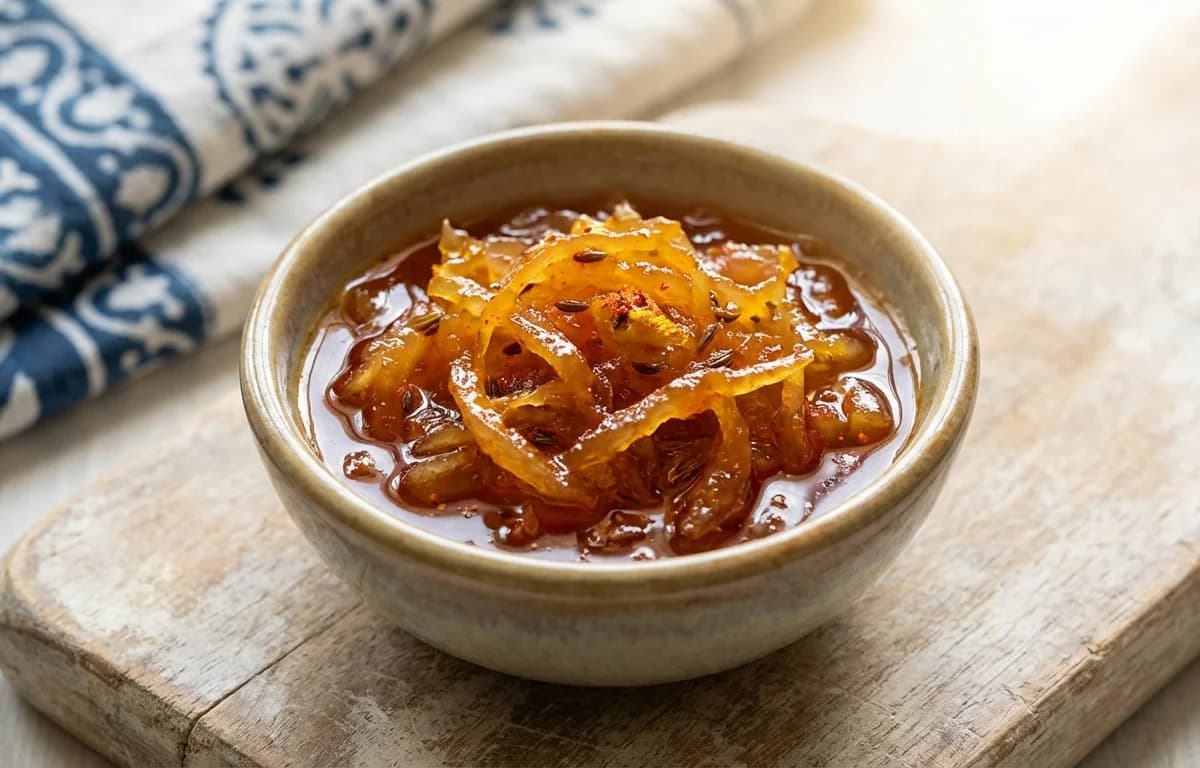
A classic Gujarati sweet and tangy raw mango pickle, cooked to a perfect jam-like consistency. This instant stovetop version captures the traditional sun-dried flavor in under an hour and is a perfect side for theplas, rotis, or parathas.
Fiber-rich Methi Thepla with cool curd and tangy chundo – perfect for busy mornings!
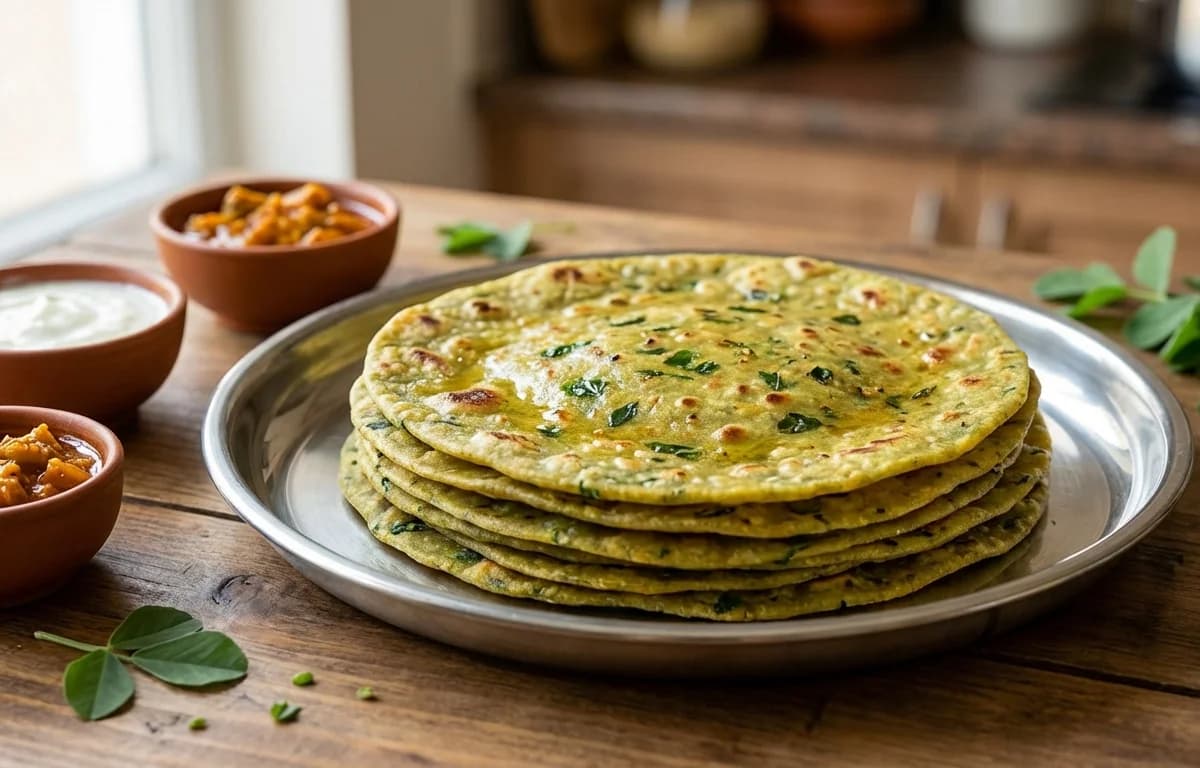
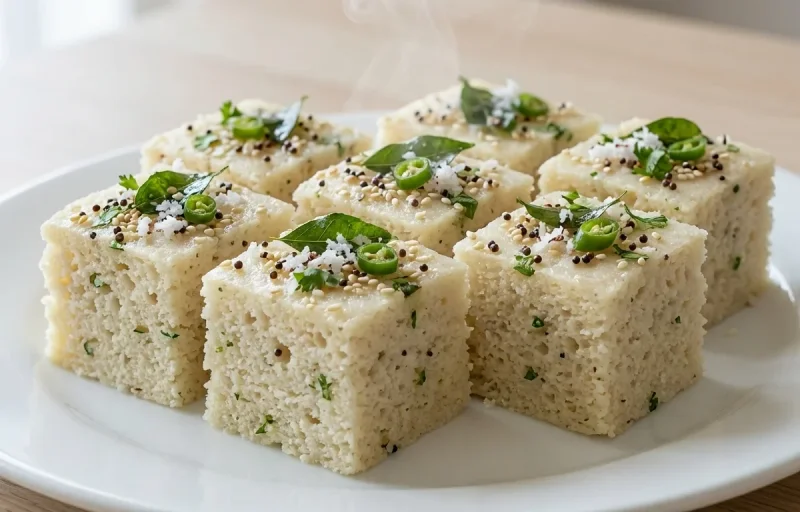
This gujarati dish is perfect for lunch. With 492.48999999999995 calories and 17.72g of protein per serving, it's a nutritious choice for your meal plan.
fat
0.25 tsp Asafoetida (Also known as Hing)
0.5 tsp Carom Seeds (Also known as Ajwain)
1 tsp Salt (Adjust to taste)
0.5 tsp Sugar (Optional, to balance bitterness)
2 tbsp Oil (For the dough)
0.25 cup Warm Water (As needed for kneading)
Instructions
1
Prepare the Dough (5 minutes)
In a large mixing bowl, combine atta, besan, turmeric powder, red chilli powder, coriander-cumin powder, asafoetida, carom seeds, salt, and optional sugar. Whisk thoroughly to ensure the spices are evenly distributed.
Add the finely chopped methi leaves, plain yogurt, ginger-garlic paste, green chillies, and 2 tablespoons of oil.
Using your fingertips, rub the wet ingredients into the flour mixture until it resembles coarse breadcrumbs. This step ensures the fat and moisture are well incorporated.
2
Knead and Rest the Dough (30 minutes)
Gradually add warm water, a little at a time, and begin to knead. The methi and yogurt will release moisture, so be cautious not to add too much water at once.
Knead for 6-8 minutes until you have a soft, smooth, and pliable dough. It should be softer than standard roti dough but not sticky.
Coat the dough with a few drops of oil, cover the bowl with a damp cloth or a lid, and let it rest for at least 20-30 minutes. This resting period is crucial for developing gluten and results in softer theplas.
3
Roll the Theplas (10 minutes)
After the dough has rested, knead it again for one minute.
Divide the dough into 12 equal-sized portions and roll each into a smooth ball.
Take one ball, flatten it, and lightly dust it with dry atta. Roll it out into a thin circle, about 6-7 inches in diameter. Theplas are traditionally rolled thinner than parathas for a softer texture.
4
Cook the Theplas (20 minutes)
Heat a tawa (griddle) over medium-high heat. To check if it's ready, sprinkle a few drops of water; they should sizzle and evaporate immediately.
Place a rolled thepla onto the hot tawa. Cook for about 30 seconds, until you see small bubbles forming on the surface.
Flip the thepla. Drizzle about ½ teaspoon of oil on and around its edges.
Cook for another 30-40 seconds, pressing down gently with a spatula to ensure even cooking, until golden-brown spots appear.
Flip it one last time, apply a little more oil if desired, and cook until the first side is also perfectly spotted. Avoid overcooking to keep them soft.
Remove from the tawa and place in a casserole dish or a container lined with a clean kitchen towel. This traps the steam and keeps the theplas soft. Repeat for all remaining dough balls.
5
Serve
Serve Methi Thepla warm or at room temperature with plain yogurt, chunda (sweet mango pickle), athanu (mixed pickle), or a hot cup of masala chai.
Servings
4
Serving size: 1 cup
164cal
9gprotein
14gcarbs
8gfat
Ingredients
1 litre Whole Milk (Full-fat milk yields the thickest, creamiest curd. You can use low-fat milk, but the result will be less thick.)
1 tbsp Yogurt Starter (Must contain live active cultures. Ensure the starter is fresh and not sour for the best results.)
Instructions
1
Boil the Milk
Pour the milk into a heavy-bottomed pot or saucepan.
Bring the milk to a rolling boil over medium heat, then reduce the heat to low. Let it simmer for 5-7 minutes, stirring occasionally to prevent a skin from forming and to avoid scorching at the bottom. This process helps thicken the milk slightly, resulting in a creamier curd.
2
Cool to Lukewarm Temperature
Turn off the heat and allow the milk to cool down until it is lukewarm. The ideal temperature is between 40-45°C (105-115°F).
To test without a thermometer, dip a clean finger into the milk. You should be able to hold it in for about 10 seconds without it feeling uncomfortably hot. If it's too hot, it will kill the bacteria; if it's too cold, the curd won't set.
3
Inoculate with Starter
In a small bowl, whisk the yogurt starter until it is smooth and lump-free.
Add 2-3 tablespoons of the warm milk to the starter and mix well. This process, called tempering, helps the culture mix evenly without curdling.
Pour this tempered starter mixture back into the pot of milk and stir gently just a few times to combine everything thoroughly.
4
Ferment and Set the Curd
Pour the inoculated milk into the container you wish to set the curd in (earthenware, glass, or steel containers work well).
Cover the container with a lid and place it in a warm, draft-free spot to ferment. An oven (turned off) with the light on, a warm cupboard, or an Instant Pot on the 'Yogurt' setting are great options.
Let it sit undisturbed for 6 to 12 hours. The time will vary based on the climate; warmer weather requires less time (6-8 hours), while colder weather may take longer (10-12 hours).
5
Chill and Serve
Once the curd is set (it should be firm and not jiggle like a liquid), carefully transfer it to the refrigerator without disturbing it.
Chill for at least 3-4 hours. This crucial step stops the fermentation process (preventing it from becoming too sour) and helps the curd to thicken and set further.
Serve chilled as a side dish, or use it as a base for raita, lassi, or marinades.
500 g Raw Mango (Grated, preferably Rajapuri variety)
500 g Sugar (Use granulated white sugar)
1.5 tsp Salt
1 tsp Turmeric Powder
2 tsp Kashmiri Red Chili Powder (Adjust to your spice preference)
2 tsp Roasted Cumin Powder (Freshly roasted and ground is best)
Instructions
1
Prepare the Mangoes
Wash the raw mangoes thoroughly and pat them completely dry with a clean cloth.
Peel the skin and grate the mango flesh using a medium-sized grater, discarding the seed.
Measure the grated mango to ensure you have approximately 500g (about 4 cups).
2
Macerate the Mango
In a large, non-reactive bowl (glass or stainless steel), combine the grated mango, sugar, salt, and turmeric powder.
Mix everything together very well until the mango is fully coated.
Cover the bowl and let it rest for 20-30 minutes. This process, called maceration, allows the sugar to draw out moisture from the mango, creating a syrup.
3
Cook the Chundo
Transfer the entire mixture to a heavy-bottomed pan or kadai.
Turn the heat to low and begin cooking. Stir continuously as the sugar melts completely and the mixture becomes liquid.
Do not increase the heat, as this can cause the sugar to caramelize and burn.
4
Thicken to One-String Consistency
Continue to cook on low heat, stirring every few minutes, for about 20-25 minutes.
The mixture will gradually thicken, become glossy, and the mango shreds will turn translucent.
To check for doneness, perform the one-string consistency test: take a small drop of the syrup on a spoon, let it cool for 15-20 seconds, then touch it between your thumb and index finger. When you gently pull them apart, a single, stable thread should form.
5
Add Finishing Spices
Once the one-string consistency is achieved, immediately turn off the heat.
Let the chundo cool in the pan for 5 minutes. This prevents the spices from burning.
Add the Kashmiri red chili powder and roasted cumin powder. Stir well to distribute them evenly.
6
Cool and Store
Allow the Aam Chundo to cool down completely at room temperature. It will thicken further as it cools.
Once fully cooled, transfer it to a completely dry and sterilized airtight glass jar.
Store at room temperature. It has a shelf life of up to one year if stored properly.