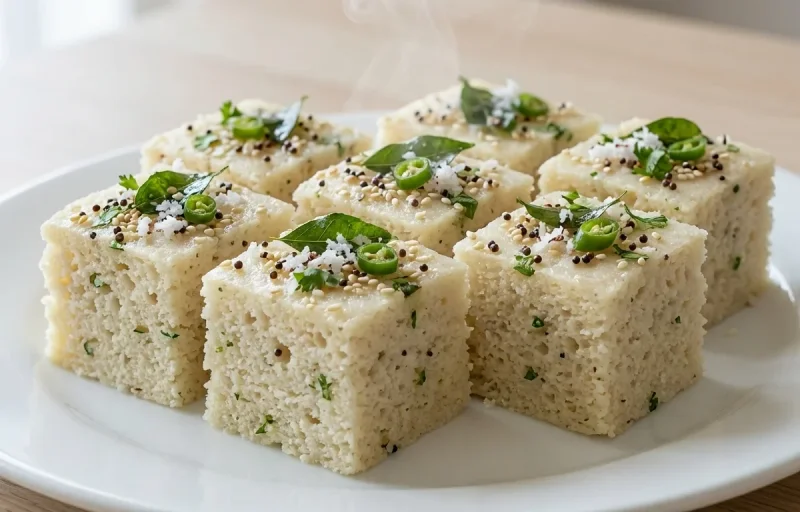
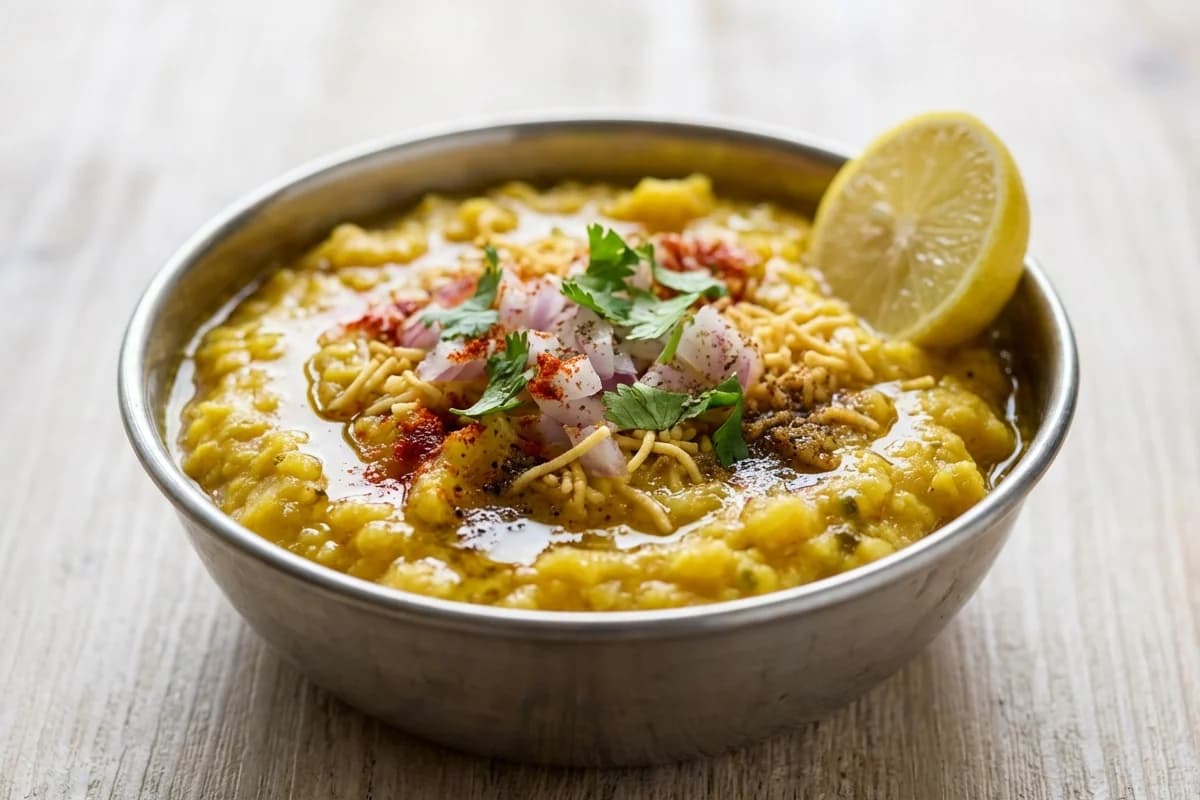
A popular steamed savory cake from Surat, Gujarat, made from chana dal. This unique snack has a soft, melt-in-your-mouth texture, topped with spicy masala, sev, and onions.
Prep20 min
Cook15 min
Soak360 min
Ferment480 min
Servings4
Serving size: 1 serving
453cal
15gprotein
51gcarbs
Ingredients
1 cup Chana Dal
2 tbsp Urad Dal
0.25 cup Poha (Use thick variety for best results)
0.25 cup Curd (Slightly sour curd enhances the flavor)
1 inch Ginger
2 pcs Green Chili (Adjust to your spice preference)
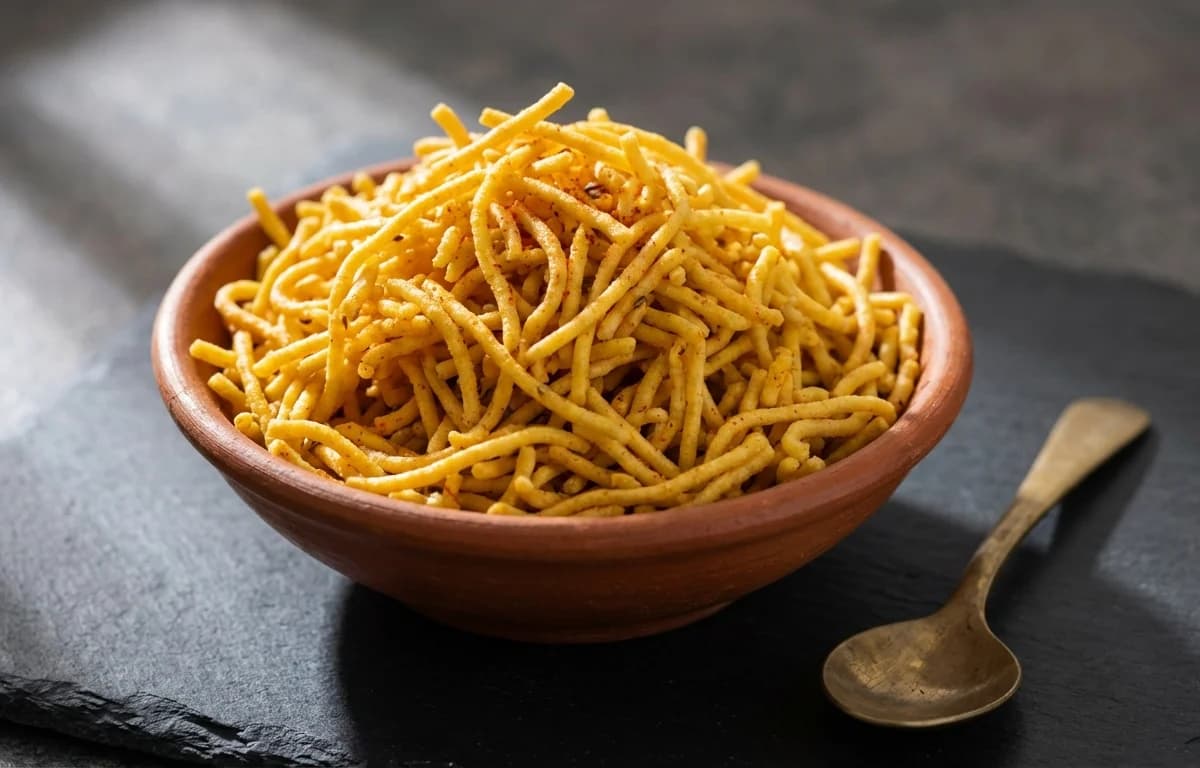
Crispy, golden strands of savory chickpea flour noodles, perfect for snacking on their own or for adding a delightful crunch to chaat dishes. This classic Indian namkeen is a festival favorite and surprisingly easy to make at home.
Crisp, tangy onion rings tossed in a zesty mix of Indian spices and lemon juice. This simple North Indian salad is the perfect, refreshing accompaniment to rich curries and grilled meats, ready in minutes.
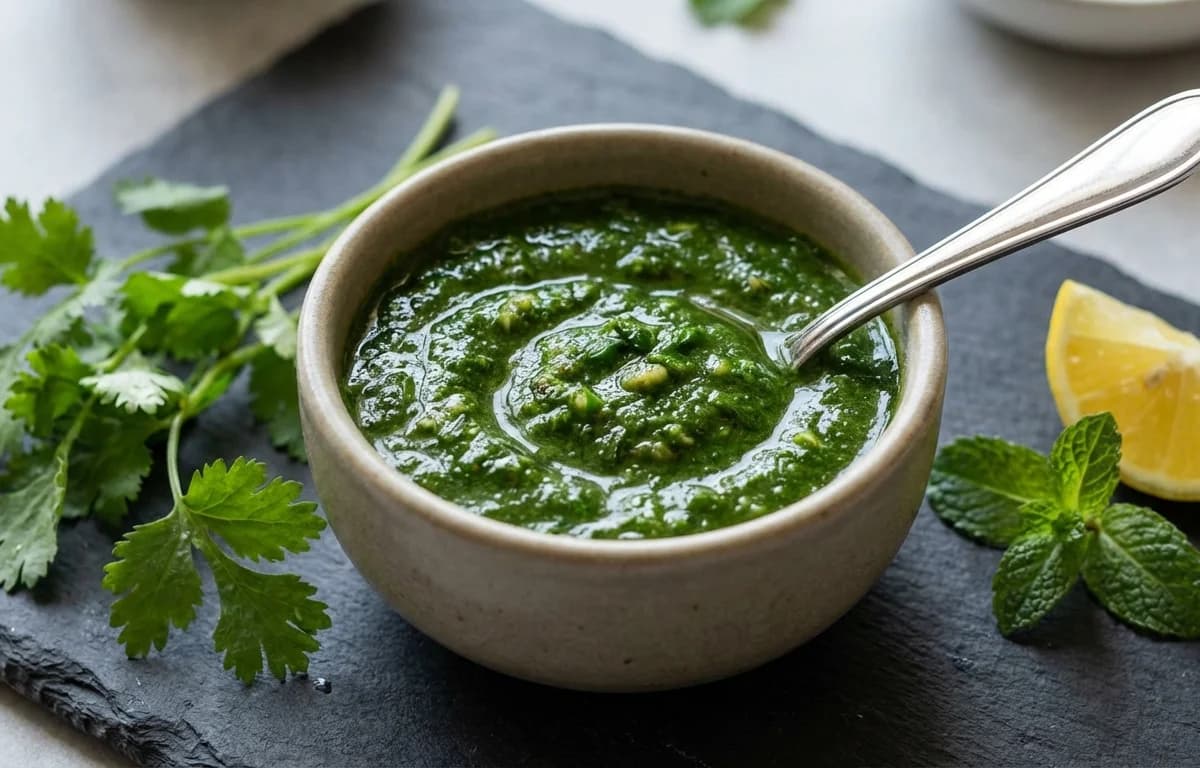
A vibrant and refreshing green chutney made with fresh coriander and mint leaves. This versatile Indian condiment is the perfect zesty accompaniment to snacks like samosas, pakoras, and sandwiches.
Prep10 min
Cook0 min
Servings8
Serving size: 1 serving
About Surti Locho, Besan Sev, Lachha Pyaaz and Coriander Mint Chutney
Melt-in-mouth Surti Locho with crispy sev & tangy chutney – a perfectly spiced, aromatic snack!
This gujarati dish is perfect for lunch. With 660.8100000000001 calories and 22.709999999999997g of protein per serving, it's a nutritious choice for your meal plan.
Other Cuisines to Explore
Discover authentic meals from cuisines around the world.
0.5 tsp Black Pepper Powder (For the locho masala)
0.5 tsp Roasted Cumin Powder (For the locho masala)
0.5 tsp Black Salt (Also known as kala namak, for the locho masala)
4 tbsp Peanut Oil (For topping)
1 cup Fine Sev (Also known as nylon sev, for topping)
1 pcs Onion (Medium-sized, finely chopped for topping)
3 tbsp Coriander Leaves (Freshly chopped, for topping)
1 pcs Lemon (Cut into wedges for serving)
Instructions
1
Soak the Lentils and Poha
Rinse the chana dal and urad dal under running water until the water runs clear.
Place the rinsed dals in a large bowl and cover with ample water. Let them soak for at least 5-6 hours.
About 20 minutes before you plan to grind, rinse the poha and soak it in a separate small bowl with just enough water to cover it.
2
Grind the Batter
Drain all the water from the soaked dals and the poha.
Transfer the drained dals, poha, and sour curd to a high-speed blender or grinder.
Grind to a smooth, yet slightly grainy batter. Add water, a tablespoon at a time, only if needed to facilitate grinding. The final consistency should be thick and pourable, similar to idli batter.
3
Ferment the Batter
Pour the batter into a large container, ensuring it's filled no more than halfway to allow space for fermentation.
Cover the container with a lid (do not seal it tightly) and place it in a warm, draft-free place for 8-10 hours, or overnight.
After fermentation, the batter will have increased in volume, become airy, and have a pleasant sour aroma.
4
Prepare for Steaming
Once the batter is fermented, prepare your steamer by adding 2-3 inches of water to the bottom and bringing it to a rolling boil over medium-high heat.
Grease a thali (a round metal plate with a rim) or a round 8-inch cake pan with a little oil.
In a small bowl, crush the ginger and green chilies into a coarse paste.
Add the ginger-chili paste, turmeric powder, hing, and salt to the fermented batter. Stir gently to combine everything without deflating the batter too much.
5
Steam the Locho
Just before pouring the batter into the tray, add the fruit salt (Eno). Pour about 1 teaspoon of water directly over the fruit salt to activate it; you will see it fizz.
Immediately and gently, mix the batter in one direction for about 10-15 seconds until it becomes light and frothy. Do not overmix.
Quickly pour the aerated batter into the greased thali or pan, filling it up to about half or two-thirds of its height.
Place the thali in the preheated steamer. Cover with a lid and steam on high heat for 12-15 minutes.
To check for doneness, insert a toothpick or knife into the center. If it comes out clean, the locho is cooked.
6
Prepare Toppings and Serve
While the locho is steaming, prepare the locho masala by mixing the red chili powder, black pepper powder, roasted cumin powder, and black salt in a small bowl.
Once cooked, carefully remove the hot thali from the steamer.
The locho is meant to be very soft and delicate. Use a spoon or a thin spatula to scoop out messy, uneven portions directly onto serving plates.
Immediately drizzle each serving with 1 tbsp of peanut oil. Sprinkle generously with the prepared locho masala, followed by finely chopped onions, a handful of fine sev, and fresh coriander leaves.
Serve piping hot with a lemon wedge on the side to squeeze over the top.
141cal
6gprotein
19gcarbs
5gfat
Ingredients
2 cup Besan
0.25 cup Rice Flour (for extra crispiness)
1 tsp Ajwain
0.5 tsp Turmeric Powder
1 tsp Red Chili Powder
0.25 tsp Hing
1 tsp Salt
2 tbsp Vegetable Oil (hot, for the dough (moyan))
0.6 cup Water (or as needed)
Instructions
1
Prepare the Dough
In a large mixing bowl, sift the besan and rice flour. Add the ajwain, turmeric powder, red chili powder, hing, and salt. Whisk well to combine all dry ingredients.
Heat 2 tbsp of oil until it's quite hot. Carefully pour this hot oil (this is called 'moyan') over the flour mixture. Use a spoon initially, then your fingertips to rub the oil into the flour until it resembles coarse breadcrumbs.
Gradually add water, a little at a time, and knead to form a soft, smooth, and pliable dough. The dough should be soft and slightly sticky, not stiff.
2
Set Up the Sev Maker
Choose the disc for fine sev and attach it to your sev maker (sev press or sancha).
Grease the inside of the sev maker cylinder and the disc with a little oil to prevent the dough from sticking.
Shape the dough into a log and place it inside the greased cylinder.
3
Heat Oil for Frying
Pour the remaining 2 cups of oil into a heavy-bottomed kadai or deep pan. Heat over medium flame.
The oil should be moderately hot, around 175°C (350°F). To test, drop a tiny piece of dough into the oil. It should sizzle and rise to the surface steadily. If it browns too quickly, the oil is too hot; if it sinks, the oil is not hot enough.
4
Fry the Sev
Hold the sev maker directly over the hot oil. Turn the handle to press the dough out into the oil, moving in a circular motion to form a large, flat spiral.
Fry for 1-2 minutes on one side. You will notice vigorous bubbling. Once the bubbling subsides significantly, carefully flip the sev spiral using a slotted spoon.
Fry the other side for another minute until it is light golden and crisp. Avoid over-browning.
Work in batches to avoid overcrowding the pan, which can lower the oil temperature.
5
Drain and Cool
Once crisp, remove the sev from the oil with a slotted spoon, allowing excess oil to drip back into the pan.
Place the fried sev on a wire rack or a plate lined with paper towels to drain further.
Let the sev cool completely at room temperature. It will become even crispier as it cools.
Once cooled, gently break the sev spirals into smaller, bite-sized pieces.
6
Store
Store the completely cooled besan sev in a clean, dry, airtight container.
It will stay fresh and crispy for up to 3 weeks at room temperature.
1 tsp Kashmiri Red Chilli Powder (Adjust to your spice preference)
1 tsp Chaat Masala
0.5 tsp Salt (Or use a mix of black salt and regular salt)
1 pc Green Chilli (Finely chopped, optional for extra heat)
2 tbsp Coriander Leaves (Freshly chopped, for garnish)
Instructions
1
Prepare the Onions
Peel the red onions and slice them into thin, uniform rings, about 1/8-inch thick. A mandoline slicer works best for this.
Gently separate the slices into individual rings and place them in a large bowl.
2
Soak for Crispness
Add the ice cubes and cold water to the bowl, ensuring all onion rings are fully submerged.
Let the onions soak for 10-15 minutes. This crucial step makes them incredibly crisp and mellows their sharp, pungent flavor.
3
Drain and Dry Thoroughly
Drain the onions completely using a colander.
Spread the onion rings on a clean kitchen towel or paper towels and pat them completely dry. Removing all excess moisture is key to preventing a watery salad.
4
Season and Toss
Transfer the dry onion rings to a clean mixing bowl.
2 cup Coriander Leaves (Packed, with tender stems)
1 cup Mint Leaves (Packed, stems discarded)
3 whole Green Chilies (Adjust to your spice preference)
1 inch Ginger (Peeled and roughly chopped)
3 clove Garlic (Peeled)
2 tbsp Roasted Chana Dal (Also known as Dalia or Bhuna Chana)
2 tbsp Lemon Juice (Freshly squeezed for best flavor)
0.5 tsp Chaat Masala
0.5 tsp Black Salt (Also known as Kala Namak)
0.5 tsp Sugar (Optional, helps balance the tanginess)
0.25 tsp Salt (Adjust to taste)
3 whole Ice Cubes (Or use 3-4 tbsp of ice-cold water)
Instructions
1
Prepare the Herbs (3 minutes)
Thoroughly wash the coriander and mint leaves under cold running water to remove any grit or dirt.
Pluck the mint leaves from their stems; discard the thicker stems as they can be bitter.
For the coriander, use both the leaves and the tender upper stems, which are packed with flavor. Roughly chop the bunch.
2
Combine Ingredients in Blender (2 minutes)
Place the washed coriander and mint leaves into a high-speed blender jar.
Add the green chilies (broken in half), chopped ginger, garlic cloves, roasted chana dal, lemon juice, chaat masala, black salt, sugar (if using), and salt.
3
Blend to a Smooth Paste (2 minutes)
Add the ice cubes or 3 tablespoons of ice-cold water. Using ice is highly recommended as it prevents the herbs from oxidizing and helps maintain a vibrant green color.
Blend for 1-2 minutes, scraping down the sides of the jar as needed, until you achieve a completely smooth, uniform paste.
Avoid over-blending, as the heat from the motor can darken the chutney. If the mixture is too thick, add one more tablespoon of cold water and pulse briefly to combine.
Sprinkle with Kashmiri red chilli powder, chaat masala, salt, and the optional finely chopped green chilli.
Pour the fresh lemon juice over the top.
5
Garnish and Serve Immediately
Gently toss everything together with your hands or two forks until the onion rings are evenly coated with the spices.
Garnish with freshly chopped coriander leaves.
Serve immediately to enjoy the best crispy texture.
4
Taste, Adjust, and Serve (3 minutes)
Transfer the chutney to a serving bowl.
Taste and adjust the seasoning. You may want to add more salt for savoriness, lemon juice for tanginess, or a pinch of sugar to balance the flavors.
For best results, let the chutney rest for 10-15 minutes to allow the flavors to meld. Serve fresh with snacks like samosas, dhokla, or use as a spread in sandwiches.