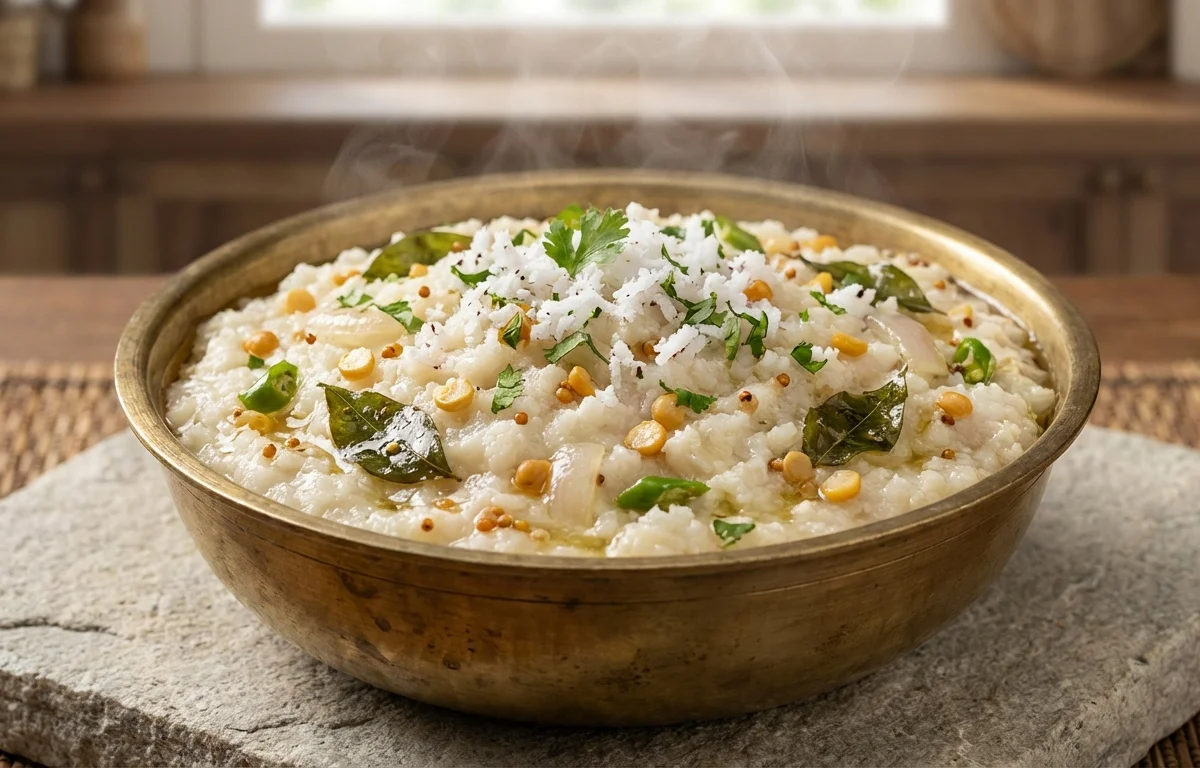
Arisi Upma
A homestyle Tamil dish made with broken raw rice, tempered lentils, curry leaves, and green chili. It cooks up fluffy and lightly grainy, with simple flavors that pair well with coconut chutney or pickle.
For 4 servings
- prep
Crush the rice.
Pulse the raw rice in a mixer jar to a coarse, rava-like texture. Do not grind it to a fine powder.
TIPA slightly uneven grind gives Arisi Upma its classic light, grainy texture. - temper · ~3 min
Make the tempering.
1.Heat oil in a kadai over medium heat.2.Add mustard seeds and let them splutter.3.Add urad dal and chana dal; cook until lightly golden.4.Add dried red chili, green chili, ginger, and curry leaves; sauté for 20 to 30 seconds.TIPKeep the heat medium so the lentils turn golden without burning. - saute · ~4 min
Cook the onion.
Add the chopped onion and cook until soft and lightly translucent. It should not brown deeply.
- boil · ~5 min
Boil the water.
Pour in the water and add salt. Bring it to a full boil so the rice cooks evenly once added.
- mix · ~3 min
Add the crushed rice.
1.Lower the heat.2.Add the crushed rice slowly in a steady stream.3.Stir continuously to prevent lumps.4.Mix until the rice is evenly distributed in the water.TIPAdding the rice slowly while stirring keeps the upma loose and separate. - simmer · ~12 min
Cook until the rice is tender.
Cover and cook on low heat until the water is absorbed and the rice turns soft but separate. Stir once or twice in between to stop sticking.
- garnish
Finish with grated coconut.
Add the grated coconut and fluff the upma gently with a spoon so the grains stay light.
- serve
Serve hot.
What to keep in mind.
7 tips from the recipe — small details that make a real difference to the final dish.
- 1Pulse the rice in short bursts; a slightly uneven rava texture gives the best fluffy, grainy finish.
- 2Let the mustard splutter fully before adding the dals, or the tempering will taste flat and undercooked.
- 3Toast urad dal and chana dal only to light golden; darker lentils can turn bitter in this mild upma.
- 4Add the crushed rice in a slow stream into boiling water while stirring to avoid clumps.
- 5Keep the simmer on low once the rice goes in, so the grains cook through without turning pasty at the bottom.
- 6Fluff in the grated coconut only at the end; cooking it too long can dull its fresh sweetness.
- 7Arisi Upma thickens as it sits, so serve it hot or sprinkle a little hot water and fluff before reheating.
Adapt it for your goals.
Vegetable-loaded
Add finely chopped carrots, beans, or peas after the onion for a more colorful, lightly sweeter breakfast with extra texture.
jainJain
Skip onion and ginger, and rely on curry leaves, green chili, and coconut for a clean, traditional-style flavor without root vegetables.
millet styleMillet-style
Replace crushed rice with coarsely broken little millet or kodo millet for a nuttier taste and a change from the classic version.
pepper cuminPepper-cumin
Use crushed black pepper and cumin in the tempering for a warmer, more tiffin-style variation with less green chili heat.
Why this is on our healthy list.
Gentle, Simple Comfort Food
Made mainly with rice, ginger, and mild seasoning, this dish is often easy to enjoy when you want a straightforward, lightly spiced meal.
Includes Plant-Based Protein
The urad dal and chana dal in the tempering add some protein and make the texture more satisfying than plain rice alone.
Aromatic Digestive Ingredients
Ginger, curry leaves, and mustard seeds bring classic flavor while contributing traditional digestive support in South Indian cooking.
Frequently asked questions
Yes. Rice rava works well and saves time, but choose a coarse texture for the most authentic Arisi Upma bite.