Assamese Fish Curry
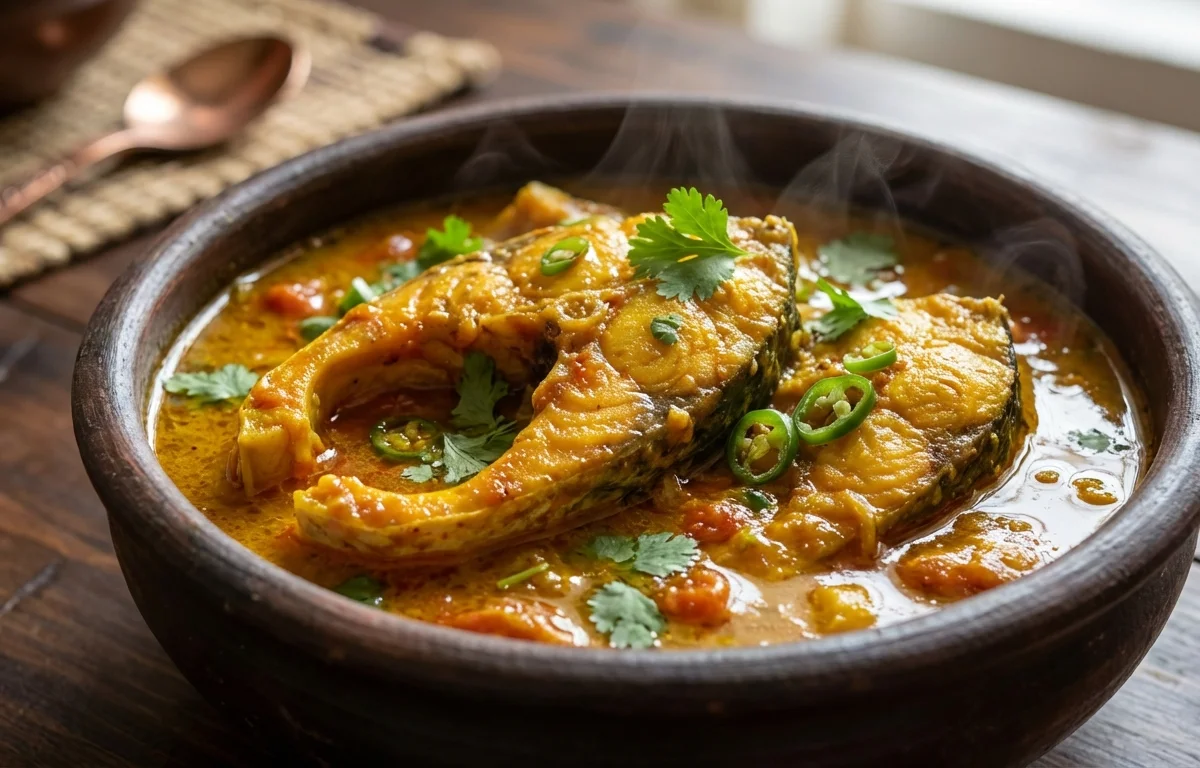
A light, homestyle fish curry from Assam with mustard oil, tomatoes, potatoes, and gentle spices. The gravy stays thin and comforting, letting the fish shine without heavy masalas.
For 4 servings
- prep · ~10 min
Season the fish.
1.Rub the fish with 1 pinch of the salt and 0.25 tsp of the turmeric powder.2.Set it aside for 10 minutes while you prep the curry ingredients.3.Keep the potato, tomato, ginger, and green chili ready near the stove.TIPA short rest helps the turmeric and salt cling to the fish and improves flavor. - fry · ~5 min
Lightly fry the fish.
1.Heat the mustard oil in a kadai over medium heat until it just begins to smoke lightly.2.Slide in the fish pieces and fry them gently for 1-2 minutes per side.3.Remove the fish as soon as the outside is lightly sealed; do not cook it through.TIPLight frying keeps the fish from breaking in the curry. - saute · ~7 min
Cook the base for the curry.
1.In the same oil, add the fenugreek seeds and let them sizzle for a few seconds.2.Add the potato and cook for 3-4 minutes until the edges look lightly colored.3.Add the ginger, tomato, green chili, remaining turmeric powder, red chili powder, and remaining salt.4.Cook until the tomatoes soften and turn pulpy.TIPKeep the heat medium so the fenugreek seeds flavor the oil without turning bitter. - boil · ~5 min
Add water and bring the curry to a boil.
Pour in the water and stir well, scraping up any bits from the pan. Bring the curry to a steady boil so the potatoes start cooking in the spiced broth.
- simmer · ~10 min
Simmer with the fish.
1.Lower the fried fish pieces into the boiling curry.2.Reduce the heat to low and simmer gently for 8-10 minutes.3.Cook until the potato is tender and the fish is just done.TIPAvoid stirring hard after adding the fish; swirl the pan instead. - garnish
Finish with coriander leaves.
- serve
Serve the fish curry hot.
Spoon the thin curry into katoris and serve hot as part of a meal, ideally with plain rice.
What to keep in mind.
7 tips from the recipe — small details that make a real difference to the final dish.
- 1Heat the mustard oil until it just smokes, then lower the heat before frying; this tames the raw pungency without losing its signature flavor.
- 2Do not let the fenugreek seeds darken too much in the oil, or the thin broth can turn noticeably bitter.
- 3Only lightly fry the fish first; if fully cooked at this stage, it will toughen and break apart during the simmer.
- 4Cut the potato wedges evenly so they finish cooking at the same time as the fish in the thin gravy.
- 5Once the fish goes back into the pan, swirl the kadai instead of stirring with a spoon to keep the steaks intact.
- 6This curry tastes even better after a short 10-15 minute rest off the heat, which lets the mustard oil, ginger, and tomato settle into the broth.
- 7Reheat gently on low heat with a splash of water if needed; a hard boil can overcook the fish and make the gravy cloudy.
Adapt it for your goals.
More-tangy
Add a little extra tomato or a few drops of lemon at the end if you prefer a brighter, sharper broth.
spicierSpicier
Increase the green chilies or red chili powder slightly for more heat while keeping the curry light and not overly masala-heavy.
vegetable heavyVegetable-heavy
Add more potato or include a few pieces of eggplant for a fuller everyday meal that still keeps the Assamese homestyle character.
boneless fishBoneless-fish
Use firm boneless fish pieces if you want easier serving, especially for children, but keep the simmer very gentle.
Why this is on our healthy list.
Protein-Rich Main Dish
Fish makes this curry a satisfying source of protein, helping turn a light broth into a filling meal.
Light, Less Heavy Gravy
Because the curry uses a thin tomato-based broth instead of cream or rich nut pastes, it stays comforting without feeling overly heavy.
Includes Aromatic Spices
Ginger, turmeric, green chili, and fenugreek add flavor depth along with plant compounds commonly used in everyday Indian home cooking.
Vegetables in the Curry
Tomatoes, potatoes, and coriander leaves add freshness, body, and a broader mix of ingredients than a fish-only preparation.
Frequently asked questions
Yes. Any firm fish cut into steaks works well, especially river fish. Choose pieces that can handle light frying and gentle simmering without falling apart.