Aval Upma
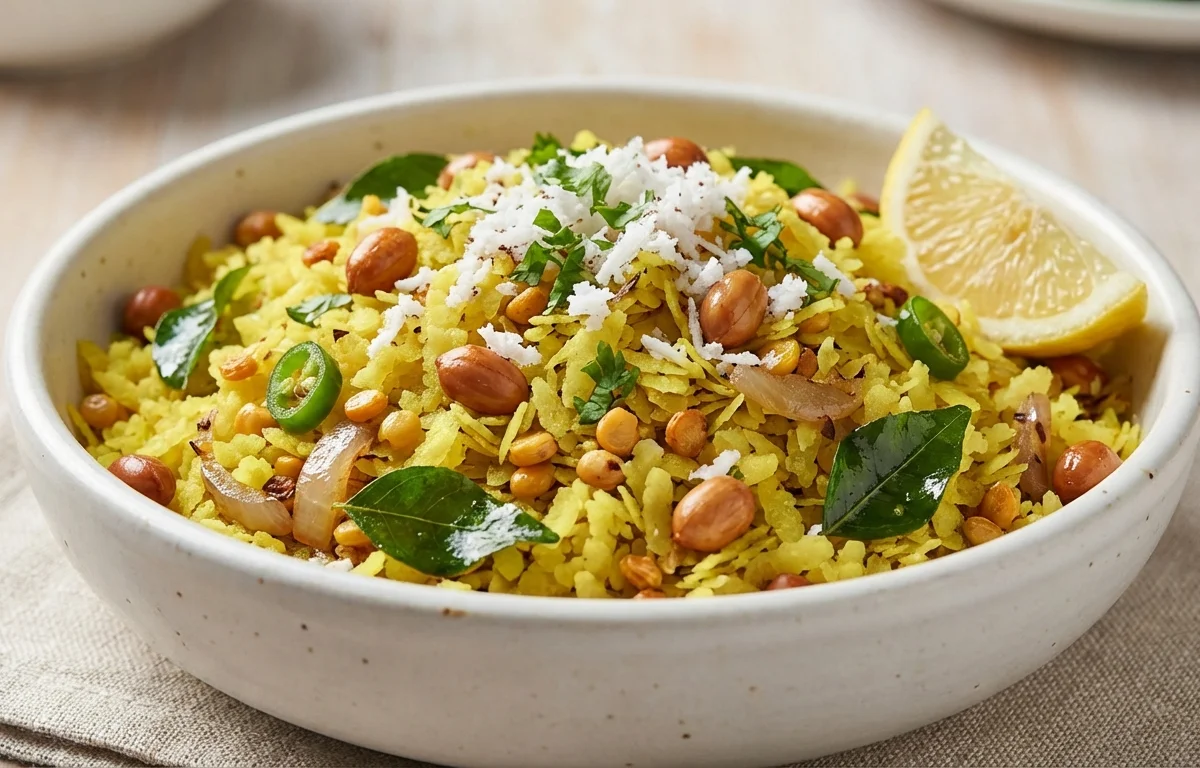
Light, comforting aval upma comes together quickly with softened flattened rice, onions, curry leaves, and a gentle tempering. It makes a simple South Indian breakfast or tiffin that feels warm, savory, and easy on the stomach.
For 4 servings
- prep · ~5 min
Rinse and soften the aval.
1.Place the poha in a colander and rinse it quickly under water.2.Set it aside for 5 minutes so it softens without turning mushy.3.Fluff it gently with your fingers to separate the flakes.TIPUse thick poha here. Thin poha softens too fast and can become pasty. - temper · ~2 min
Make the tempering.
1.Heat oil in a kadai over medium heat.2.Add mustard seeds and let them splutter.3.Add urad dal and chana dal and cook until lightly golden.4.Add green chili, ginger, and curry leaves and cook until fragrant. - saute · ~4 min
Cook the onion.
Add the onion and sauté for 3 to 4 minutes until soft and lightly translucent. Stir in turmeric powder and salt.
- mix · ~2 min
Add the aval and mix well.
Add the softened poha and toss gently so the tempering coats it evenly. Sprinkle in the water and mix without breaking the flakes too much.
- saute · ~3 min
Cook until heated through.
Cover and cook on low heat for 2 to 3 minutes, then uncover and stir once gently. The aval should be soft, warm, and fluffy.
TIPIf it looks dry, sprinkle 1 to 2 teaspoons more water and cover briefly. - garnish · ~1 min
Finish with lemon juice and coriander leaves.
- serve · ~1 min
Serve the aval upma hot.
What to keep in mind.
7 tips from the recipe — small details that make a real difference to the final dish.
- 1Rinse the thick poha quickly and drain well; soaking it too long will make the upma sticky.
- 2Let the mustard seeds fully splutter before adding the dals so the tempering tastes nutty, not raw.
- 3Fry urad dal and chana dal only to light golden; darker browning can make the upma taste bitter.
- 4Keep the onions just translucent and soft, not deeply browned, for a lighter breakfast-style upma.
- 5Mix the softened aval with a gentle lifting motion so the flakes stay separate and fluffy.
- 6Add lemon juice only after turning off the heat to keep its fresh, bright flavor.
- 7If making ahead, sprinkle a little water and steam covered for a minute before serving to revive softness.
Adapt it for your goals.
Vegetable-loaded
Add grated carrot, peas, or finely chopped beans after the onions for more color, texture, and a more filling breakfast.
peanutPeanut
Stir in roasted peanuts with the tempering for crunch and a nuttier taste that pairs well with lemon and curry leaves.
mildMild
Reduce or skip the green chilies for a gentler version that suits kids or those who prefer less heat.
jain styleJain-style
Omit onion and ginger, then rely on curry leaves, green chili, and lemon for a simple Jain-friendly aval upma.
Why this is on our healthy list.
Light and Easy Meal
Flattened rice cooks quickly and makes a soft, gentle dish that many people enjoy as a light breakfast or tiffin.
Includes Digestive Spices
Ginger, curry leaves, and green chili add aroma and character while making the dish feel lively rather than heavy.
Balanced with Lentils
The small tempering of urad dal and chana dal adds texture and a little staying power alongside the poha.
Frequently asked questions
Usually the poha was soaked too long or too much water was added. Rinse briefly, rest just until soft, and sprinkle water sparingly while cooking.