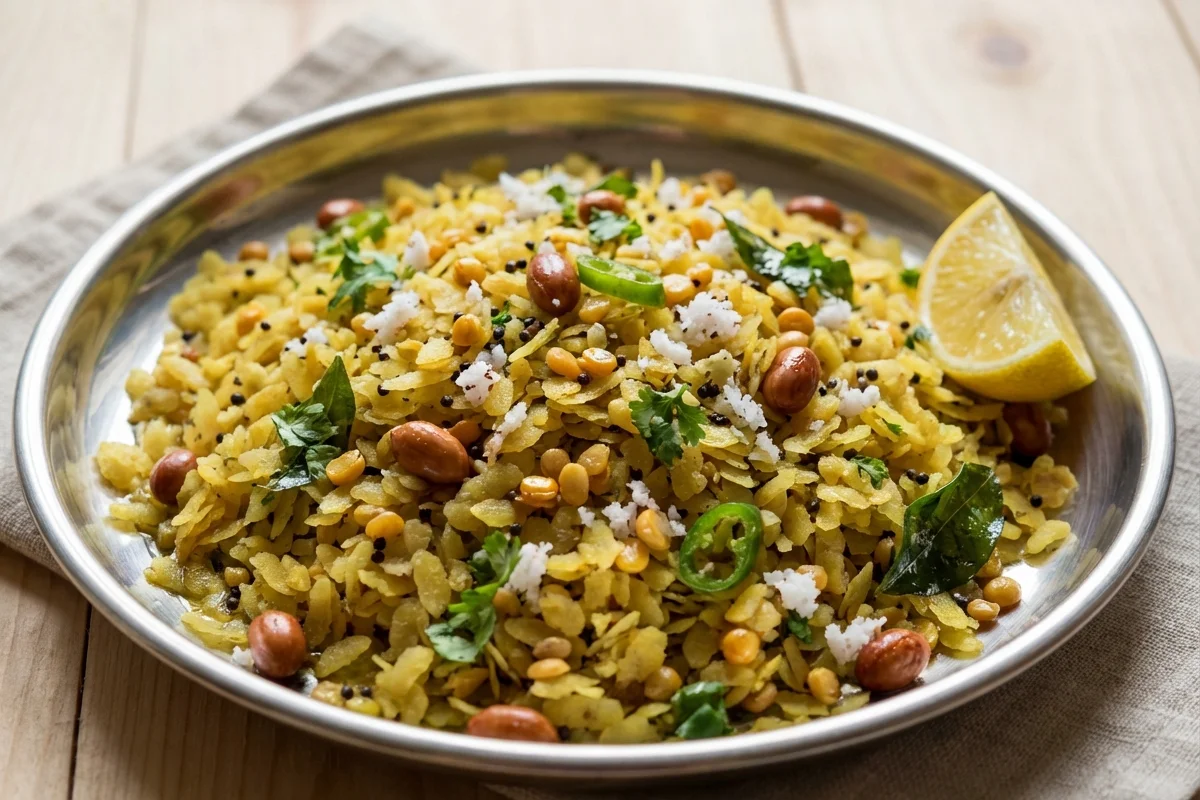
Avalakki Oggarane
Light, savory Karnataka-style poha tossed with a fragrant tempering of mustard seeds, curry leaves, chilies, onion, and peanuts. It cooks quickly and makes a comforting breakfast or snack with bright lemony finish.
For 4 servings
- prep · ~5 min
Rinse and soften the poha.
1.Place the poha in a colander and rinse it quickly under running water.2.Drain well and rest it for 5 minutes so the flakes soften without turning mushy.3.Fluff gently with your fingers to separate any clumps.TIPUse thick poha here. Thin poha softens too fast and can break while mixing. - temper · ~4 min
Make the tempering.
1.Heat oil in a kadai over medium heat.2.Add mustard seeds and let them splutter.3.Add urad dal, chana dal, and peanuts, then fry until the dals turn lightly golden.4.Add green chili and curry leaves and cook for a few seconds until fragrant.TIPKeep the heat medium so the dals and peanuts turn crisp without burning. - saute · ~4 min
Cook the onion.
Add the chopped onion and sauté until soft and lightly translucent, about 3 to 4 minutes.
- mix · ~2 min
Season and add the poha.
1.Add turmeric powder and salt to the pan and mix well.2.Add the softened poha and toss gently so the tempering coats every flake.3.Sprinkle in the water and mix once more. - saute · ~3 min
Steam the poha briefly in the pan.
Cover the pan and cook on low heat for 2 to 3 minutes until the poha is warm, soft, and evenly seasoned.
TIPDo not stir too much at this stage or the poha can turn pasty. - garnish · ~1 min
Finish with lemon, coconut, and coriander.
Turn off the heat. Add lemon juice, fresh coconut, and coriander leaves, then toss gently to combine.
- serve
Serve hot.
What to keep in mind.
7 tips from the recipe — small details that make a real difference to the final dish.
- 1Rinse thick poha only briefly; if it sits under water too long, the flakes will turn gummy.
- 2After rinsing, rest the poha for 5 minutes before cooking so it softens evenly without breaking.
- 3Fry the peanuts and dals until lightly golden before adding onion; that keeps them crisp in the finished avalakki.
- 4Add the 2 tablespoons of water only after mixing in the poha so it steams gently instead of getting soggy.
- 5Keep the covered cooking on low heat and avoid repeated stirring, or the poha will mash and lose its fluffy texture.
- 6Stir in lemon juice only after switching off the heat to keep the finish bright and fresh.
- 7If making ahead, keep coconut and coriander separate and add just before serving for the best texture and aroma.
Adapt it for your goals.
Vegetable-loaded
Add grated carrot, green peas, or diced capsicum with the onion for more color, texture, and a heartier breakfast.
jainJain
Skip the onion and increase curry leaves, peanuts, and coconut for a no-onion version that still tastes full and aromatic.
low oilLow-oil
Reduce the oil slightly and dry-roast the peanuts separately first; you still get crunch with a lighter finish.
extra spicyExtra-spicy
Use more green chilies or add a pinch of red chili powder with the turmeric for a sharper, hotter oggarane.
Why this is on our healthy list.
Light Yet Satisfying
Poha makes this dish easy to eat and comforting, while peanuts and dals add staying power so it feels more filling.
Plant-Based Protein Boost
Peanuts, urad dal, and chana dal contribute plant protein and make the breakfast more balanced than plain poha alone.
Herb- and Spice-Rich
Curry leaves, green chili, turmeric, coriander, and lemon add flavor without needing heavy sauces or rich ingredients.
Includes Healthy Fats
Peanuts and fresh coconut bring natural fats and texture, helping the dish feel satisfying with simple pantry ingredients.
Frequently asked questions
It was likely rinsed too long, overmixed, or cooked with too much water. Use thick poha, drain it well, and stir gently.