Avalakki Upma
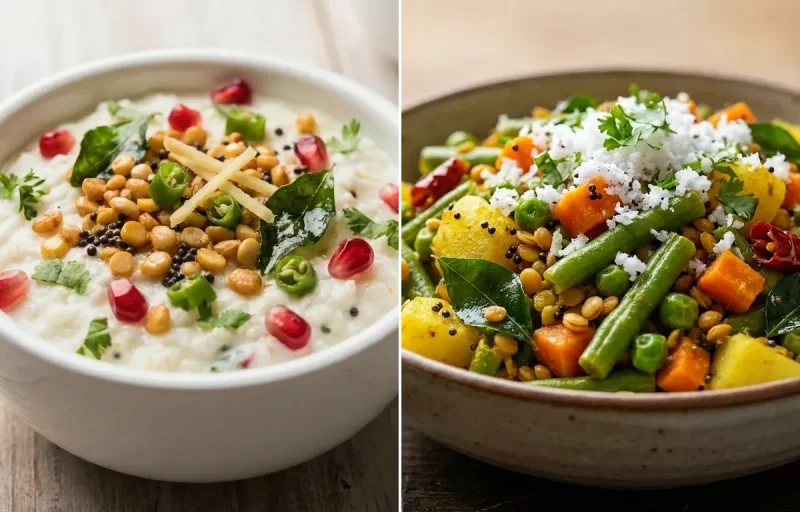
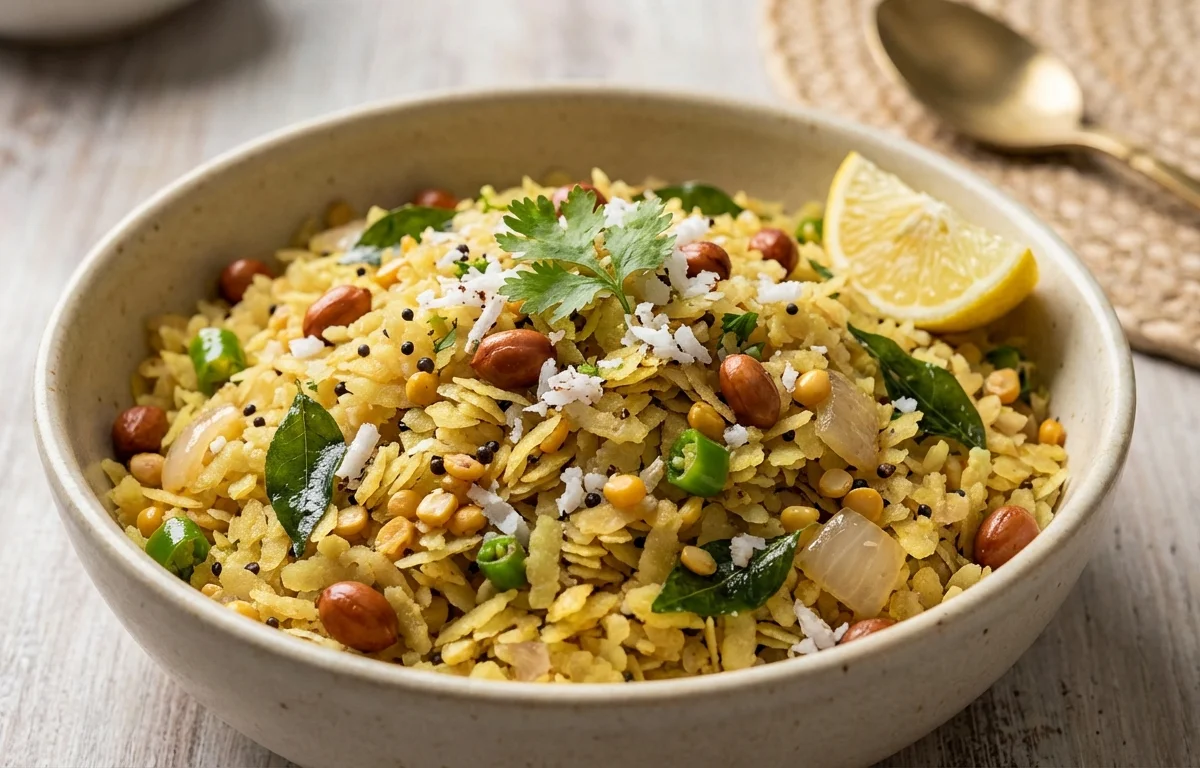
Light, comforting flattened rice upma with onions, peanuts, curry leaves, and a squeeze of lemon. This Karnataka-style breakfast comes together quickly and stays soft, fluffy, and full of gentle spice.
For 4 servings
- prep · ~6 min
Rinse and soften the poha.
1.Place the poha in a colander and rinse it quickly under running water.2.Drain well and let it sit for 5 minutes so it softens without turning mushy.3.Fluff it gently with your fingers to separate any lumps.TIPUse thick poha for upma. Thin poha softens too fast and can become sticky. - temper · ~3 min
Make the tempering.
1.Heat oil in a kadai over medium heat.2.Add mustard seeds and let them splutter.3.Add urad dal, chana dal, and peanuts.4.Cook until the dals turn light golden and the peanuts smell nutty.TIPKeep the heat medium so the dals crisp evenly without burning. - saute · ~4 min
Cook the aromatics.
1.Add green chili, ginger, and curry leaves to the pan.2.Stir for a few seconds until fragrant.3.Add onion and cook until soft and translucent. - mix · ~2 min
Season and add the poha.
Add turmeric powder and salt, then mix well. Add the softened poha and toss gently so the tempering coats it evenly without breaking the flakes.
- simmer · ~3 min
Steam it briefly in the pan.
Sprinkle in the water, cover, and cook on low heat until the poha is fully soft and warmed through.
- garnish
Finish with lemon juice and coriander.
Turn off the heat, drizzle in the lemon juice, and add coriander leaves. Toss gently and let it sit for 1 minute before serving.
- serve
Serve the avalakki upma warm.
What to keep in mind.
7 tips from the recipe — small details that make a real difference to the final dish.
- 1Rinse the thick poha very quickly and drain thoroughly; soaking it too long makes the upma pasty.
- 2Let the rinsed poha rest before cooking so the flakes soften evenly and stay fluffy when tossed.
- 3Fry the peanuts and dals until light golden before adding onion, so they stay crunchy in the finished upma.
- 4Keep the heat low after adding poha and water; high heat can make the bottom dry out before the top softens.
- 5Add the lemon juice only after turning off the heat to keep its fresh, bright flavor intact.
- 6If the poha still feels firm after steaming, sprinkle just a little more water, cover, and rest for a minute.
- 7Leftovers reheat best with a few drops of water in a covered pan to restore softness without making them soggy.
Adapt it for your goals.
Vegetable-loaded
Add diced carrot, peas, or capsicum with the onions for a heartier breakfast with more color and texture.
low oilLow-oil
Reduce the oil slightly and dry-roast the peanuts separately; you still get nutty crunch with a lighter finish.
no onionNo-onion
Skip the onion for a simpler temple-style version that highlights curry leaves, ginger, peanuts, and lemon.
jainJain
Omit onion and ginger, then increase curry leaves and lemon for a clean, aromatic version that fits Jain preferences.
Why this is on our healthy list.
Light and Easy to Digest
Flattened rice cooks gently and makes this a soft, comforting meal that is often easier on the stomach than heavier breakfasts.
Balanced Energy and Crunch
Poha provides quick energy, while peanuts and lentils add staying power and texture that make the dish more satisfying.
Aromatic Plant Ingredients
Ginger, curry leaves, green chili, coriander, and lemon bring fresh flavor from herbs and spices rather than relying on rich sauces.
Frequently asked questions
Usually the poha was rinsed too long, not drained well, or too much water was added during steaming. Thick poha and a quick rinse are key.