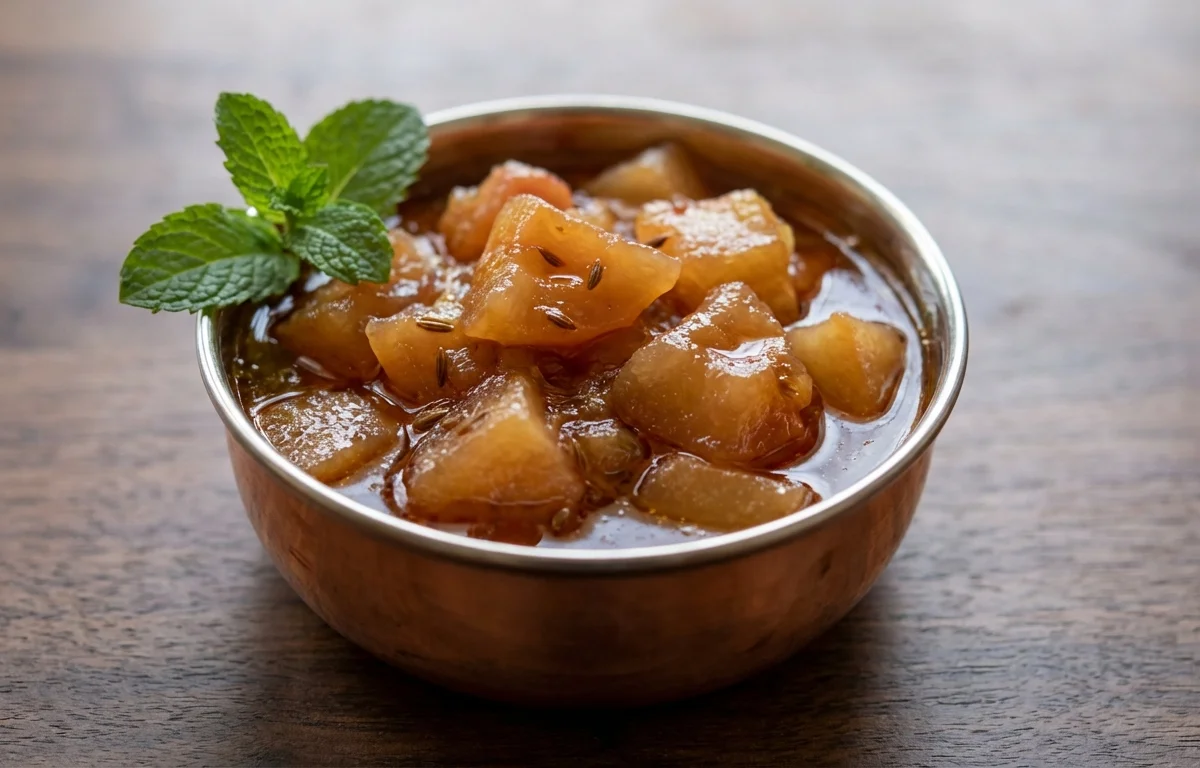
Bam Tsount
A unique and aromatic Kashmiri curry featuring the tartness of quince and the subtle sweetness of apples. Simmered in a fragrant, tangy gravy with fennel and ginger, this dish offers a delightful taste of the valley's traditional cuisine.
For 4 servings
Prepare the Fruit
1.Wash the quince and apples thoroughly. Peel, core, and cut them into thick 1-inch wedges.2.Immediately place the cut fruit into a large bowl of cold water to prevent oxidation and browning.Shallow-Fry the Fruit
1.Heat the mustard oil in a heavy-bottomed pan or kadai over medium-high heat until it reaches its smoking point. This is crucial for removing its raw pungency.2.Reduce the heat to medium and let the oil cool for 30 seconds. Carefully drain the fruit pieces and add them to the hot oil.3.Sauté for 5-7 minutes, stirring gently, until the edges of the fruit are lightly golden. Remove with a slotted spoon and set aside.Prepare the Spice Base
1.In the same pan with the remaining oil, lower the heat to low. Add the hing and cumin seeds. Let the seeds sizzle for about 30 seconds until fragrant.2.In a small bowl, whisk together the Kashmiri red chili powder, fennel powder, dry ginger powder, and turmeric powder with 1/4 cup of water to form a smooth paste.3.Pour this spice paste into the pan. Cook for 2-3 minutes, stirring continuously, until the paste thickens and you see oil separating from the masala.Simmer the Curry
1.Return the sautéed quince and apple pieces to the pan. Gently stir to coat them with the masala.2.Add the remaining 2.25 cups of water, tamarind paste, sugar, and salt. Stir well to combine.3.Increase the heat to medium-high and bring the curry to a boil.Cook and Serve
1.Once boiling, reduce the heat to low, cover the pan, and let it simmer for 15-20 minutes.2.The curry is ready when the quince pieces are tender and can be easily pierced with a knife. The apples will be very soft by this point.3.Turn off the heat and let the curry rest, covered, for at least 10 minutes to allow the flavors to meld and deepen.4.Serve hot with steamed rice.
What to keep in mind.
5 tips from the recipe — small details that make a real difference to the final dish.
- 1Use firm, ripe quince for the best flavor and texture. Underripe quince can be overly astringent.
- 2Smoking the mustard oil is a non-negotiable step in traditional Kashmiri cooking; it mellows the oil's pungent flavor.
- 3The gravy is intentionally thin and soupy, which is characteristic of many Kashmiri curries. Avoid the temptation to thicken it.
- 4Taste the gravy before serving and adjust the balance of sweet (sugar) and sour (tamarind) to your preference.
- 5Don't overcook the curry after the quince is tender, as the apples can disintegrate and become mushy.
Adapt it for your goals.
Protein Addition
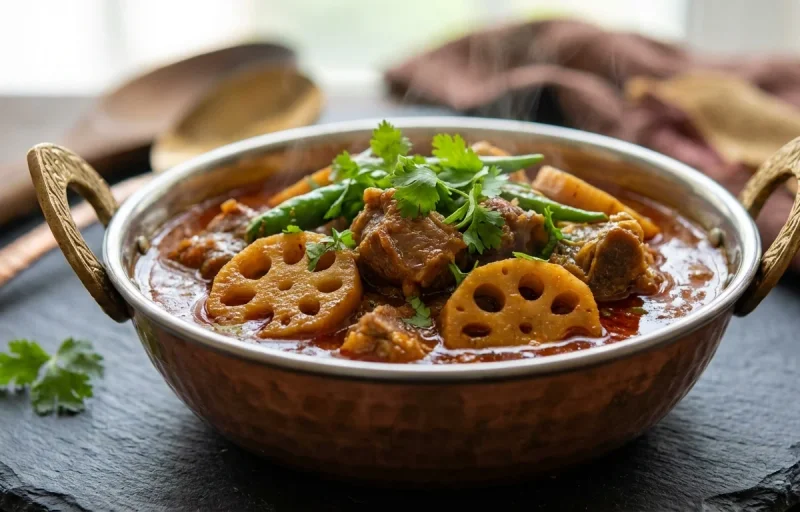
For a heartier dish, add fried cubes of paneer (Indian cottage cheese) or boiled lotus stem (nadru) along with the fruits in the final simmering step.
Sweetener SwapSweetener Swap
Replace the white sugar with an equal amount of grated jaggery for a more complex, earthy sweetness.
Increase HeatIncrease Heat
For a spicier version, add 1-2 slit green chilies to the oil along with the cumin seeds.
Tangy TwistTangy Twist
Substitute half of the tamarind paste with 1 teaspoon of dried pomegranate seed powder (anardana) for a different dimension of tartness.
Why this is on our healthy list.
Rich in Dietary Fiber
Quince and apples are excellent sources of both soluble and insoluble fiber, which aids digestion, promotes gut health, and helps in maintaining stable blood sugar levels.
Anti-inflammatory Properties
The curry is flavored with spices like turmeric (containing curcumin) and dry ginger (gingerol), which have potent anti-inflammatory and antioxidant properties that help combat cellular stress.
Supports Digestive Health
Fennel powder, a key spice in this dish, is traditionally used to relieve indigestion, bloating, and gas, contributing to overall digestive comfort.
Boosts Immunity
Quince is a good source of Vitamin C, an essential antioxidant that plays a vital role in strengthening the immune system and protecting the body against infections.
Frequently asked questions
One serving of Bam Tsount contains approximately 200-220 calories, making it a relatively light main dish. The exact count can vary based on the size of the fruits and the amount of oil used.