
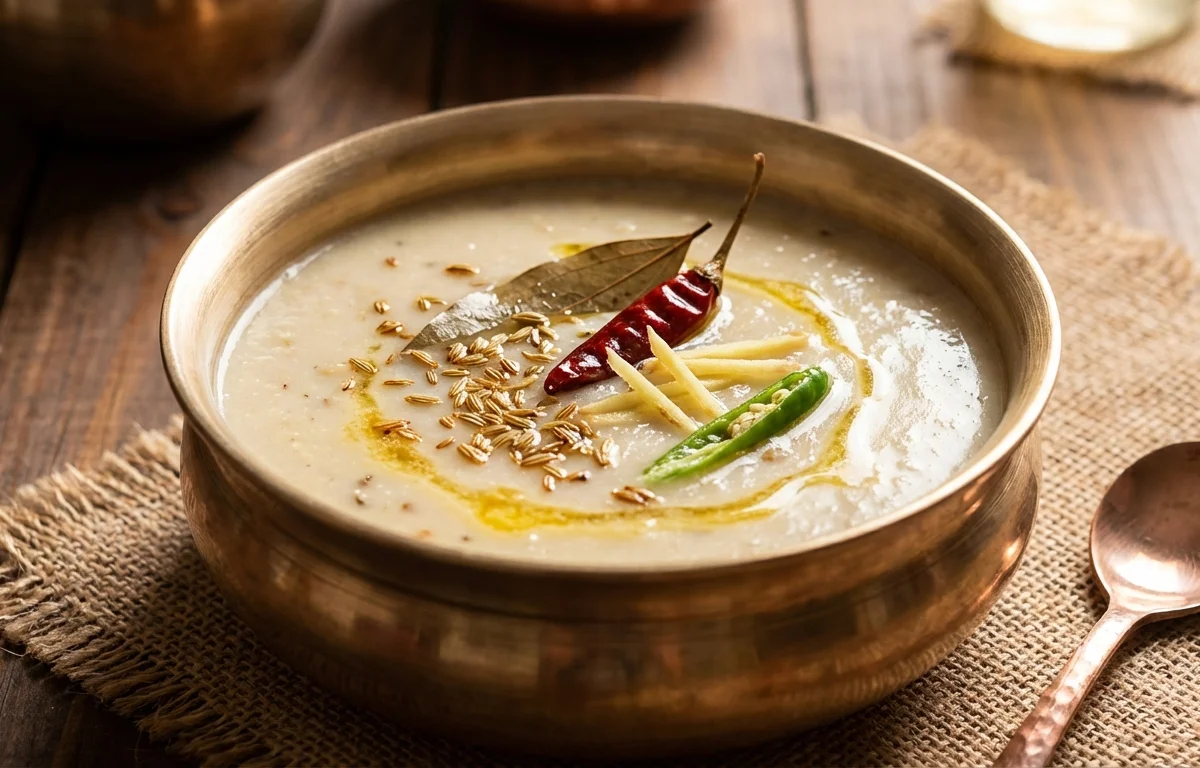
Bengali Kolai Dal
A creamy, earthy lentil preparation that's a breakfast staple in Bengali households. Split black gram is slow-cooked until silky, then finished with a fragrant panch phoron tempering and a touch of fennel. Simple, comforting, and deeply nourishing, it pairs beautifully with luchi or steamed rice.
For 4 servings
- prep
Soak and cook the lentils.
Wash the urad dal thoroughly and soak in enough water for 2 hours. Drain and add to a pressure cooker with 3 cups fresh water, salt, turmeric powder, and sugar. Pressure cook on medium-high heat for 4-5 whistles, then let the pressure release naturally.
- mix
Mash the dal to a creamy consistency.
Open the pressure cooker. Using a ladle or hand-held whisk, mash the cooked dal against the sides until smooth and creamy. If too thick, add a splash of warm water to reach a pourable, gravy-like consistency. Keep warm on low heat.
- temper · ~3 min
Prepare the Bengali phoron.
1.Heat mustard oil in a small frying pan over medium heat until it smokes lightly and turns pale yellow.2.Reduce heat to low and add panch phoron, fennel seeds, and dried red chilies.3.Cook until the seeds splutter and turn fragrant, about 30-40 seconds.4.Quickly stir in the grated ginger and sauté for 10 seconds until aromatic.TIPDon't let the panch phoron burn — it turns bitter fast. Keep the heat low once the seeds are in. - mix · ~3 min
Finish the dal with the tempering.
Immediately pour the hot tempering over the simmering dal. Stir well to combine. Let it bubble gently for 2-3 minutes so the flavors meld together.
- garnish
Garnish with chopped coriander leaves and serve hot.
Ladle into serving bowls and top with a sprinkle of fresh coriander. Serve piping hot with luchi, paratha, or steamed rice.
TIPA dash of raw mustard oil drizzled on top just before serving adds a pungent kick that Bengalis love.
What to keep in mind.
7 tips from the recipe — small details that make a real difference to the final dish.
- 1Soak the urad dal for a full 2 hours to ensure even cooking and a creamy texture.
- 2Mash the dal while it's still hot for the smoothest, silkiest consistency.
- 3Smoke the mustard oil until it turns pale yellow to mellow its pungency before adding spices.
- 4Keep the heat low when tempering panch phoron to prevent burning and bitterness.
- 5Let the dal rest for 5 minutes after adding the tempering so the flavors fully meld.
- 6Leftover kolai dal thickens upon cooling; thin it with warm water while reheating.
- 7For a richer flavor, stir in a teaspoon of ghee just before serving.
Adapt it for your goals.
Vegan
This recipe is already vegan as written — no dairy is used. Confirm that the sugar is vegan-friendly (e.g., organic or unrefined).
no onion garlic (sattvic)No-onion-garlic (sattvic)
Follow the recipe as is — kolai dal traditionally omits onion and garlic, making it naturally sattvic and suitable for fasting or temple offerings.
extra spicyExtra-spicy
Add 1-2 finely chopped green chilies along with the ginger in the tempering, or stir in 1/4 tsp cayenne pepper with the turmeric for a fiery kick.
rich & butteryRich & buttery
After mashing the dal, stir in 1 tbsp ghee or butter for a richer mouthfeel. This is not traditional but offers a luxurious variation.
Why this is on our healthy list.
High in Plant Protein
Urad dal is a rich source of plant-based protein, essential for muscle repair and overall body function. This dish provides a substantial protein boost in a single serving.
Good Source of Dietary Fiber
The lentils in kolai dal are high in soluble and insoluble fiber, which aids digestion, promotes gut health, and helps maintain steady blood sugar levels.
Rich in Iron
Urad dal contains iron, important for red blood cell production and preventing anemia. Pairing with mustard oil may help absorption.
Supports Bone Health
Lentils provide magnesium and phosphorus, both essential minerals for maintaining strong bones and teeth.
Frequently asked questions
Yes, you can simmer the soaked dal in a pot with 4-5 cups of water for 45-60 minutes, stirring occasionally, until very soft and creamy.



-curry.webp)
.webp)