
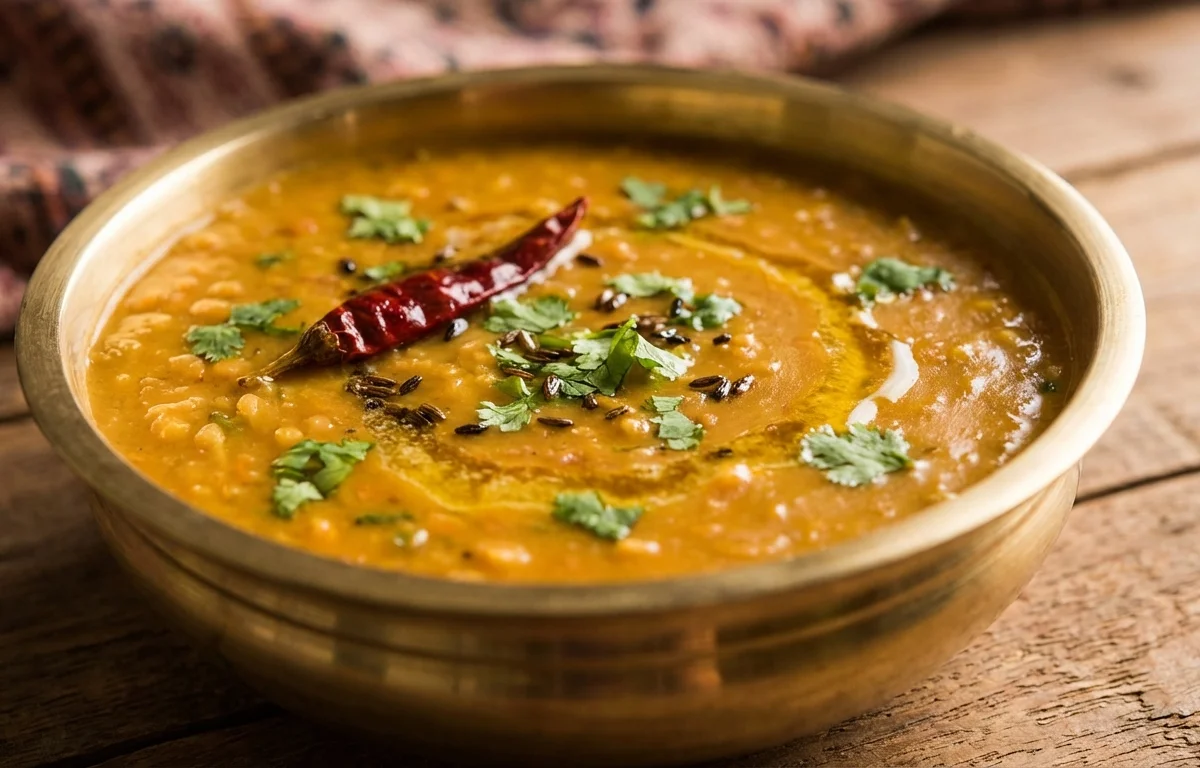
Bengali Masoor Dal
A simple, comforting red lentil dal that's a staple in Bengali kitchens. Unlike dal from other regions, this version skips the garlic and lets the sweetness of coconut and the aroma of panch phoron shine through. Light, soupy, and perfect with plain rice.
For 4 servings
- boil · ~18 min
Cook the masoor dal.
1.Rinse 1 cup masoor dal well under running water until water runs clear.2.In a deep pot, combine the rinsed dal with 3 cups water, turmeric powder, and salt.3.Bring to a boil, then reduce to a gentle simmer. Skim off any white foam that rises to the surface.4.Cook for 15-18 minutes until the dal is soft and starts to break down. Stir occasionally to prevent sticking.TIPAdd a few drops of oil to the pot to prevent the dal from boiling over. - mix · ~5 min
Whisk the dal and add tomato.
1.Remove the cooked dal from heat. Use a wire whisk or a hand blender to mash it lightly until smooth but still with some texture.2.Stir in the chopped tomato and sugar. Return to a low simmer for 2-3 minutes until tomato softens into the dal.3.Add a little hot water if the dal feels too thick — the consistency should be thin and flowing, like a light soup.TIPDon't over-blend. Bengali masoor dal should have a creamy body with a few lentil halves still visible. - temper · ~2 min
Make the panch phoron tempering.
1.Heat mustard oil in a small tempering pan over medium heat until it smokes lightly, then cool it slightly for a few seconds.2.Add the panch phoron spice blend and let it splutter and become fragrant (15-20 seconds).3.Add the broken dried red chili and sauté until it darkens slightly (10 seconds).4.Add the grated ginger and fry just until aromatic and lightly golden (30 seconds).TIPMustard oil must reach its smoking point to lose its raw pungency — this is essential for authentic Bengali flavor. - mix · ~1 min
Pour the tempering into the dal.
1.Immediately pour the sizzling tempering mixture over the hot dal.2.Stir everything together gently. Watch the aromatic oils swirl into the dal.3.Add the grated fresh coconut and stir to combine.TIPPour the tempering directly from the pan into the dal — the sizzle when it hits the lentils releases maximum aroma. - garnish
Garnish with fresh cilantro and serve.
Ladle the dal into serving bowls. Sprinkle generously with chopped cilantro. Serve immediately with steamed rice.
What to keep in mind.
7 tips from the recipe — small details that make a real difference to the final dish.
- 1Rinse the masoor dal until the water runs clear to remove excess starch and prevent foaming.
- 2Skim off the white foam that rises while boiling for a cleaner, smoother dal texture.
- 3Whisk the dal just enough to break it down; leave a few whole lentils for rustic texture.
- 4Heat mustard oil until it smokes, then cool slightly before adding panch phoron to avoid burning the spices.
- 5Add the tempering while both the dal and oil are hot for the best aromatic infusion.
- 6Adjust the dal's consistency with hot water — it should be thin and soupy, not thick.
- 7This dal tastes even better the next day; store it in the fridge and reheat with a splash of water.
Adapt it for your goals.
Vegan
Use coconut oil or a neutral vegetable oil instead of mustard oil for a vegan version that still retains the sweetness of coconut and aromatic spices.
low oilLow-oil
Reduce mustard oil to 1 tsp and add the dry spices directly to the dal along with the ginger, then skip the tempering step. This lowers fat while keeping flavor intact.
high proteinHigh-protein
Add a tablespoon of chopped spinach or kale along with the tomato for extra iron and vitamins without altering the dal's texture or flavor profile.
jainJain
Omit ginger and garlic (already absent) and replace fresh coconut with finely chopped raw papaya to maintain a subtle sweetness that mirrors the original.
Why this is on our healthy list.
Rich in Plant-Based Protein
Masoor dal (red lentils) provide a hearty dose of protein, essential for muscle repair and overall health, making this a satisfying vegetarian dish.
Good Source of Dietary Fiber
Lentils are packed with soluble fiber that supports healthy digestion and helps maintain stable blood sugar levels.
Packed with Antioxidants
Turmeric, ginger, and coconut offer anti-inflammatory compounds that may help reduce oxidative stress and support immunity.
Low in Fat and Calories
This dal uses minimal oil, making it a light yet nourishing option for those watching their calorie intake.
Frequently asked questions
Bengali cuisine often omits garlic in daily lentil dishes to let the subtle sweetness of coconut and the floral notes of panch phoron stand out.


