
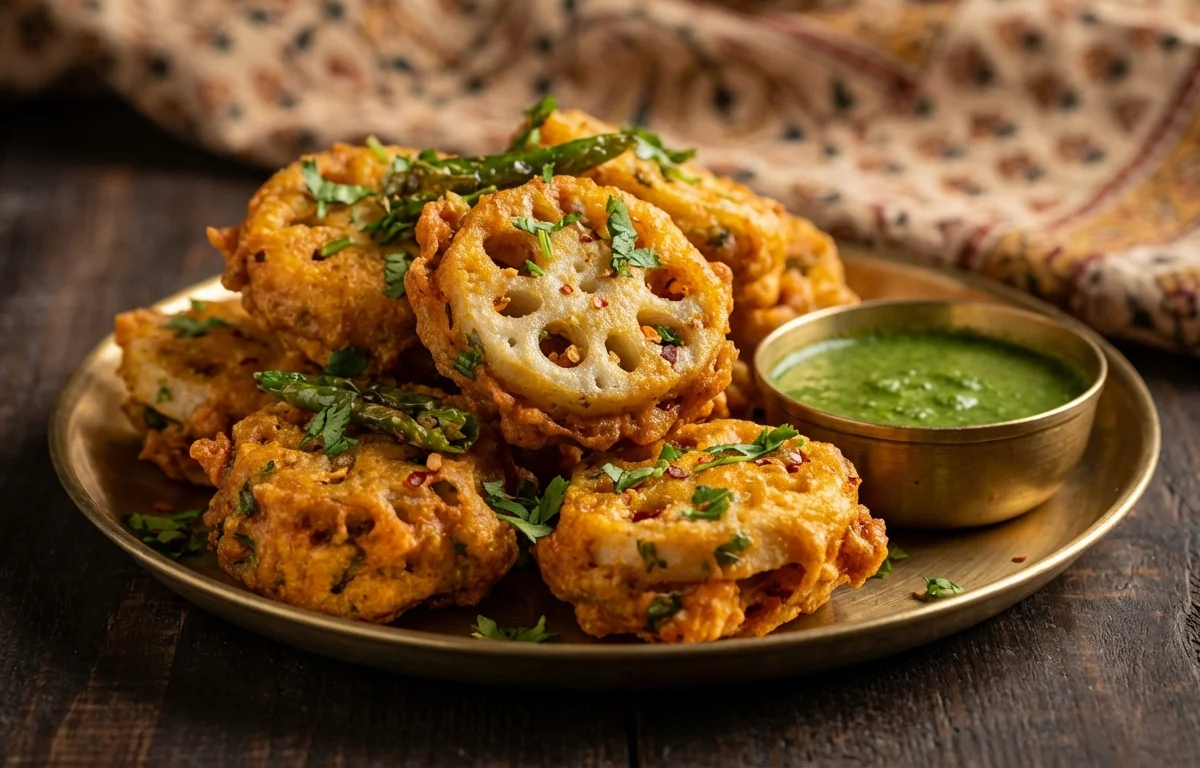
Bhee ja Pakora
Crispy, golden fritters made from tender lotus stem slices coated in a spiced gram flour batter. A beloved Sindhi tea-time snack and monsoon favorite, these pakoras are crunchy on the outside and slightly soft inside, best enjoyed hot with mint chutney.
For 4 servings
- prep · ~8 min
Prep and parboil the lotus stem.
1.Peel the lotus stem and slice into thin rounds about 3-4 mm thick.2.Bring a pot of water to a boil and add the lotus stem slices.3.Boil for 4 minutes until slightly tender but still firm.4.Drain and pat completely dry with a kitchen towel.TIPDon't overcook the lotus stem — it should stay firm so it doesn't fall apart during frying. - mix · ~3 min
Make the pakora batter.
1.In a mixing bowl, combine besan, rice flour, red chili powder, turmeric, ajwain, cumin seeds, and salt.2.Add water a little at a time, whisking continuously to form a smooth, thick batter.3.Add the pinch of baking soda and whisk again until well incorporated.TIPThe batter should coat the back of a spoon — too thin and it won't stick to the lotus stem, too thick and the pakoras turn dense. - prep · ~2 min
Coat the lotus stem slices.
Dip each parboiled lotus stem slice into the batter, letting the excess drip off. Ensure both sides are evenly coated.
- fry · ~8 min
Deep fry the pakoras.
1.Heat oil in a kadhai over medium heat until it reaches 180°C (350°F).2.Carefully slide the battered slices into the hot oil, a few at a time without crowding.3.Fry for 2-3 minutes per side, flipping once, until golden and crisp.4.Remove with a slotted spoon and drain on paper towels.TIPTest one pakora first — if it browns too fast the oil is too hot; if it soaks oil the batter may be too thin. - serve
Serve hot with mint chutney.
Arrange the crispy Bhee ja Pakora on a serving plate and serve immediately with fresh mint chutney or tamarind chutney.
TIPThese are best enjoyed sizzling hot within minutes of frying — they lose crispiness as they cool.
What to keep in mind.
6 tips from the recipe — small details that make a real difference to the final dish.
- 1Pat the parboiled lotus stem slices very dry — excess moisture thins the batter and causes splattering.
- 2Use a kadhai or heavy-bottomed pan for stable frying temperature; maintain oil at 180°C (350°F).
- 3Add baking soda just before frying and whisk briefly — overmixing deflates the batter and reduces crispiness.
- 4Fry in small batches of 4-5 slices so the oil temperature doesn't drop and pakoras stay crunchy.
- 5Serve immediately after draining — these pakoras soften quickly as they cool.
- 6To make ahead, parboil and dry the slices a day in advance and refrigerate; batter fresh just before frying.
Adapt it for your goals.
Spicy Twist
Add 1/2 teaspoon of finely chopped green chilies and 1/4 teaspoon of chaat masala to the batter for a punchier, tangy kick.
Low OilLow-Oil
Skip deep-frying: brush the battered slices lightly with oil and air-fry at 200°C (400°F) for 8-10 minutes, flipping halfway, for a lighter version.
Gluten FreeGluten-Free
This recipe is naturally gluten-free as written, but ensure your besan (chickpea flour) and rice flour are certified gluten-free if serving celiac individuals.
Herb InfusedHerb-Infused
Mix 1 tablespoon of finely chopped fresh coriander and 1 teaspoon of dried fenugreek leaves (methi) into the batter for an earthy, aromatic layer.
Why this is on our healthy list.
Rich in Dietary Fiber
Lotus stem is a good source of insoluble fiber, which supports healthy digestion and promotes satiety.
Low Glycemic Index Base
Chickpea flour (besan) has a lower glycemic index than wheat flour, making these pakoras a more blood-sugar-friendly fried snack.
Anti-Inflammatory Spices
Turmeric and ajwain (carom seeds) contain anti-inflammatory compounds that can aid in reducing oxidative stress.
Plant-Based Protein
Besan provides about 10g of protein per 100g, contributing to muscle repair and making this a satisfying vegetarian snack.
Frequently asked questions
Sogginess usually means the oil wasn't hot enough (below 350°F) or the slices weren't dried thoroughly after parboiling — both cause excess oil absorption.


