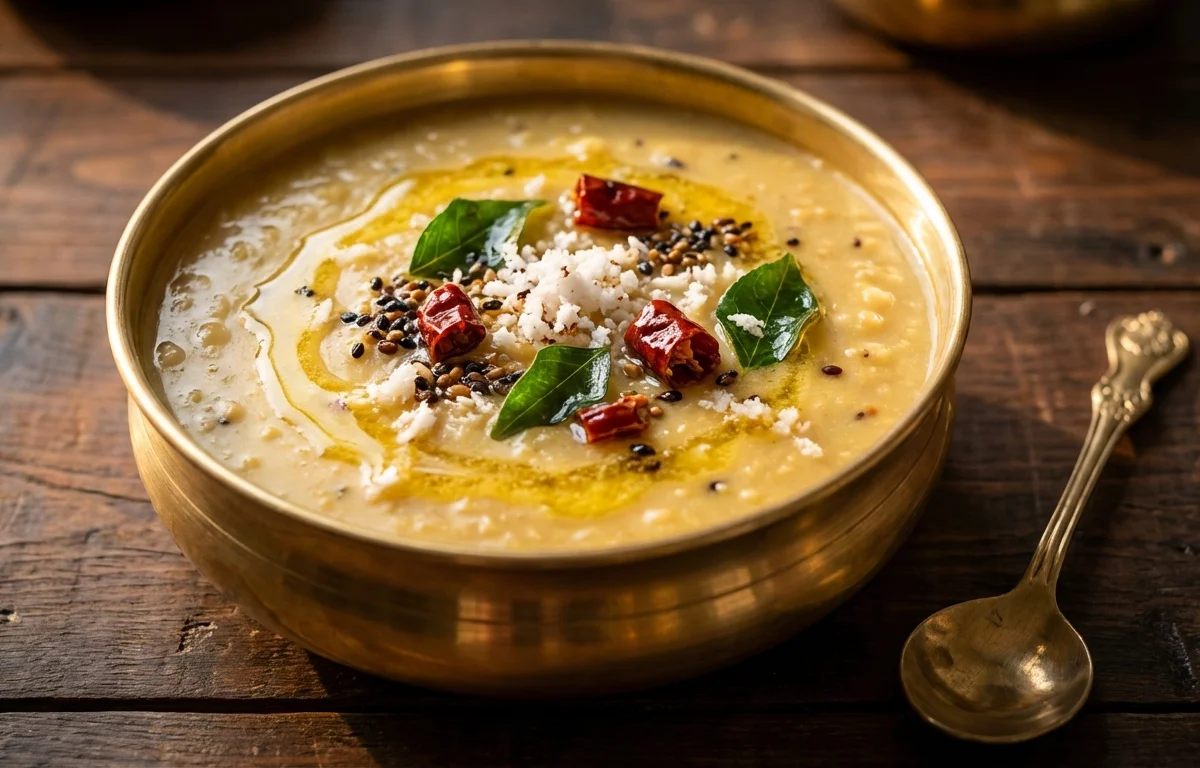
Biri Dali
A hearty, comforting lentil dish from Odisha, where urad dal is slow-cooked with aromatic ginger and whole spices, then finished with a fragrant panch phoron tempering. Creamy and mildly spiced, this dal pairs beautifully with steamed rice for a simple, soulful meal.
For 4 servings
- prep
Soak the urad dal.
Wash the urad dal thoroughly under running water. Soak in enough water to cover by 2 inches for at least 2 hours. Drain and keep aside.
TIPSoaking softens the lentils and reduces cooking time significantly. - boil · ~35 min
Cook the dal until tender.
1.In a heavy-bottomed pot, add the soaked dal, 3.5 cups water, ginger, turmeric powder, and salt.2.Bring to a rolling boil over high heat, then reduce heat to medium-low.3.Cover partially and simmer for 30-35 minutes, stirring occasionally, until the dal is soft and creamy but individual grains still hold shape.4.Add a splash of hot water if the dal thickens too much.TIPDo not overcook into a mush; Biri Dali should have a porridge-like consistency with a slight bite to the lentils. - temper · ~2 min
Make the tempering.
1.Heat ghee in a small pan over medium heat until shimmering.2.Add panch phoron and let the seeds splutter and crackle (20-30 seconds).3.Add sliced garlic and broken dried red chilies. Sauté until garlic turns golden brown (1 minute).4.Switch off the heat and immediately add the pinch of asafoetida. Let it sizzle in the residual heat.TIPBe swift with the asafoetida — it burns easily. Add it only after the flame is off. - mix · ~2 min
Combine the tempering with the dal.
Pour the entire tempering over the hot cooked dal. Stir well to incorporate the aromatic ghee and spices throughout. Simmer for 2 minutes to allow the flavors to meld.
- garnish
Garnish and serve.
Transfer the Biri Dali to a serving bowl. Sprinkle with freshly chopped cilantro and serve hot.
TIPA final drizzle of raw ghee on top before serving elevates the aroma.
What to keep in mind.
7 tips from the recipe — small details that make a real difference to the final dish.
- 1Soak urad dal for at least 2 hours to ensure even cooking and a creamy texture.
- 2Stir the dal occasionally while simmering to prevent sticking and promote creaminess.
- 3Add asafoetida after switching off the heat to avoid a bitter, burnt flavor.
- 4For a thicker dal, mash a few lentils against the pot side with a spoon.
- 5If the dal thickens too much on standing, loosen it with a splash of hot water before serving.
- 6Garnish with a final drizzle of raw ghee just before serving for extra aroma.
- 7Leftover Biri Dali keeps well for 2 days in the fridge; thin with water when reheating.
Adapt it for your goals.
Vegan
Replace ghee with coconut oil or a neutral oil in the tempering. The dish remains creamy and aromatic, suitable for plant-based diets.
spicierSpicier
Add 1-2 finely chopped green chilies along with the garlic in the tempering for extra heat. Great for those who enjoy a fiery kick.
tomato tangyTomato-tangy
Stir in 1 small finely chopped tomato during the last 10 minutes of cooking the dal. It adds a mild acidity that contrasts beautifully with the earthy lentils.
no soak quickNo-soak quick
Skip the soaking step; pressure-cook the dal with 4 cups water for 4-5 whistles. Saves time while still producing a creamy texture.
Why this is on our healthy list.
Rich in Plant Protein
Urad dal is an excellent source of plant-based protein, supporting muscle repair and keeping you full longer.
High in Dietary Fiber
The lentils provide soluble fiber, which aids digestion and helps maintain steady blood sugar levels.
Good Source of Iron
Urad dal contains iron, essential for oxygen transport and energy production; pairing with the vitamin C in cilantro enhances absorption.
Anti-Inflammatory Spices
Turmeric, ginger, and asafoetida have natural anti-inflammatory properties, supporting joint health and immunity.
Ghee for Healthy Fats
A moderate serving of ghee provides fat-soluble vitamins and butyrate, which supports gut health.
Frequently asked questions
Yes, split urad dal cooks faster (about 15-20 minutes) and yields a smoother, almost soup-like consistency. Soaking is optional but reduces cooking time.