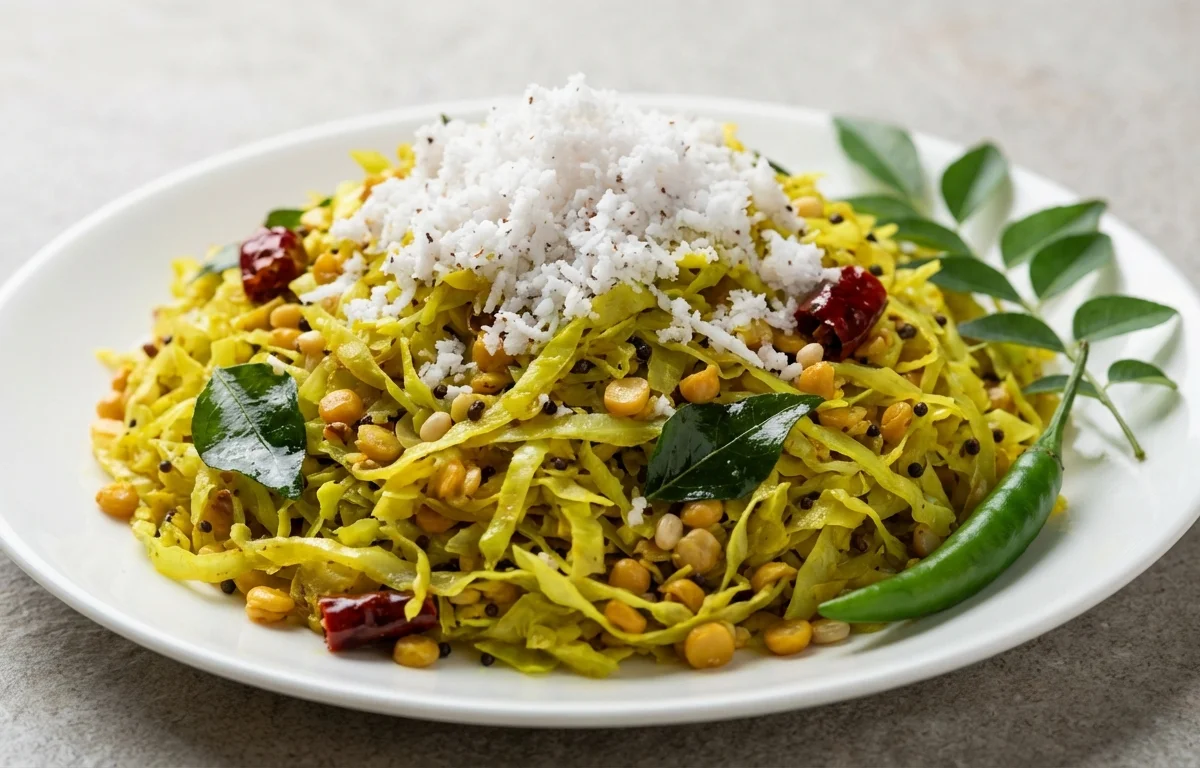
Cabbage Porutu
A simple, everyday Andhra-style stir-fry where finely chopped cabbage meets the nutty crunch of chana dal and the fresh aroma of coconut. Lightly spiced with green chilies, this dry sabzi comes together in minutes and pairs beautifully with hot rice and a dollop of ghee.
For 4 servings
- prep
Prep the cabbage.
Remove the outer leaves. Halve, core, and finely chop the cabbage into small, even shreds. Rinse well and drain completely — excess water will make the porutu soggy.
TIPPat the cabbage dry with a clean kitchen towel after washing. The drier the cabbage, the better it stir-fries. - temper · ~3 min
Make the tempering.
1.Heat oil in a kadai over medium heat until shimmering.2.Add chana dal and urad dal; fry until they turn light golden (1 min).3.Add mustard seeds and let them splutter fully (30 sec).4.Add cumin seeds, dried red chilies, green chilies, curry leaves, and chopped ginger; sauté until fragrant (30 sec).TIPWatch the dals carefully — they go from golden to burnt in seconds. Keep the heat at medium. - saute · ~10 min
Stir-fry the cabbage.
1.Add the chopped cabbage to the kadai along with turmeric powder and salt.2.Toss everything well so the spices and tempering coat the cabbage evenly.3.Cover and cook on low heat for 8-10 minutes, stirring once halfway through.TIPDo not add any water. Cabbage releases its own moisture and cooks perfectly in the steam trapped under the lid. - saute · ~2 min
Finish with coconut and crisp it up.
1.Remove the lid. Check that the cabbage is tender but still has a slight bite.2.Add the grated coconut and stir-fry uncovered on medium-high heat for 2 minutes until any remaining moisture evaporates.TIPThis final uncovered stir-fry is what gives the porutu its characteristic dry, non-soggy texture. - garnish
Garnish with coriander leaves and serve hot.
Turn off the heat. Scatter chopped coriander leaves on top and give it one last gentle toss.
What to keep in mind.
6 tips from the recipe — small details that make a real difference to the final dish.
- 1Finely chop the cabbage into uniform shreds so it cooks evenly and stays crisp-tender.
- 2Pat the rinsed cabbage very dry to prevent the porutu from turning watery during cooking.
- 3Roast the chana dal and urad dal until just golden — they add a crucial nutty crunch to the dish.
- 4Do not skip the final uncovered stir-fry on medium-high heat; it drives off excess moisture for a dry, non-soggy texture.
- 5Freshly grated coconut makes a noticeable difference in flavor and texture over pre-shredded or frozen options.
- 6This porutu reheats well — store in the fridge for up to 2 days and reheat in a dry pan to restore its texture.
Adapt it for your goals.
Vegan
This recipe is already vegan, as it uses oil instead of ghee and no dairy; simply confirm the coconut is fresh and not mixed with any dairy shreds.
nut freeNut-free
Omit or replace the coconut with an extra tablespoon of roasted chana dal powder for a nut-free version that still offers a subtle crunch.
low oilLow-oil
Reduce oil to 1 teaspoon and use a non-stick pan; the cabbage releases enough moisture to prevent sticking during the covered steam-cook step.
protein boostProtein-boost
Add 1/4 cup of cooked, crumbled tofu or steamed moong dal along with the cabbage for an extra protein punch without altering the dish's character.
Why this is on our healthy list.
Rich in Dietary Fiber
Cabbage provides a generous amount of fiber, which supports healthy digestion and helps maintain stable blood sugar levels.
Good Source of Vitamin C
Cabbage is naturally high in vitamin C, an antioxidant that supports immune function and skin health.
Low Calorie & Nutrient Dense
This stir-fry is very low in calories yet packed with vitamins, minerals, and fiber from cabbage, lentils, and coconut.
Contains Probiotic-Friendly Fiber
Cabbage contains prebiotic fiber that feeds beneficial gut bacteria, promoting a healthy microbiome.
Frequently asked questions
Yes, green cabbage works perfectly; it is slightly more tender and has a milder flavor, so the cook time may be reduced by a minute or two.



.webp)