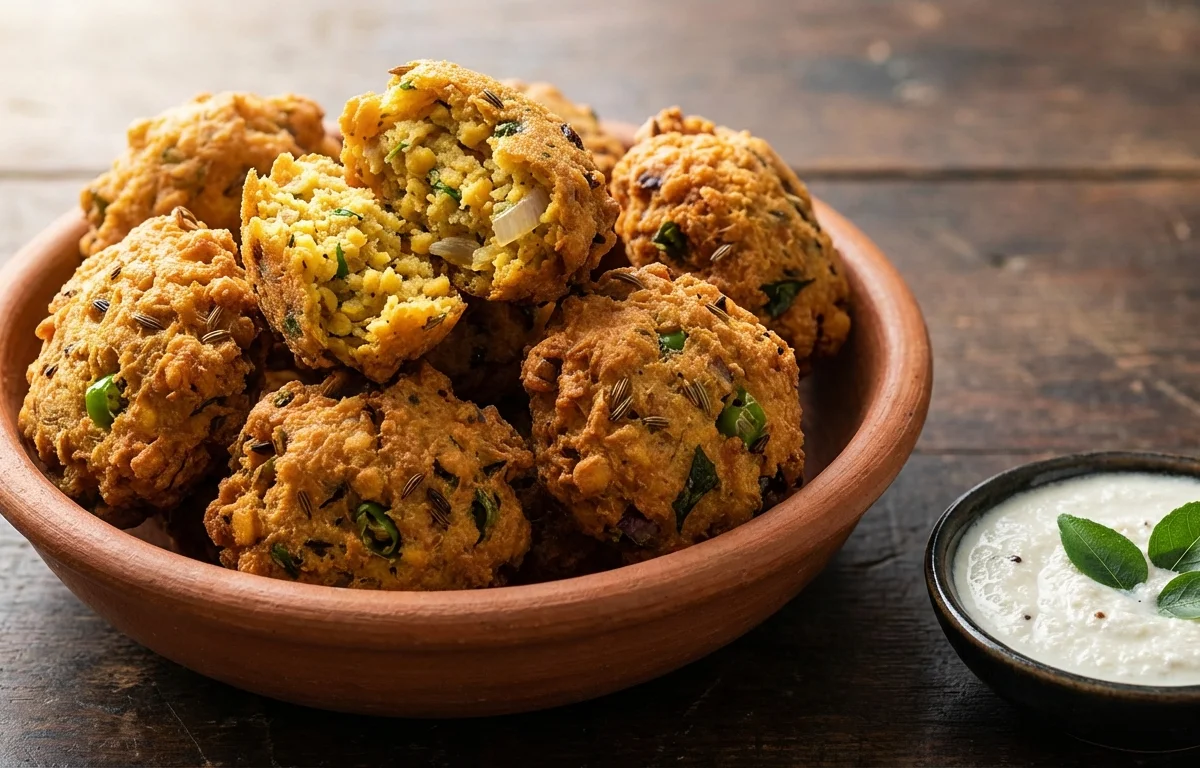
Chana Dal Vada
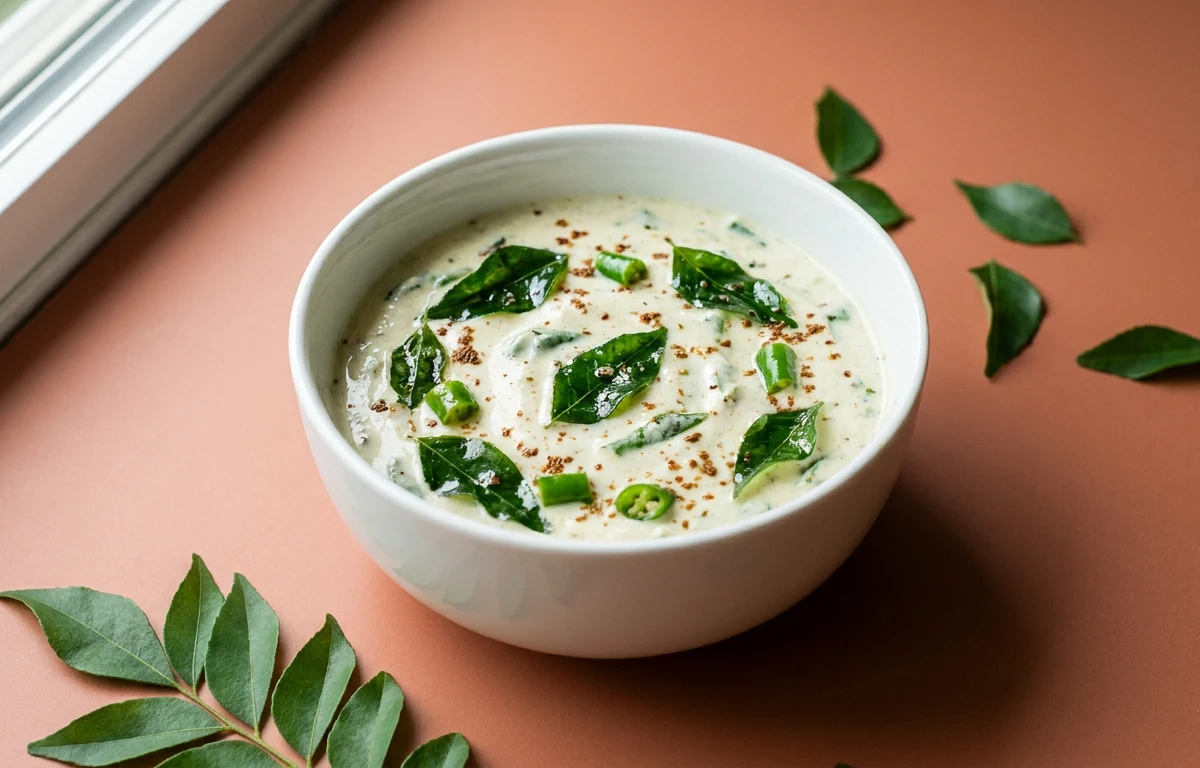
Crispy, golden-brown fritters with a crunchy exterior and soft, fluffy interior. Made from coarsely ground chana dal, fresh herbs, and aromatic spices, these South Indian tea-time favorites are packed with flavor and pair perfectly with coconut chutney or a hot cup of filter coffee.
For 4 servings
- prep · ~120 min
Soak the chana dal.
Wash the chana dal thoroughly. Soak in 2 cups of water for 2 hours. Drain completely — no excess water should remain.
TIPDo not soak the dal beyond 2 hours, or the vadas will absorb too much oil. - mix · ~2 min
Coarsely grind the dal.
Transfer the drained dal to a grinder. Pulse coarsely without adding any water — aim for a rough, granular texture where a few whole dal pieces are still visible. Scrape into a mixing bowl.
TIPAvoid making a smooth paste; the coarse texture is what gives vada its signature crunch. - mix · ~3 min
Mix the vada batter.
1.Add chopped onion, green chili, ginger, torn curry leaves, and chopped coriander leaves to the ground dal.2.Add fennel seeds, cumin seeds, salt, and red chili powder.3.Mix everything well by hand until evenly combined and the mixture holds together when pressed. - fry · ~5 min
Heat the oil for deep frying.
Pour oil into a kadai and heat over medium flame. To test, drop a tiny ball of batter in — it should sizzle and rise immediately.
TIPMaintain consistent medium heat throughout frying to ensure the vadas cook through without burning. - fry · ~20 min
Shape and fry the vadas.
1.Wet your palms with water. Take a small ball of batter (about 2 tbsp) and flatten gently into a rough disc about ½ inch thick.2.Make a small hole in the center with your finger, like a doughnut.3.Carefully slide the shaped vada into the hot oil. Add 2-3 more, without crowding the kadai.4.Fry for 4-5 minutes, turning occasionally, until deep golden brown and crisp on both sides.5.Remove with a slotted spoon and drain on paper towels.TIPShaping with wet hands prevents the batter from sticking to your palms. - serve
Serve the chana dal vadas hot.
Arrange the vadas on a serving plate. Serve immediately with coconut chutney and a hot cup of filter coffee or chai.
TIPVadas lose their crispiness as they cool — serve them right away for the best texture.
What to keep in mind.
6 tips from the recipe — small details that make a real difference to the final dish.
- 1Soak the chana dal for exactly 2 hours — over-soaking makes the vada absorb excess oil.
- 2Pulse the dal coarsely without water; a few whole pieces add the signature crunch.
- 3Wet your palms before shaping to stop the batter from sticking to your hands.
- 4Make a small hole in the center of each vada so it cooks evenly and stays crisp.
- 5Fry at a steady medium heat; if the oil is too hot, the vada will brown outside but stay raw inside.
- 6Serve immediately — vadas lose their crunch within 15 minutes of cooling.
Adapt it for your goals.
Low-oil
Shape the batter into small flat patties and pan-fry in a skillet with just 2 tablespoons of oil, flipping once. This reduces oil absorption while keeping a crisp exterior.
High proteinHigh-protein
Add 2 tablespoons of roasted, crushed peanuts to the batter for extra protein and nutty crunch.
JainJain
Skip the onion and garlic, replace with 1/4 cup finely chopped spinach and a pinch of asafoetida. Suitable for Jain dietary restrictions.
Herb crustedHerb-crusted
Roll each shaped vada in finely chopped curry leaves or sesame seeds before frying to add another layer of texture and flavor.
Why this is on our healthy list.
High in Plant Protein
Chana dal (split chickpeas) is an excellent source of plant-based protein, supporting muscle repair and satiety.
Rich in Dietary Fiber
The generous amount of chana dal provides soluble fiber that aids digestion and helps maintain steady blood sugar levels.
Packed with Aromatic Spices
Cumin, fennel, ginger, and curry leaves offer natural antioxidants and anti-inflammatory properties with every bite.
Good Source of Iron
Chana dal contains iron which supports healthy red blood cells, especially when paired with the vitamin C from green chilies.
Frequently asked questions
The most common cause is grinding the dal into a smooth paste, which traps moisture, or frying at too low a temperature. Always pulse coarsely, drain the soaked dal thoroughly, and maintain medium-hot oil.