Coconut Raita
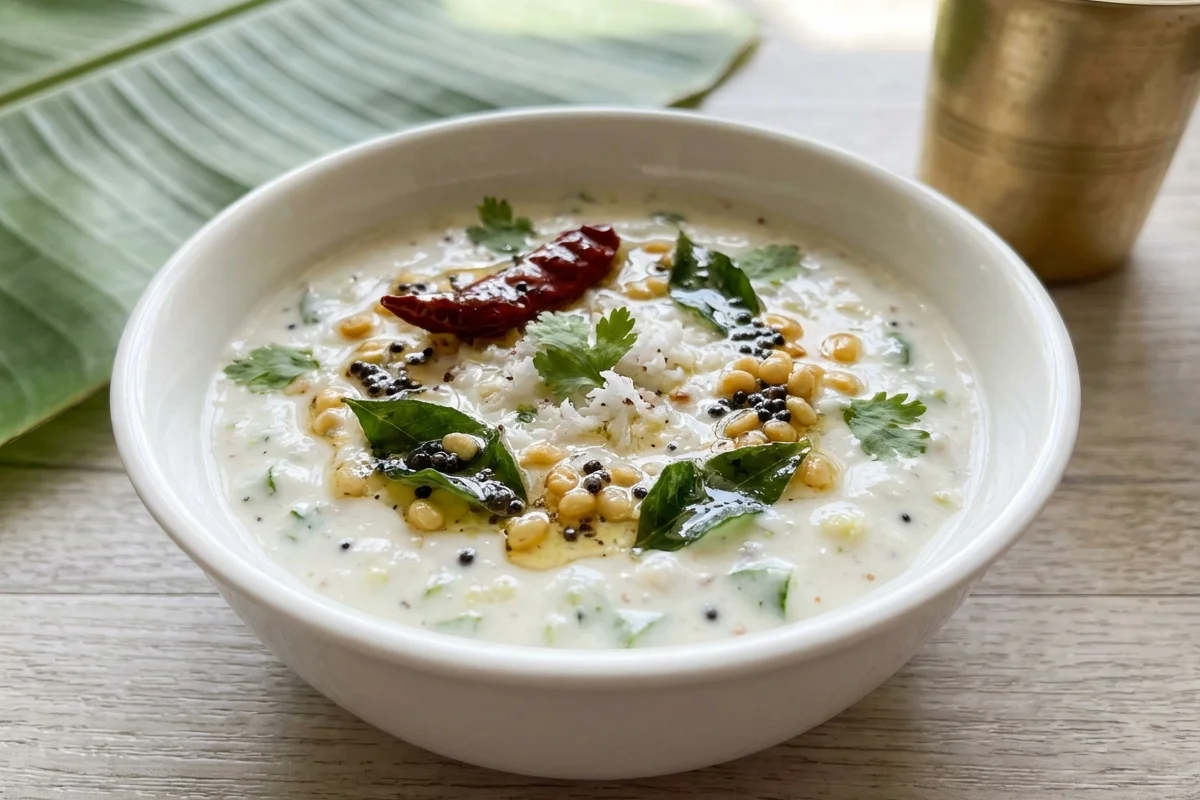
A cooling, creamy yogurt side dish studded with fresh grated coconut and a gentle pop of mustard seeds. This South Indian style raita balances the heat of spicy curries and biryanis, ready in just 10 minutes with no cooking required.
For 4 servings
- prep
Whisk the yogurt base.
In a mixing bowl, whisk the chilled yogurt until smooth and creamy. Add the freshly grated coconut, chopped green chili, chopped coriander leaves, and salt. Mix well until everything is evenly distributed.
- temper · ~2 min
Make the tempering.
1.Heat oil in a small tadka pan over medium heat until shimmering.2.Add mustard seeds and let them splutter (30 sec).3.Add cumin seeds and let them sizzle until fragrant (15 sec).4.Toss in torn curry leaves and broken dried red chili. Fry until leaves crisp (20 sec).TIPCover the pan with a lid when adding curry leaves — they sputter and splatter. - mix
Pour the tempering over the yogurt.
Immediately pour the hot tempering over the prepared yogurt mixture. Gently fold it in — the contrast of hot tadka hitting cold raita releases incredible aroma.
- rest · ~10 min
Chill briefly before serving.
Cover and refrigerate for 10 minutes to let the flavors meld. The raita can be made up to 2 hours ahead.
What to keep in mind.
6 tips from the recipe — small details that make a real difference to the final dish.
- 1Use full-fat yogurt for a creamier texture and richer mouthfeel.
- 2Grate fresh coconut just before using; frozen or desiccated coconut won't yield the same moist, delicate texture.
- 3Deseed the green chili if you prefer a milder raita; the heat builds over time.
- 4Let the tempering cool for 10 seconds before pouring into the yogurt to avoid curdling.
- 5Cover the pan when adding curry leaves to prevent hot oil splatters.
- 6Make the raita up to 2 hours ahead; stir gently before serving to redistribute the tempering.
Adapt it for your goals.
Vegan
Replace yogurt with a thick, unsweetened coconut or almond yogurt. Use a neutral oil like coconut oil for the tadka to complement the coconut flavor.
low fatLow-fat
Use low-fat or Greek yogurt for a lighter version, but increase the coconut slightly to compensate for the reduced creaminess.
herb forwardHerb-forward
Swap half the coriander for finely chopped mint leaves for a fresher, cooler finish — ideal with lamb or spicy roasted vegetables.
extra crunchExtra crunch
Fold in 2 tablespoons of finely diced cucumber (seeds removed) or pomegranate arils just before serving for added texture and juiciness.
Why this is on our healthy list.
Probiotic-rich Yogurt
The live cultures in yogurt support gut health and digestion, making this raita a soothing accompaniment to spicy meals.
Healthy Fats from Coconut
Fresh coconut provides medium-chain triglycerides (MCTs), which are a quick source of energy and may aid in satiety.
Anti-inflammatory Spices
Mustard seeds and cumin contain compounds with natural anti-inflammatory properties, while curry leaves are rich in antioxidants.
Low in Added Sugar
This raita relies on the natural sweetness of coconut and the tang of yogurt, with no added sugar, keeping it balanced and wholesome.
Frequently asked questions
Yes — use any small skillet or saucepan. The key is to heat oil over medium heat and let the mustard seeds splutter fully before adding the other spices.