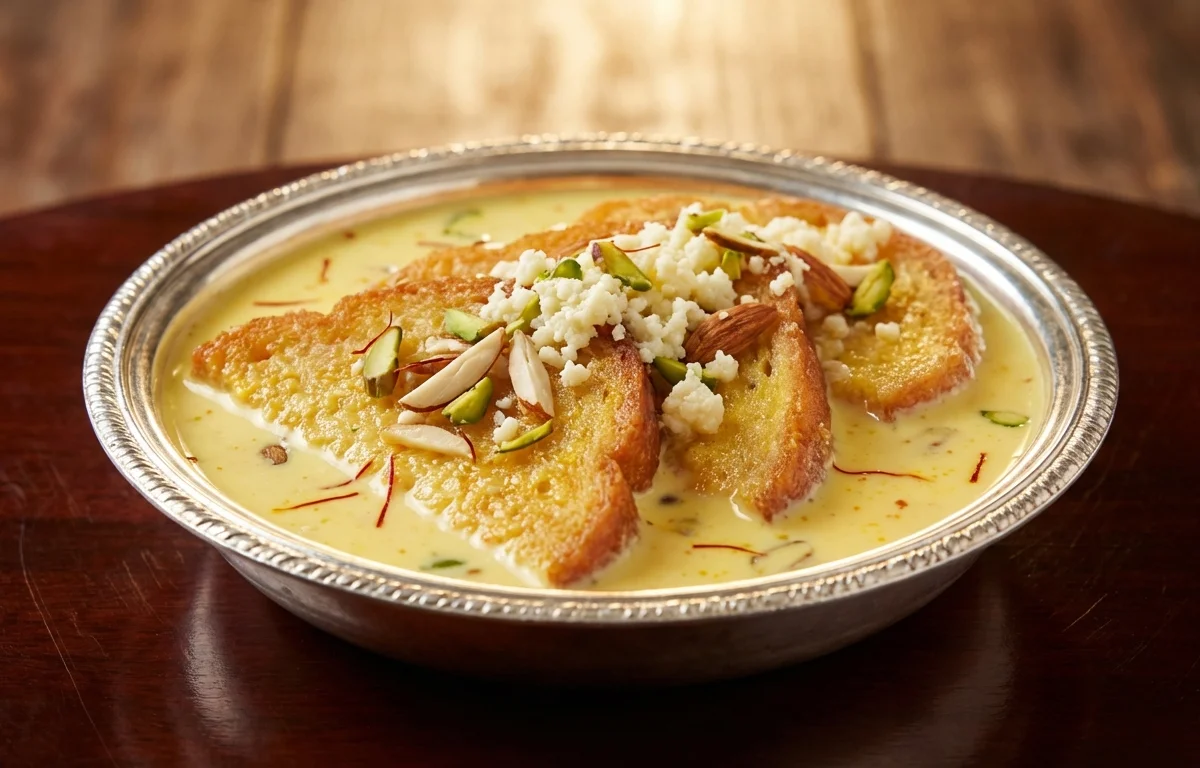
Double ka Meetha
Rich, comforting bread pudding from Hyderabad made with fried bread, saffron milk, and a lightly thickened rabri. Every bite is soft, fragrant, and dotted with nuts for a festive finish.
For 4 servings
- prep
Trim and cut the bread.
Remove the crusts from the bread slices and cut each slice diagonally into 2 triangles for even frying and layering.
- boil · ~10 min
Make the saffron milk.
1.Pour the milk into a wide pan and bring it to a gentle boil over medium heat.2.Add saffron strands and let the milk simmer until slightly reduced and fragrant, about 8-10 minutes.3.Stir now and then so the milk does not catch at the bottom. - boil · ~4 min
Make the sugar syrup.
1.Heat water and sugar in a small pan over medium heat.2.Add the crushed green cardamom and stir until the sugar dissolves.3.Simmer for 3-4 minutes until you get a light syrup, then turn off the heat. - fry · ~8 min
Fry the bread and raisins.
1.Heat ghee in a wide pan over medium heat.2.Fry the bread triangles in batches until both sides are deep golden and crisp.3.Lift them out and set aside.4.Add the raisins to the same ghee and fry just until they puff, then remove.TIPKeep the heat medium so the bread turns crisp without burning before the center dries slightly. - assemble
Soak the bread with syrup.
Arrange the fried bread in a shallow serving dish or pan. Spoon the warm sugar syrup all over so the bread softens but still holds its shape.
- assemble · ~5 min
Pour over the saffron milk.
Pour the hot saffron milk evenly over the syrup-soaked bread. Let it sit for 5 minutes so the bread absorbs the milk and turns soft and rich.
- garnish
Finish with nuts and raisins.
Scatter the almonds, pistachios, and fried raisins over the top for texture and color.
- serve
Serve warm.
Spoon into katoris and serve warm for the best texture, when the bread is soft and the milk is still fragrant.
What to keep in mind.
7 tips from the recipe — small details that make a real difference to the final dish.
- 1Fry the bread until deep golden, not just pale golden, so it stays structured after soaking.
- 2Use a wide pan for the milk reduction; it thickens faster and lowers the chance of scorching.
- 3Pour the syrup while warm so the bread absorbs it evenly without turning patchy.
- 4Let the fried bread cool for a minute before soaking to keep it from collapsing too fast.
- 5Add the saffron to hot milk early so it has time to release both color and aroma.
- 6Fry the raisins only until they puff; any longer and they can harden or taste bitter.
- 7Serve within a short time of assembling for the best contrast between soft bread and crunchy nuts.
Adapt it for your goals.
Low-sugar
Reduce the sugar syrup slightly and let the natural richness of the reduced milk and saffron lead the dessert.
rabri richRabri-rich
Simmer the milk longer until thicker and creamier for a more festive, luxurious double ka meetha.
bakedBaked
Assemble in a baking dish and warm briefly in the oven so the bread absorbs evenly and the top gets lightly toasted.
shahiShahi
Add a little rose water or kewra at the end for a more royal, wedding-style fragrance.
Why this is on our healthy list.
Calcium From Milk
The full-fat milk in this dessert contributes calcium and dairy protein while also making the texture rich and satisfying.
Nutrient-Dense Nuts
Almonds and pistachios add healthy fats, some protein, and a bit of crunch along with minerals and vitamin E.
Saffron and Cardamom Aroma
Saffron and cardamom bring intense fragrance, which helps the dessert taste luxurious without needing many extra ingredients.
Frequently asked questions
Yes. Fry the bread, make the syrup, and reduce the milk ahead; assemble shortly before serving so the bread does not become overly mushy.